0%

Choosing an Optical Quartz Glass Sheet manufacturer in 2026 requires more than comparing polished surfaces and catalog prices. Buyers must examine purity, hydroxyl content, transmission range, birefringence, thickness tolerance, surface flatness, and delivery consistency. These details influence ultraviolet systems, analytical instruments, semiconductor equipment, and precision optical assemblies.

Glass researcher George W. Morey is widely associated with the observation, “The history of glass is the history of civilization.” His statement remains relevant here. Modern quartz sheets are not ordinary transparent panels. Their performance depends on raw material selection, melting control, thermal treatment, machining, and inspection discipline. A sheet may look flawless under warehouse lighting yet reveal haze, edge chips, or stress lines under polarized inspection.

Small details matter.

This guide evaluates seven leading Optical Quartz Glass Sheet manufacturers for 2026. The comparison considers technical capability, production experience, customization, quality documentation, packaging, and customer support. It also considers practical evidence, such as dimensional reports, test certificates, sample approval procedures, and traceable batch records. A manufacturer with impressive equipment may still struggle with communication or repeatability. That weakness deserves attention.

No ranking can fit every application perfectly. Some buyers need extremely low absorption, while others prioritize large dimensions, rapid prototyping, or stable international supply. Public information is also uneven, and that creates room for caution. The final choice should match the sheet’s wavelength, operating temperature, geometry, and required service life. Verify critical specifications directly before placing a production order.
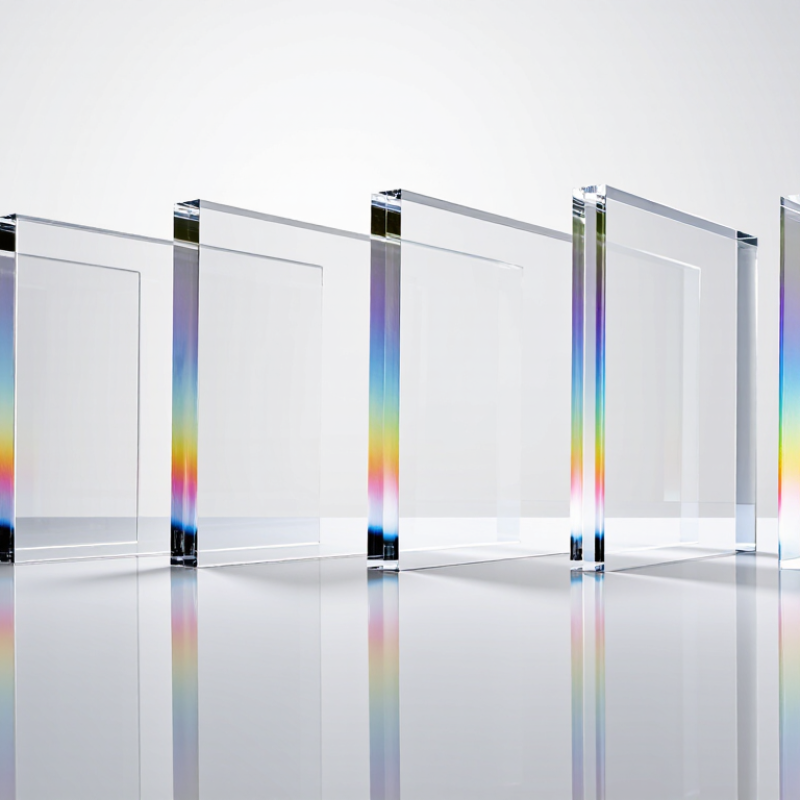
7 Best Optical Quartz Glass Sheet Manufacturers in 2026?

What Optical Quartz Glass Sheets Are and Why They Matter

What Optical Quartz Glass Sheets Are and Why They Matter

Optical quartz glass sheets are flat panels made from high-purity fused silica. They transmit ultraviolet, visible, and near-infrared light with limited absorption. Unlike ordinary glass, quartz tolerates rapid temperature changes and remains stable near intense heat. That difference matters in UV instruments, semiconductor chambers, laboratory windows, and solar equipment.

The material is not automatically perfect. Tiny bubbles, striae, surface scratches, or uneven thickness can distort light and reduce process accuracy. In practical inspections, engineers check transmission curves, flatness, parallelism, surface quality, and thermal expansion. A clean edge also matters when sheets enter vacuum equipment.

Industry data shows why demand remains strong. SEMI’s World Fab Forecast tracks hundreds of active and planned semiconductor manufacturing projects worldwide, creating continued demand for contamination-controlled quartz parts.

Grand View Research’s 2024 fused silica market analysis also expects steady growth through 2030, supported by optics, electronics, and renewable-energy applications. These reports describe market direction, not guaranteed performance. Specifications still need verification.

Some applications expose a weakness. UV transmission can decline after prolonged radiation, depending on grade and operating conditions. “High purity” is too vague without test data. Buyers should request spectral transmission results, dimensional tolerances, and inspection records. A lower price may become expensive after one failed coating, warped panel, or contaminated process chamber.

How to Evaluate Optical Quartz Glass Sheet Manufacturers

Choosing among the seven best optical quartz glass sheet manufacturers in 2026 requires more than comparing prices. I examine the material’s intended wavelength, thickness range, and required surface finish. A reliable supplier should provide measured transmission data, not only a catalogue curve. Ask for sample sheets. Inspect bubbles, striae, edge chips, haze, and visible polishing marks under controlled light. Small defects can become serious when a sheet enters a high-power optical assembly.

Manufacturing experience shows in process control. Request dimensional tolerances, flatness results, cleaning procedures, and coating compatibility. The supplier should explain how each batch is identified and traced. Inspection reports should include test methods, instrument details, and acceptance limits. Vague certificates worry me. I would also review packaging: protective films, sealed bags, and shock-resistant crates matter during shipping. A technically capable team can discuss annealing, grinding, polishing, and thermal behavior without hiding behind general claims.

Authority comes from repeatable evidence. Look for qualified engineers, documented quality systems, independent test support, and customer references for similar optical conditions. Do not judge capability from one perfect sample. Compare several batches. No checklist is perfect. Lead time, communication, and corrective-action speed reveal practical reliability. I once treated low price as proof of efficiency; that assumption failed when rework delayed assembly. A better evaluation combines laboratory results, factory questions, and a small pilot order before committing to volume.

7 Best Optical Quartz Glass Sheet Manufacturers in 2026? – How to Evaluate Optical Quartz Glass Sheet Manufacturers

No. Evaluation Dimension Recommended Verification Point Relevant Standard or Technical Reference Practical Selection Benchmark Priority
1 Quartz Material Purity Request a material certificate and traceable impurity analysis for aluminum, iron, sodium, potassium, lithium, calcium, and other relevant metallic elements. ASTM E438, Type I laboratory glass requirements; project-specific optical-grade specifications. The supplier should state the analytical method, detection limits, lot number, and maximum impurity limits rather than using only the term “high purity.” Critical
2 Optical Transmission Review measured transmission curves for the exact thickness, wavelength range, surface finish, and incidence conditions required for the application. ASTM E1164 for spectrophotometric measurements; ISO 15368 for optical transmittance and reflectance measurement principles. Accept data generated on production samples, with wavelength interval, instrument model, calibration status, and measurement uncertainty clearly identified. Critical
3 Homogeneity and Refractive Uniformity Check whether the manufacturer measures refractive-index variation, striae, inclusions, bubbles, and internal stress across the full sheet. ISO 10110-18 for optical properties of glass; ISO 10110-2 for material imperfections and inclusions. A suitable supplier provides a defined inspection area, acceptance grade, sampling plan, and full-size mapping where the optical path covers most of the sheet. Critical
4 Dimensional Accuracy and Flatness Compare thickness tolerance, length and width tolerance, squareness, parallelism, and total flatness with the drawing or equipment interface. ISO 10110 drawing conventions; ISO 2768 where applicable to general dimensional tolerances. Require a dimensional inspection report for every production lot and confirm that tolerances are achievable after cutting, grinding, polishing, and thermal processing. High
5 Surface Quality and Finish Verify scratch-dig grade, polishing method, edge condition, coating compatibility, and the inspection lighting and viewing procedure. MIL-PRF-13830B is commonly referenced for scratch-dig visual surface-quality grading; the purchase specification should define the applicable grade. The supplier should provide representative photographs, written inspection criteria, and controls for chips, sleeks, stains, pits, and polishing residue. High
6 Thermal and Environmental Performance Evaluate maximum service temperature, thermal shock resistance, hydroxyl content, dimensional stability, and resistance to the intended chemicals or vacuum conditions. ASTM E438 for laboratory glass classification; application-specific thermal cycling, vacuum, and chemical-resistance test procedures. Choose a manufacturer that can provide test conditions matching the real process instead of relying only on generic maximum-temperature claims. High
7 Quality System, Traceability, and Delivery Capability Audit document control, lot traceability, calibration records, nonconformance handling, packaging, lead time, minimum order quantity, and after-sales support. ISO 9001 quality-management principles; customer-specific inspection and packaging requirements. Prefer suppliers that can issue consistent certificates of conformity, retain inspection records, protect polished surfaces, and demonstrate repeatable delivery performance. Important

Recommended evaluation method: Compare at least three qualified suppliers using the same drawing, sample size, optical wavelength range, inspection method, and acceptance criteria. Do not rank a manufacturer using price alone; optical performance, traceability, and lot-to-lot consistency should carry the greatest weight.

Seven Leading Optical Quartz Glass Sheet Manufacturers in 2026

Seven Leading Optical Quartz Glass Sheet Manufacturers in 2026

The seven leading optical quartz glass sheet manufacturers in 2026 compete through purity, transmission, and process control. Their products support ultraviolet optics, semiconductor equipment, laboratory windows, and photonic devices. Grand View Research estimates the global fused silica market will expand steadily through 2030, driven by semiconductor and solar applications. The report also highlights rising demand for low-contamination materials. That trend makes traceability more important than polished marketing language.

The strongest manufacturers typically offer synthetic or high-purity fused silica, tight thickness tolerances, and low bubble counts. One focuses on deep-ultraviolet transmission. Another specializes in large sheets for coating systems. A third provides heat-resistant laboratory panels. The remaining four emphasize precision grinding, custom cutting, low-metal contamination, and rapid prototyping. SEMI industry forecasts continue to show substantial investment in global semiconductor fabrication, supporting this supplier group. However, “leading” is not absolute. Published specifications can hide edge defects, delivery limits, or inconsistent batch quality. Buyers should request inspection records, spectral curves, and thermal-shock data. Small details matter. A clean sheet should arrive with protected edges, readable certificates, and stable performance under repeated heating. Personally, I would compare sample lots before accepting any ranking. Editorial lists can simplify a complicated market.

Key Products, Technologies, and Industry Applications

Optical Quartz Glass Sheet Manufacturers in 2026: Key Products, Technologies, and Industry Applications

The strongest manufacturers now offer fused silica sheets, UV-grade plates, and low-bubble optical blanks. Product selection depends on wavelength, thickness tolerance, surface finish, and thermal stability. A serious supplier should publish hydroxyl content, transmission curves, flatness data, and inspection methods. Small details matter. A 2024 report from Fortune Business Insights valued the global optical fiber market at about USD 8.8 billion, supporting continued demand for reliable silica-based optical components.

Advanced production uses electric fusion, hydrogen-oxygen flame fusion, CNC grinding, and computer-controlled polishing. Some facilities also use ion-beam finishing for demanding ultraviolet applications. Manufacturers serving semiconductor plants typically control metallic contamination, particles, and edge chipping in cleanroom conditions. The SEMI World Fab Forecast continues to identify strong capacity expansion across advanced chip manufacturing, increasing demand for stable quartz components. However, market reports often combine quartz tubing, windows, and specialty glass, so their figures should not be treated as sheet-specific data.

Industry applications include photolithography windows, ultraviolet lamps, laser systems, analytical instruments, and photovoltaic processing equipment. Solar production also values quartz sheets because they tolerate repeated thermal cycling. Buyers should request test coupons before approving large orders. I would not judge quality by visible clarity alone; internal stress can remain hidden until heating or polarized inspection. Supplier comparisons remain imperfect because test standards and reporting formats differ.

Factors to Consider Before Choosing a Manufacturer

Choosing among the 7 best optical quartz glass sheet manufacturers in 2026 requires more than comparing prices. Ask for measured data, not broad promises. Important values include transmission range, hydroxyl content, bubble grade, striae, surface flatness, and thermal expansion. A supplier should provide batch-level certificates, inspection methods, and traceability records. ISO 9001 certification supports process control, but it does not automatically prove optical quality.

Application fit matters. Semiconductor, laser, ultraviolet, and laboratory systems require different quartz grades. SEMI reported global semiconductor materials sales of 67.5 billion dollars in 2023, showing how demanding this supply chain has become. However, market growth does not guarantee better sheets. I would test a small sample first. Check edge chipping, haze under angled light, and distortion across the full surface. A perfect-looking sample can still fail after thermal cycling.

Tips: Request three recent inspection reports. Compare the same test methods. Confirm packaging and lead times in writing. Ask whether custom thickness tolerances are realistic. Some manufacturers quote impressive tolerances but measure only selected points. That is a warning sign. Also review technical support after delivery; replacing a warped sheet may cost more than the original order. A careful supplier will discuss limitations openly, even when the answer is inconvenient.

FAQS

What are optical quartz glass sheets made from?

They are flat panels made from high-purity fused silica. They transmit ultraviolet, visible, and near-infrared light with low absorption. They are not ordinary glass.

Why are these sheets useful in high-temperature equipment?

Quartz tolerates rapid temperature changes and intense heat. It stays stable during repeated thermal cycles. That matters in laboratories, solar equipment, and semiconductor systems.

Which properties should buyers check?

Request transmission curves, thickness tolerances, flatness, parallelism, and surface quality. Also check bubbles, striae, scratches, and thermal expansion. Small flaws can distort light.

Does “high purity” guarantee good performance?

No. The phrase needs supporting test data. Ask for metallic contamination results, hydroxyl content, inspection records, and batch traceability.

Which applications commonly use quartz sheets?

Common uses include ultraviolet instruments, laser systems, laboratory windows, and photolithography equipment. Solar processing also uses them. The exact grade still matters.

Can ultraviolet exposure damage a quartz sheet?

Prolonged radiation may reduce ultraviolet transmission. The effect depends on material grade and operating conditions. It is not always obvious.

How should a buyer inspect a sample?

Check haze under angled light and inspect the entire surface. Examine edges for chips. Test the sheet after thermal cycling, not only at room temperature.

Is the lowest price usually the best choice?

Not necessarily. A warped panel or contaminated chamber can create larger costs. I would compare three recent inspection reports before approving volume.

What manufacturing capabilities are important?

Useful capabilities include electric fusion, flame fusion, CNC grinding, and computer-controlled polishing. Advanced ultraviolet work may need ion-beam finishing. Production details matter.

What should suppliers confirm before delivery?

Confirm packaging, lead time, thickness tolerance, testing methods, and replacement terms in writing. Selected-point measurements may hide uneven areas. That deserves skepticism.

Conclusion

This article presents a practical guide to the seven best Optical Quartz Glass Sheet manufacturers in 2026, focusing on the qualities that distinguish reliable suppliers in a highly specialized market. It explains what optical quartz glass sheets are, including their exceptional purity, light transmission, thermal stability, chemical resistance, and low expansion. These characteristics make them important for precision optics, semiconductor processing, laboratory equipment, ultraviolet systems, lighting, and advanced industrial applications.

Readers will also learn how to evaluate manufacturers by examining material quality, dimensional accuracy, surface finish, customization capabilities, production technology, testing standards, delivery reliability, and technical support. The comparison of seven leading manufacturers is organized around their key products, manufacturing strengths, and typical industry uses rather than brand reputation alone. Before making a final decision, buyers should consider application requirements, sheet size and thickness, optical performance, certification needs, budget, production capacity, and long-term service.

Elowen

Elowen

Elowen is a dedicated marketing professional with a strong understanding of product strategy, customer needs, and digital communication. As a key contributor to the company’s content and growth initiatives, Elowen regularly updates its professional blog with practical insights, educational......