Blog
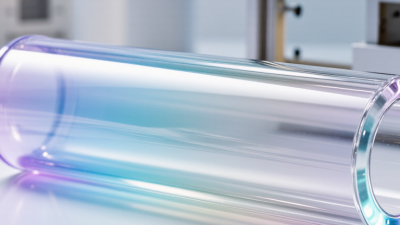
What Is a Fused Quartz Glass Tube Used For?
A Fused Quartz Glass Tube is more than a transparent container. It is a high-purity silica component designed for heat, light, and demanding chemical environments. In semiconductor laboratories, it holds wafers inside furnaces that operate at intense temperatures. In analytical equipment, it guides gases, protects sensors, and supports controlled reactions. Some models also serve in ultraviolet lamps, optical systems, and research reactors.
Glass scientist James E. Shelby has emphasized, “The properties of glass are controlled by its composition and thermal history.” This principle explains why fused quartz performs differently from ordinary glass. Its very low thermal expansion helps it resist sudden temperature changes. Its broad optical transmission supports ultraviolet and visible-light applications. Its clean surface also reduces contamination during sensitive processing.
Still, the material is not invincible. A Fused Quartz Glass Tube can devitrify after prolonged exposure to extreme heat. Alkali contamination, mechanical impact, and unsuitable cleaning can shorten its service life. Dimensions matter too. Wall thickness, bore size, surface finish, and end design influence temperature uniformity and gas flow.
The right tube depends on the application.
A laboratory furnace may need a thick-walled tube with carefully finished ends. An optical device may require exceptional clarity instead. This is where selection becomes less simple than product descriptions suggest. Engineers must compare purity, operating temperature, pressure, chemical contact, and maintenance conditions. Small details often decide whether a tube performs reliably or fails earlier than expected.
Read more »
 By:Elowen
- October 22, 2026
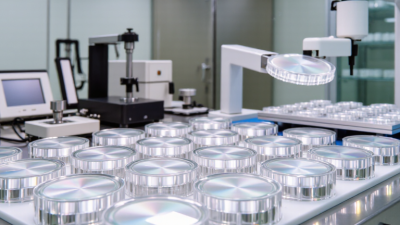
2026 Best Fused Silica Quartz Wafer Suppliers?
Choosing the 2026 best Fused Silica Quartz Wafer suppliers requires more than comparing purity percentages. Semiconductor, photonics, and laboratory users need stable geometry, low surface defects, and dependable batch-to-batch control. A wafer may look flawless under normal lighting, yet microscopic haze can appear after cleaning or thermal cycling. That detail can change process results.
Dr. James E. Shelby, a respected glass-science author, offers a useful principle: “A glass remembers its thermal history.” This observation matters when evaluating fused silica production. Suppliers should demonstrate controlled melting, annealing, machining, polishing, and packaging procedures. They should also provide traceable inspection data, including thickness tolerance, flatness, surface roughness, metallic contamination, and bubble or inclusion levels. Certifications help, but they do not replace technical conversations.
This guide examines suppliers through practical evidence rather than promotional claims. It considers material consistency, customization capability, delivery performance, technical support, and experience with demanding wafer applications. Strong suppliers should explain how they manage edge chipping, warpage, particles, and thermal stress. They should also clarify whether specifications apply to every lot or only selected samples.
No ranking is perfect. Some suppliers publish extensive data, while others protect process details. That difference can make direct comparisons difficult. Buyers should request recent certificates, sample wafers, inspection methods, and references from similar applications. A lower price may appear attractive, but unstable flatness can increase rework and interrupt production.
The following overview presents leading candidates for 2026. It is designed to support careful evaluation, not replace independent qualification. Reliability begins with evidence.
Read more »
By:Elowen
- October 22, 2026
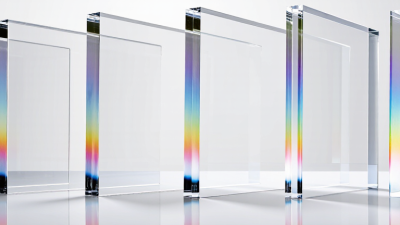
7 Best Optical Quartz Glass Sheet Manufacturers in 2026?
Choosing an Optical Quartz Glass Sheet manufacturer in 2026 requires more than comparing polished surfaces and catalog prices. Buyers must examine purity, hydroxyl content, transmission range, birefringence, thickness tolerance, surface flatness, and delivery consistency. These details influence ultraviolet systems, analytical instruments, semiconductor equipment, and precision optical assemblies.
Glass researcher George W. Morey is widely associated with the observation, “The history of glass is the history of civilization.” His statement remains relevant here. Modern quartz sheets are not ordinary transparent panels. Their performance depends on raw material selection, melting control, thermal treatment, machining, and inspection discipline. A sheet may look flawless under warehouse lighting yet reveal haze, edge chips, or stress lines under polarized inspection.
Small details matter.
This guide evaluates seven leading Optical Quartz Glass Sheet manufacturers for 2026. The comparison considers technical capability, production experience, customization, quality documentation, packaging, and customer support. It also considers practical evidence, such as dimensional reports, test certificates, sample approval procedures, and traceable batch records. A manufacturer with impressive equipment may still struggle with communication or repeatability. That weakness deserves attention.
No ranking can fit every application perfectly. Some buyers need extremely low absorption, while others prioritize large dimensions, rapid prototyping, or stable international supply. Public information is also uneven, and that creates room for caution. The final choice should match the sheet’s wavelength, operating temperature, geometry, and required service life. Verify critical specifications directly before placing a production order.
Read more »
By:Elowen
- October 22, 2026