CVD & Vacuum
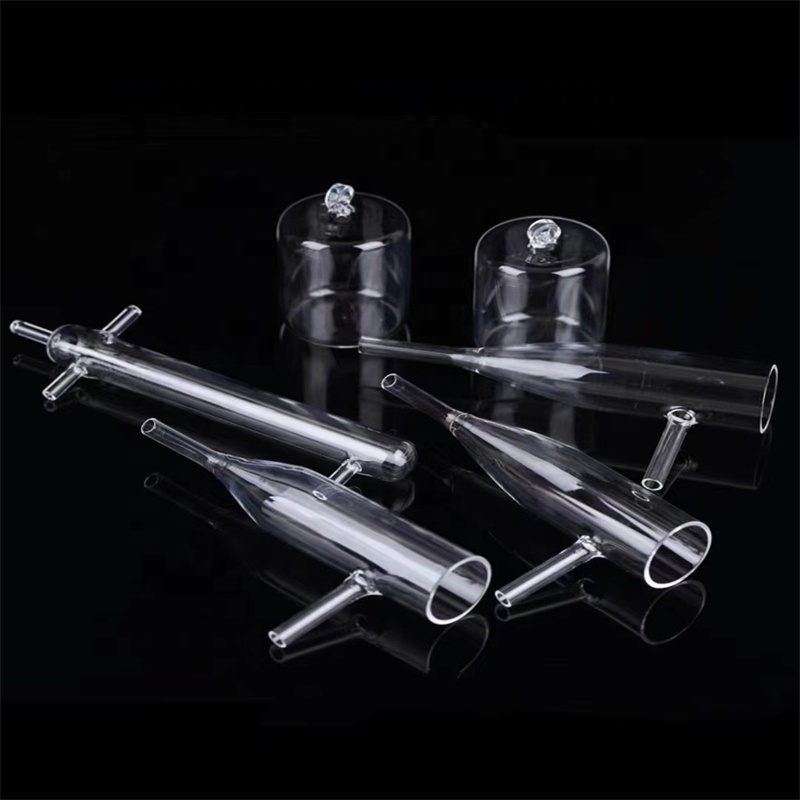
Custom High-Temp Laboratory Twin Quartz Tube (99.99% SiO₂)
CVD Furnace
Vacuum Bending
Welding
High-purity (99.99% SiO₂) fused silica solutions developed for extreme thermal stability, aggressive acid digestion, chemical vapor deposition (CVD), and UV photochemical processing.
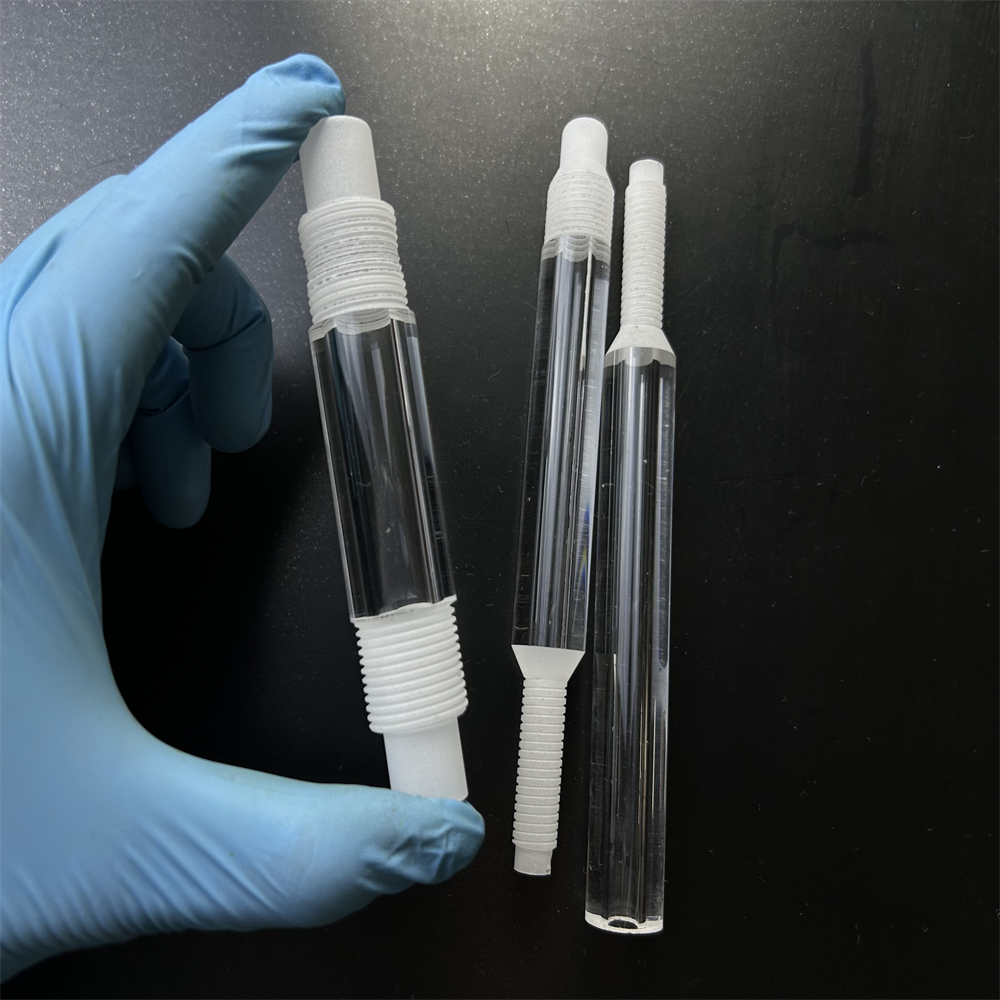
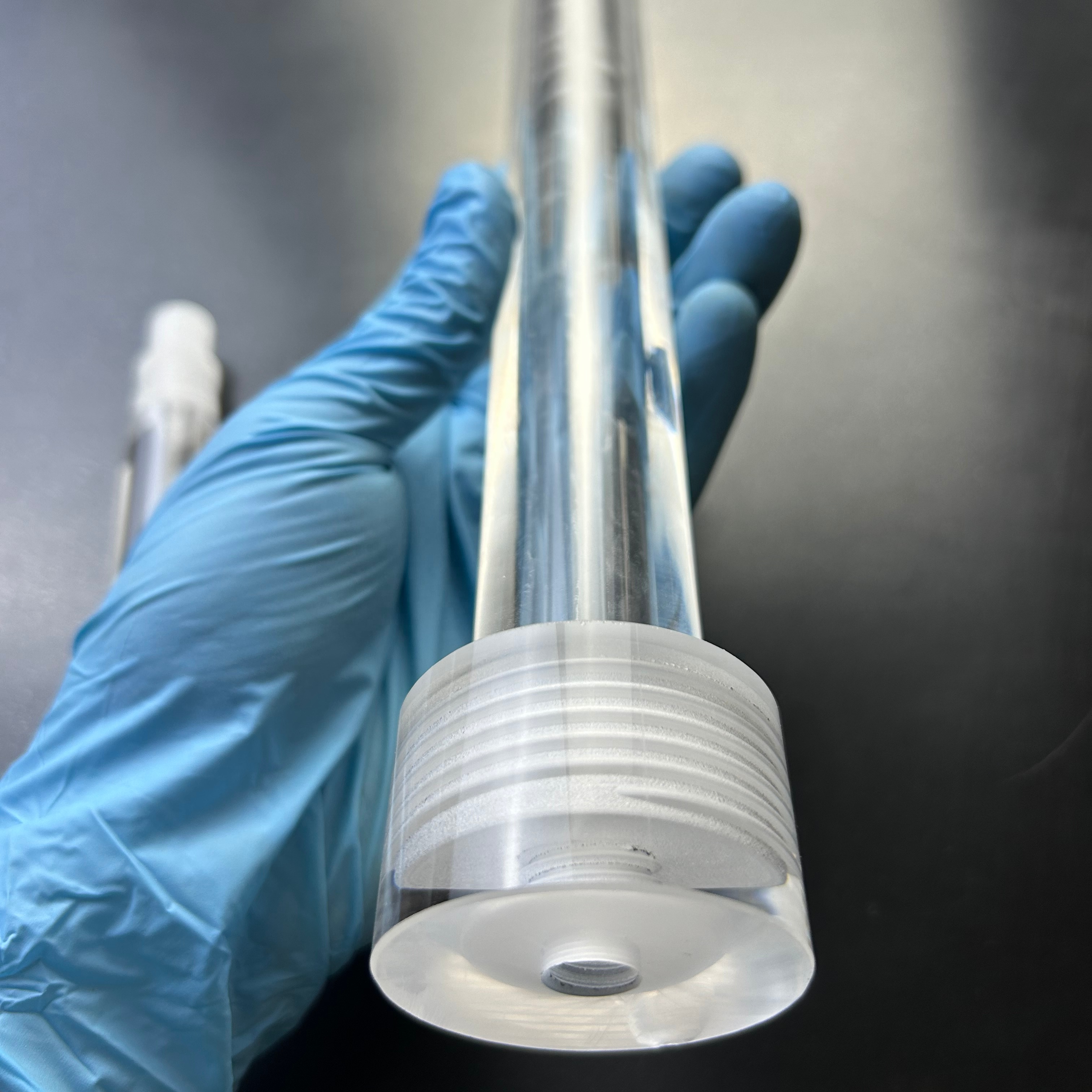
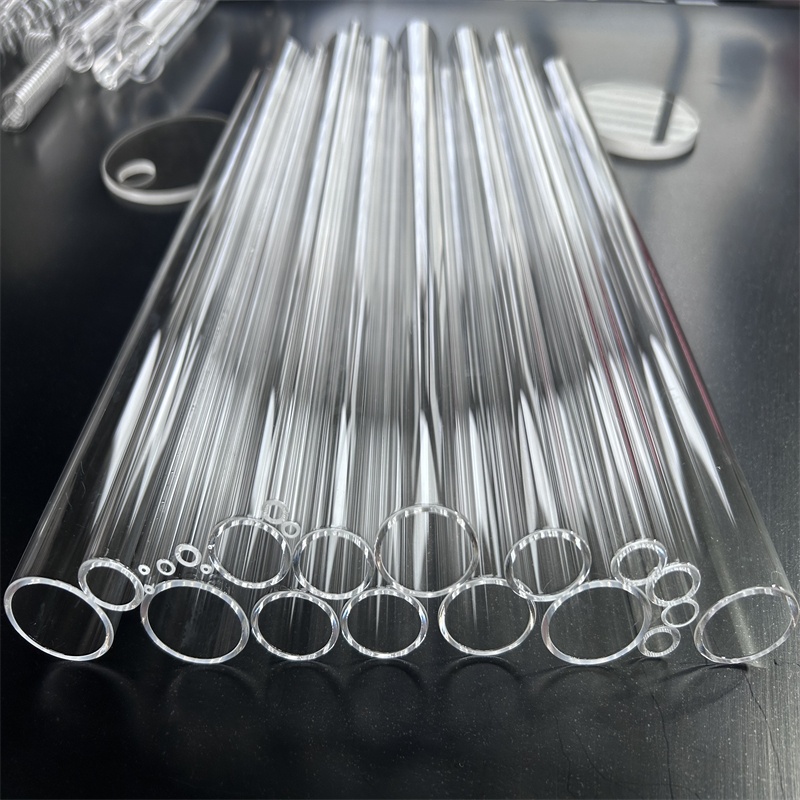
A comprehensive analysis for procurement officers, process integration engineers, and chemical plant designers sourcing helical fused silica components.
In modern semiconductor etching, photochemical synthesis, solar wafer oxidation, and continuous-flow chemical production, the geometry of fluid containment defines process kinetics. The spiral quartz tube (also referred to as a helical quartz coil, quartz condenser coil, or spiral heating jacket) represents a pinnacle of technical glassworking. Unlike rectilinear quartz pipe runs, a helical quartz assembly packs extensive surface area and prolonged residence times into tight volumetric envelopes, simultaneously accommodating severe thermal expansion differentials without mechanical buckling.
When fluids traverse a curved quartz conduit, centrifugal forces generate secondary lateral flow patterns known in fluid mechanics as Dean vortices. In continuous flow reactors and photochemical synthesis systems, this phenomenon prevents laminar boundary layer stagnation. Reactants circulating through a 99.99% pure fused silica spiral tube encounter continuous radial mixing without requiring internal mechanical impellers. Consequently, photochemical UV penetration—especially across the 185 nm to 254 nm germicidal and ozone-producing spectra—reaches maximum photon conversion efficiency throughout the fluid column.
Standard fused quartz exhibits an exceptionally low coefficient of thermal expansion (CTE) of approximately 5.5 × 10⁻⁷ /°C between 20°C and 320°C. This property grants quartz unmatched resistance to thermal shock; an illuminated red-hot spiral tube at 1000°C can be quenched in cold water without catastrophic micro-cracking.
However, when sourcing helical quartz components for prolonged exposure above 1150°C, procurement engineers must evaluate trace contamination. In the presence of alkali metals—particularly sodium (Na), potassium (K), and lithium (Li)—fused quartz undergoes accelerated devitrification, converting the amorphous vitreous silica into crystalline cristobalite. Cristobalite undergoes a sharp volumetric shrinkage of 2.8% at roughly 220°C during cool-down, causing structural spalling, haze, and eventual coil rupture. Leading global exporters must enforce Inductively Coupled Plasma Mass Spectrometry (ICP-MS) raw material validation, maintaining total alkali impurities below 1.5 ppm.
| Physical / Chemical Parameter | Semiconductor Grade Standard | Commercial Grade Quartz | Zelvo Quartz Specification |
|---|---|---|---|
| SiO₂ Purity Ratio | ≥ 99.998% | ≥ 99.90% | ≥ 99.99% Standard (Up to 99.999%) |
| Hydroxyl (-OH) Concentration | < 5 ppm (Low-OH IR) / ~180 ppm | > 250 ppm | 5 ppm – 30 ppm (Customizable by application) |
| Continuous Operating Temp | 1150 °C | 1000 °C | 1100 °C – 1150 °C |
| Softening Point | 1683 °C | 1630 °C | 1683 °C |
| Annealing Point | 1215 °C | 1180 °C | 1215 °C ± 10 °C (Computer Annealed) |
| Coil Pitch Uniformity Tolerance | ± 0.5 mm | ± 2.5 mm | ± 0.3 mm (5-Axis Lathe Guided) |
| Total Alkali Metals (Na, K, Li) | ≤ 1.0 ppm | ≤ 10.0 ppm | ≤ 1.2 ppm |
A vendor comparative analysis evaluating dimensional precision, raw material sourcing clusters, processing flexibility, and global export infrastructure.
Direct manufacturer headquartered in China's natural quartz epicenter. Specializes in custom drawing-to-part fabrication, high-precision helical winding, vacuum bending, and 5-axis laser cutting. Features an agile 1-piece prototype MOQ, ≤2-hour engineering turnarounds, and comprehensive pre-shipment polariscope stress inspection.
Global market benchmark for synthetic fused silica and high-end semiconductor grade fused quartz base materials. Widely specified in sub-7nm lithography and large diameter quartz furnace diffusers.
Pioneer in high-temperature lamp tubing, semiconductor furnace components, and purified natural quartz crucibles. Renowned for low-hydroxyl grades and superior thermal stability.
Renowned fabricator catering to leading Japanese semiconductor tool OEMs. Excels in high-precision plasma etching rings, ultra-flat wafers, and welded quartz gas injection manifolds.
European leader in hollow glassware, plasma torch tubes, and specialty doped fused silica (titanium/cerium-doped for selective UV absorption and optical filtration).
Engineers of quartz fiber textiles, wool, and heavy-duty structural quartz crucibles tailored for nuclear, aerospace, and high-temperature defense thermal protection systems.
Joint venture integrating high-purity synthetic preforms for optical fiber drawing and photomask substrates with high-precision quartz furnace liners for silicon ingot manufacturing.
Specialized producer of high-efficiency infrared emitter tubes, ozone-generating UV envelopes, and customized outer diameter quartz tubing for industrial heating modules.
Dedicated machining and ultrasonic cutting provider for micro-tolerance quartz components, showerheads, and high-frequency plasma process chambers for display panels.
Premier engineered materials manufacturer with deep competency in fused silica ceramics, high-temperature thermal barrier insulators, and hybrid quartz-ceramic assemblies for aerospace and energy exploration. Provides robust global distribution networks and extensive material analytics for extreme environmental defense applications.
Market intelligence addressing how changing semiconductor nodes, green hydrogen synthesis, and photovoltaic advancements are shaping quartz tube specifications.
As semiconductor fabrication scales down past the 2nm GAA (Gate-All-Around) node, wafer fab tolerance for trace metal particulate leaching approaches zero. Future spiral quartz reactors require advanced chemical etching passivation (acid leaching down to parts-per-trillion levels) and synthetic fused silica liners to eliminate iron (Fe), copper (Cu), and nickel (Ni) migration during high-temperature ALD (Atomic Layer Deposition) cycles.
The fine chemical and active pharmaceutical ingredient (API) industries are pivoting rapidly from batch reaction kettles to continuous photo-flow microreactors. Helical quartz coils provide optimal light transmission across deep-UV (254 nm) and UV-A/Visible spectra (365–450 nm). Sourcing strategies increasingly focus on high-pressure-rated coil walls (operating > 15 bar) with seamless laser-welded inlet flanges.
In next-generation N-type TOPCon and Perovskite-Silicon tandem photovoltaic cell processing, phosphorus and boron diffusion tubes face larger wafer diameters (M10 and G12). This elevates demand for large-envelope spiral quartz heat-exchangers capable of maintaining uniform temperature profiles across 2400 mm furnace zones without thermal sag or creep deformation over continuous 90-day production runs.
Leveraging the natural raw ore abundance of Donghai County with rigorous modern CNC fabrication and export engineering excellence.
Directly situated in Donghai, Jiangsu—China's premier quartz processing hub. Direct access to 99.99% raw silicon ore lowers material cost while guaranteeing metallurgical consistency.
Our sales engineering team provides full drawing reviews (CAD/STEP/PDF) and formal quotations within 2 hours on working days, preventing sourcing delays for your production schedule.
We eliminate high minimum batch penalties. Laboratories, university research groups, and OEM R&D centers can commission single bespoke prototype coils without excessive mold fees.
Every welded and bent spiral tube passes through computer-controlled electric annealing furnaces to eliminate internal hoop stresses, verified under polarized cross-Nicols inspection before export.
Addressing technical tolerances, packaging security, chemical resistance, and trade terms.
Send your CAD drawing, sketch, or operating parameters directly to our senior fabrication engineers. Receive feasibility validation, material selection advice, and factory-direct pricing within 2 hours.