Core Fused Quartz Products & Machined Optical Components
Manufactured from high-purity natural and synthetic silicon dioxide, our disc substrates, process tubes, and CVD reactor elements withstand working continuous temperatures up to 1100°C and peak short-term thermal cycles up to 1300°C.
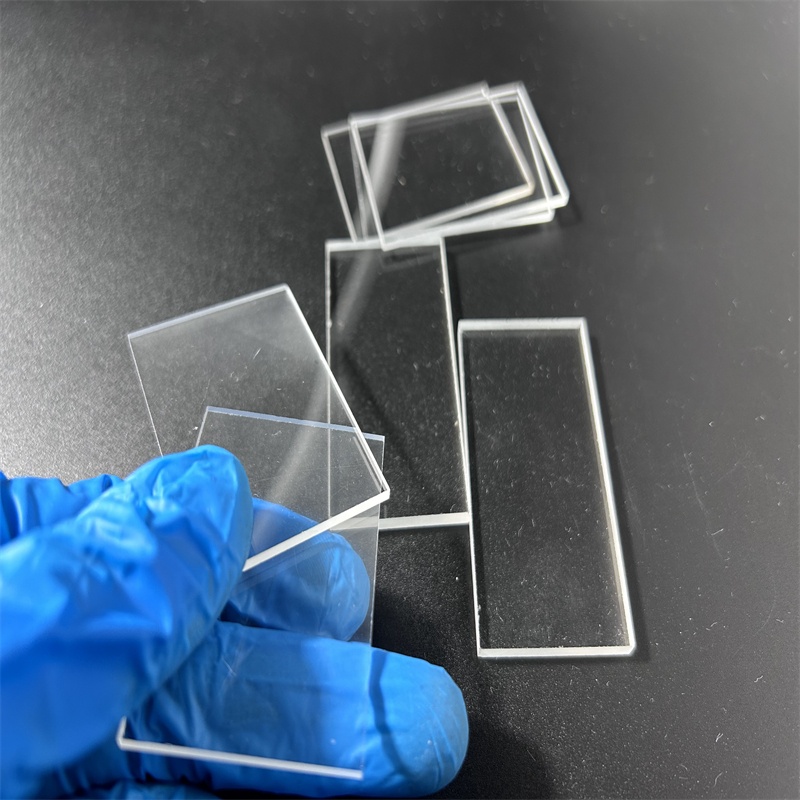
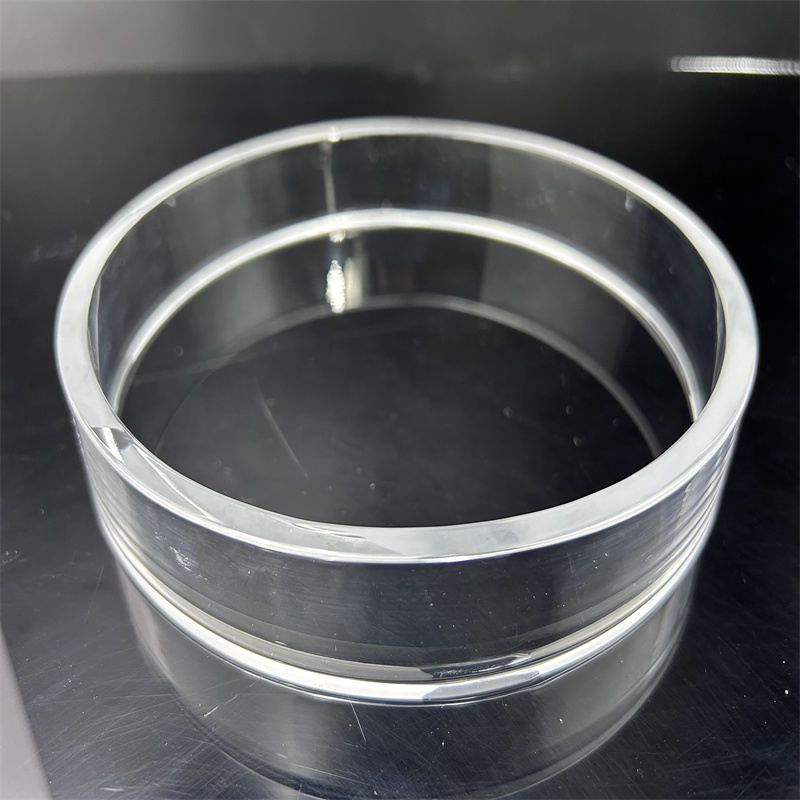
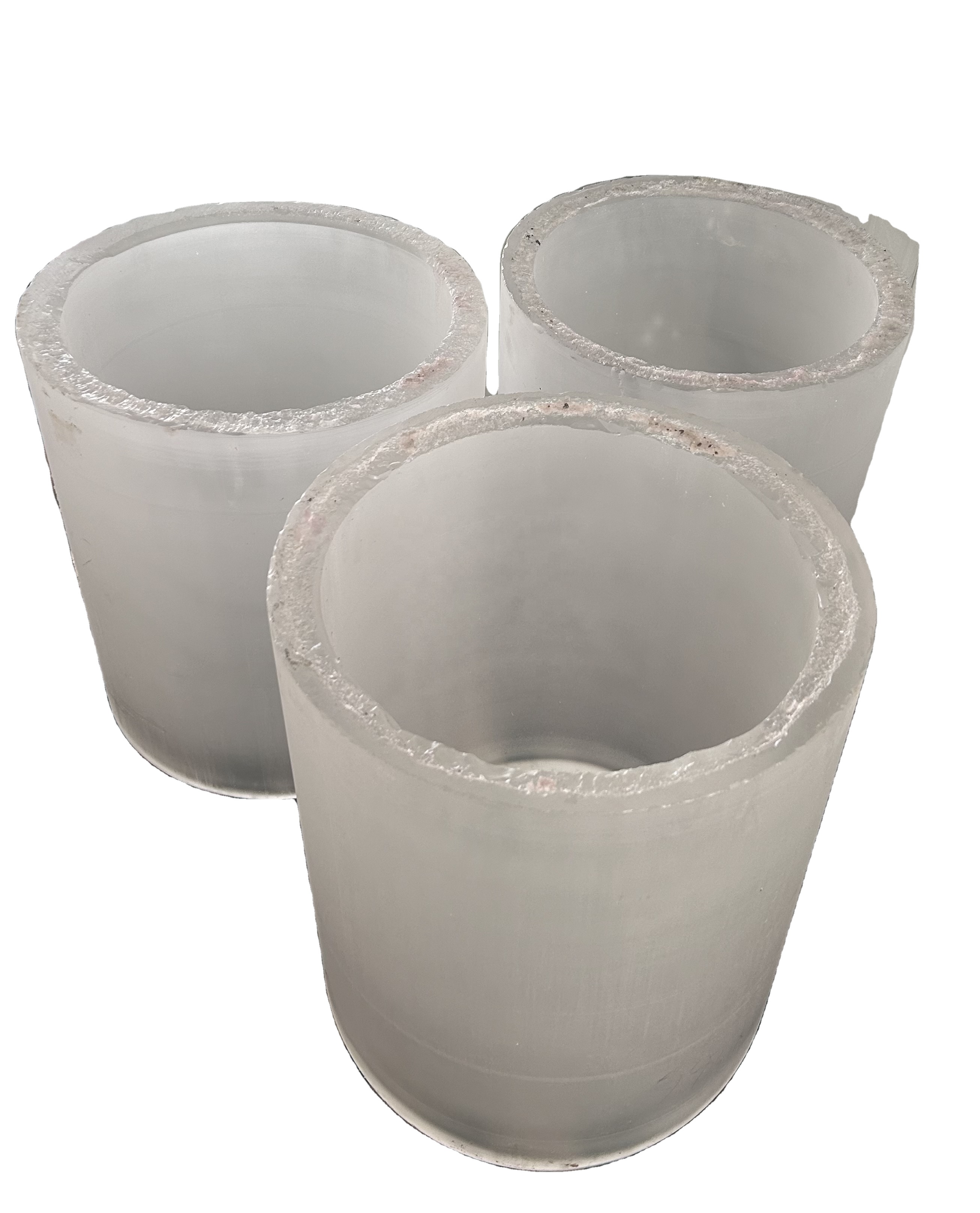
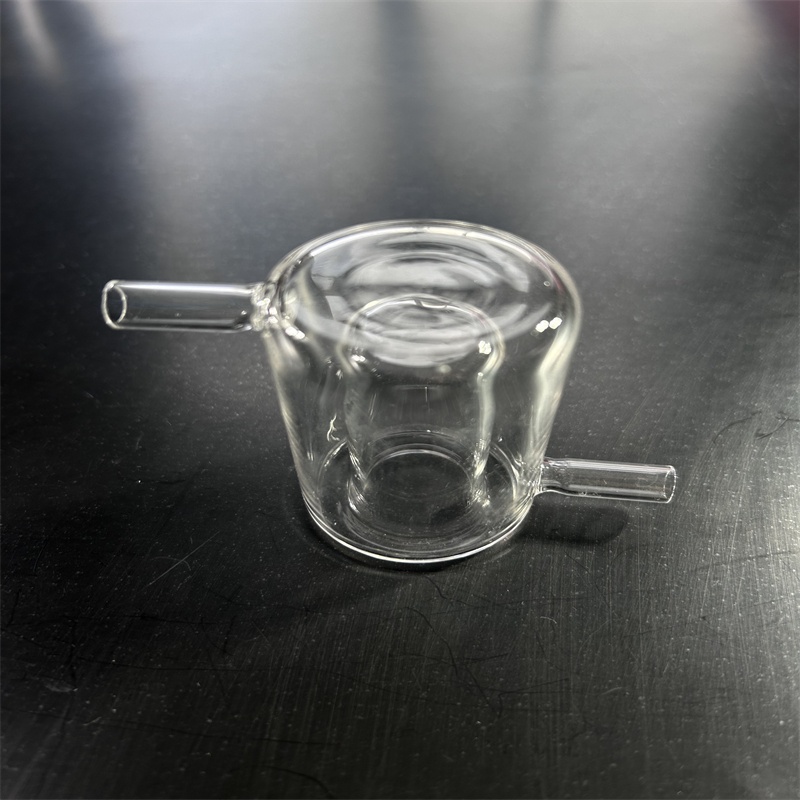
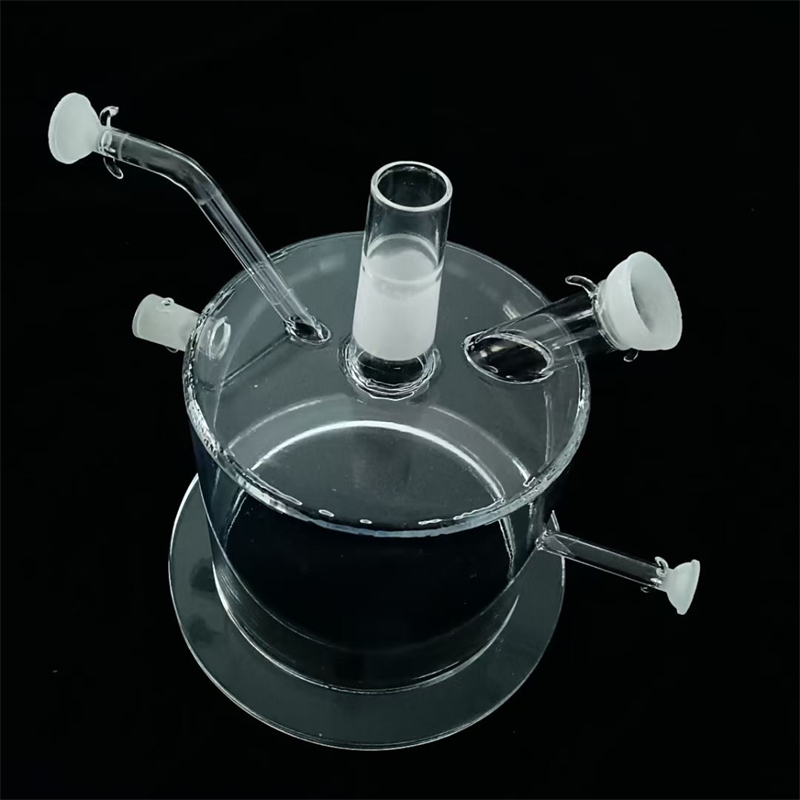
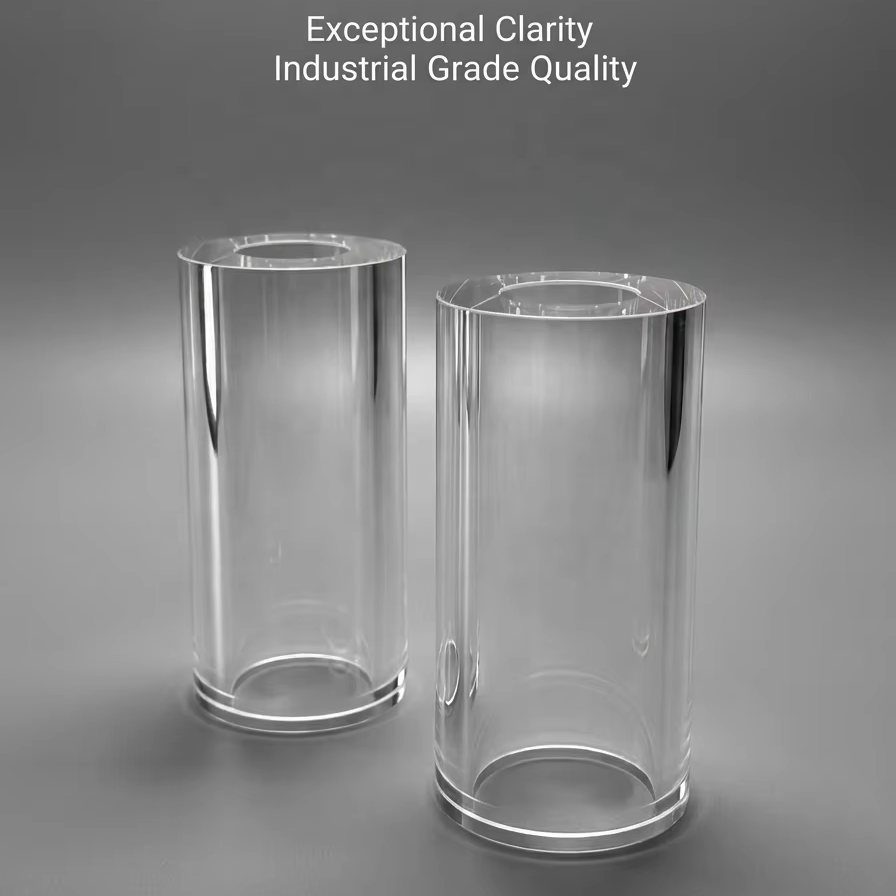
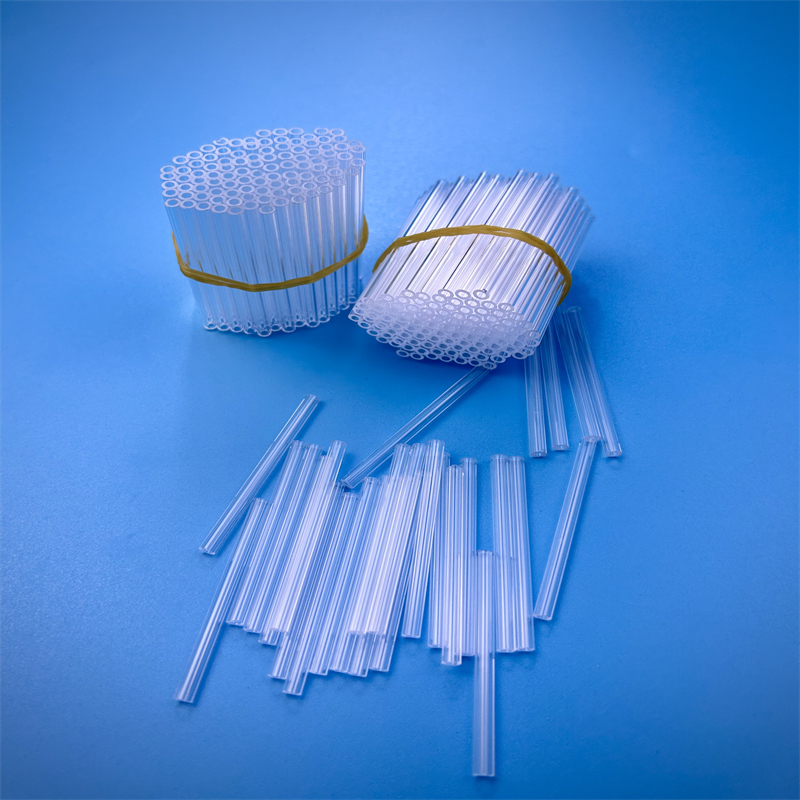
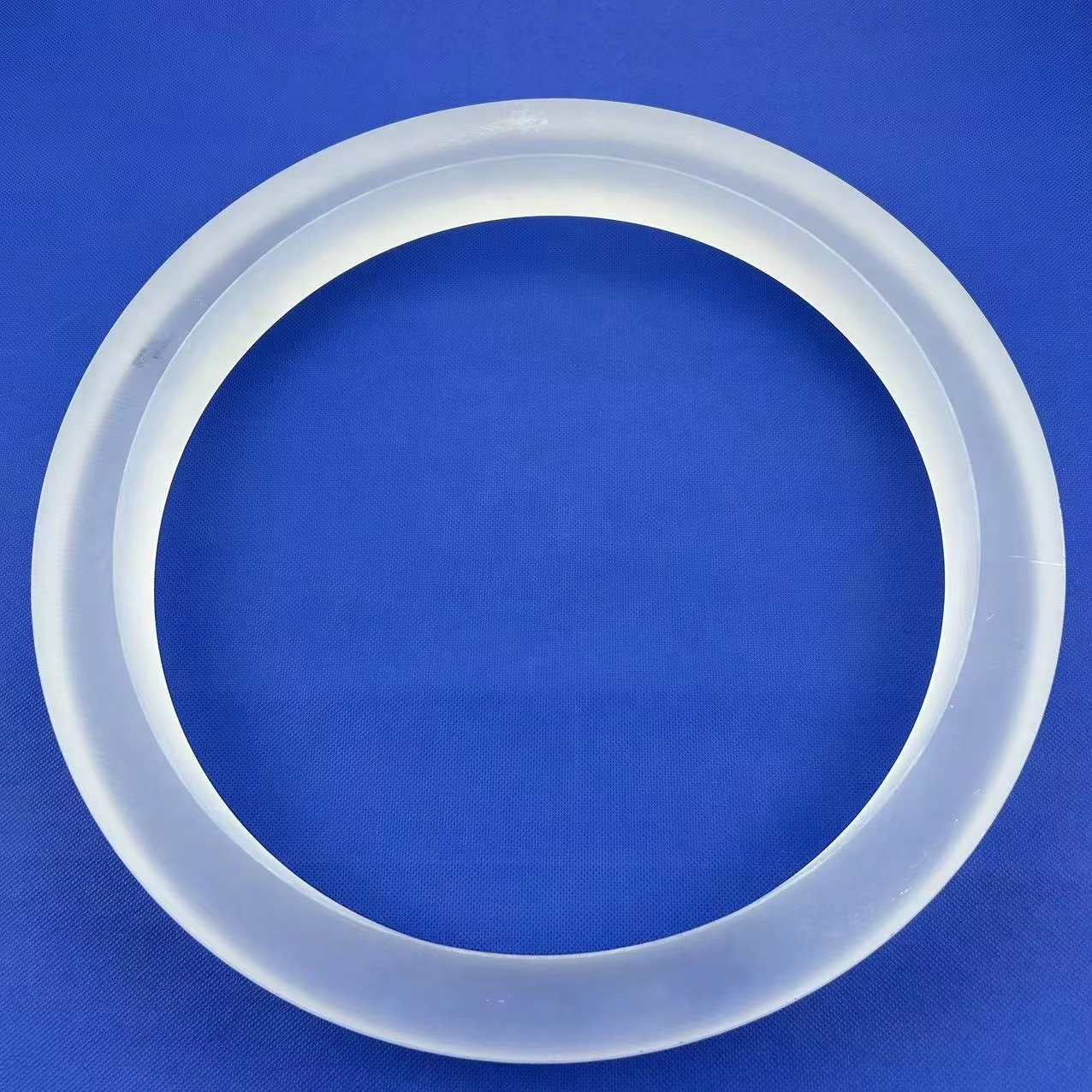
Fused Quartz Discs: Material Classifications, Transmittance & Defect Metrology
In high-specification industrial manufacturing, selecting the optimal disc material requires balancing optical transmission, bubble classes, trace impurity concentrations, and hydroxyl (OH⁻) content. As China’s primary fused quartz processing cluster, Donghai County combines vast refined silica reserves with high-temperature electro-fusion and vapor axial deposition (VAD) technologies. For international procurement teams, understanding the distinction between natural electrical-melted fused quartz, gas-refined quartz, and synthetic chemical vapor deposition (CVD) fused silica is crucial for preventing in-situ devitrification and plasma etching failures.
Natural fused quartz discs fabricated from crushed natural rock crystal typically yield a purity exceeding 99.99% (4N) to 99.998% (4N8). This material provides superior structural stability under continuous thermal loads up to 1150°C and minimizes sagging in horizontal tube furnaces and wafer boats. Conversely, synthetic fused silica synthesized from silicon tetrachloride (SiCl₄) achieves purities up to 99.9999% (6N) with virtually zero metallic impurities (Fe < 0.02 ppm, Al < 0.1 ppm). This synthetic variant is virtually bubble-free (DIN 58927 Class 0) and delivers deep ultraviolet (DUV) transmission down to 185 nm without solarization under excimer laser exposure.
| Property Parameter | JGS1 (Synthetic UV Silica) | JGS2 (Optical Fused Quartz) | JGS3 (Infrared Fused Quartz) |
|---|---|---|---|
| Primary Raw Material | Synthetic SiCl₄ Precursor | High-Purity Natural Quartz Sand | Electric Arc Refined Natural Quartz |
| Usable Transmission Band | 185 nm – 2500 nm (Deep UV) | 220 nm – 2500 nm (Standard Optical) | 260 nm – 3500 nm (IR Transparent) |
| OH⁻ (Hydroxyl) Concentration | High (800 – 1200 ppm) | Medium (150 – 300 ppm) | Low / Anhydrous (< 5 ppm) |
| Continuous Operating Temp | 950 °C – 1050 °C | 1100 °C – 1150 °C | 1150 °C – 1200 °C |
| Coefficient of Thermal Expansion | 5.5 × 10⁻⁷ / K (20°C - 320°C) | 5.5 × 10⁻⁷ / K (20°C - 320°C) | 5.4 × 10⁻⁷ / K (20°C - 320°C) |
| Laser Induced Damage (LIDT) | > 45 J/cm² @ 1064nm, 10ns | > 20 J/cm² @ 1064nm, 10ns | > 15 J/cm² @ 1064nm, 10ns |
| Bubble / Inclusion Class | Class 0 (Zero visible micro-voids) | Class 1 – Class 2 (ISO 10110-3) | Class 2 – Class 3 (Industrial Thermal) |
Surface finishing processes also govern disc performance. When fused quartz discs serve as observation viewport windows or wafer carrier substrates, surface figure, parallelism, and microroughness dictate optical wavefront distortion. Zelvo Quartz implements double-sided planetary pitch polishing and chemical-mechanical planarization (CMP), achieving surface roughness Ra < 0.3 nm (Superpolishing) and transmitted wavefront error < λ/10 per 25 mm aperture. For high-temperature semiconductor diffusion chambers, beveling and fire-polishing disc peripheries eliminate micro-fractures, preventing crack propagation induced by localized thermal gradients.
Technological Trends Shaping the Fused Quartz Industry
Evolving semiconductor lithography nodes, megawatt-level fiber lasers, and clean energy processes demand unprecedented performance from quartz components.
Sub-Nanometer CMP for 300mm/450mm Discs
As semiconductor wafer fabrication advances to 3nm and gate-all-around (GAA) architectures, quartz wafer carriers and electrostatic chuck cover discs require Total Thickness Variation (TTV) under 1.5 μm. Double-sided CMP polishing eliminates subsurface micro-damage, preventing trace particulate outgassing in high-density plasma (HDP-CVD) etching environments.
Hydroxyl (OH⁻) Tailoring for NIR/IR Lasers
Industrial multi-kilowatt fiber lasers and solid-state instrumentation operating in the 1000 nm – 2200 nm window require ultra-low absorption. Advanced gas-phase vacuum sintering processes deplete hydroxyl content to below 2 ppm, preventing vibrational absorption bands at 1380 nm and 2200 nm, dramatically raising Laser-Induced Damage Thresholds (LIDT).
5-Axis Ultrasonic CNC Micro-Machining
Traditional diamond grinding introduces micro-cracks in brittle silica matrices. Modern quartz disc exporters deploy ultrasonic-assisted 5-axis CNC machining centers. High-frequency micro-vibrations reduce tool friction by 60%, enabling crack-free micro-holes (ø < 0.2 mm), high-aspect-ratio wafer retention grooves, and complex contoured chamfers.
Global Procurement Trends: Total Cost of Ownership (TCO) & Supply Chain Resilience
Procuring precision fused quartz discs and custom apparatus is undergoing a structural transformation. Global buyers in North America, Germany, Japan, and Southeast Asia are shifting from transactional purchasing toward strategic lifecycle partnerships. The total cost of ownership is rarely determined by the initial purchase price alone; rather, it is dictated by in-chamber service life, dimensional yield rate, and resistance to thermal shock.
1. Supply Chain Clustering & Direct Factory Integration: Historically, international optics brokers added significant markups while obscuring actual factory capabilities. Sourcing directors now bypass intermediaries to deal directly with certified manufacturers clustered around Donghai, Jiangsu. This regional hub controls over 70% of China's quartz refining capacity. Procuring directly from vertically integrated fabricators ensures complete material traceability—from raw quartz crystal beneficiation to CNC five-axis milling and cleanroom ultrasonic packaging.
2. Rapid Prototyping with Low MOQ Flexibility: In fast-iterating industries such as perovskite photovoltaics, green hydrogen electrolyzers, and quantum optics, engineers cannot commit to container-load minimums during pilot phases. Chinese quartz fabricators leading the market have eliminated the traditional 50-piece barrier, offering 1-piece drawing-based prototyping. This agile capability allows R&D teams to validate custom circular viewports, slotted XRD sample discs, and flanged tubes in under 10 business days before scaling to mass manufacturing.
3. Comprehensive Traceability and Defect Documentation: Enterprise buyers in aerospace and semiconductor packaging increasingly mandate full lot validation reports. Leading exporters provide spectrophotometer UV-Vis-NIR transmission curves, coordinate measuring machine (CMM) dimensional reports, and helium leak-detection certifications alongside commercial invoices. Traceable quality records reduce incoming inspection overhead for receiving facilities from days to hours.
Manufacturing Rigor Built for Demanding Industrial Buyers
Leveraging deep industrial roots in Lianyungang and advanced technical fabrication to serve world-class research institutes, foundries, and optical equipment builders.
CAD/Drawing-Based Customization
Direct translation of STEP, DWG, DXF, and PDF schematics into CNC toolpaths. From 1-piece prototypes to 10,000-piece production runs with zero tooling fee penalties on standard shapes.
Certified 99.99% SiO₂ Purity
Strict ICP-MS raw material verification. Low trace element composition (Fe < 1.5 ppm, Al < 15 ppm) ensures extreme resistance to chemical devitrification and harsh HF/acid baths.
Rapid 2-Hour Response Time
No communication bottlenecks. Our senior sales engineers evaluate your drawings, advise on wall thicknesses, tolerances, and thermal feasibility, providing binding quotes within 120 minutes.
Shock-Proof Export Logistics
Custom multi-layer polyethylene shock foam, moisture barrier sealing, and reinforced fumigated wooden crates. Full DDP, CIF, FOB, and air express coverage with 0.02% transit damage rate.
Frequently Asked Questions: Technical & Sourcing Inquiries
Detailed engineering answers to address critical specifications, optical properties, testing standards, and international commercial terms.
What chemical and physical purity distinguishes your fused quartz discs from standard borosilicate glass?
How should I choose between JGS1, JGS2, and JGS3 optical quartz grades for disc viewports?
What mechanical tolerances, flatness, and surface roughness can your CNC facility maintain?
How do you prevent quartz devitrification during high-temperature semiconductor processing?
What is your Minimum Order Quantity (MOQ) and lead time for custom engineered prototypes?
What international shipping terms, export documentation, and breakage guarantees do you offer?
Have a Custom Drawing or Complex Quartz Requirement?
Upload your 2D/3D schematics (.STEP, .DWG, .PDF) with dimensions, tolerances, and operating temperatures. Our Donghai technical engineering team will review feasibility and issue an itemized formal quote within 2 hours.