Engineered Quartz Components Ready for Rome Deployments
Customized according to client technical drawings (.DWG, .DXF, .STEP). Each piece is cut, flame-welded, precision-ground, and laser-drilled from pure 99.99% SiO₂ fused silica with guaranteed sub-millimeter tolerances.
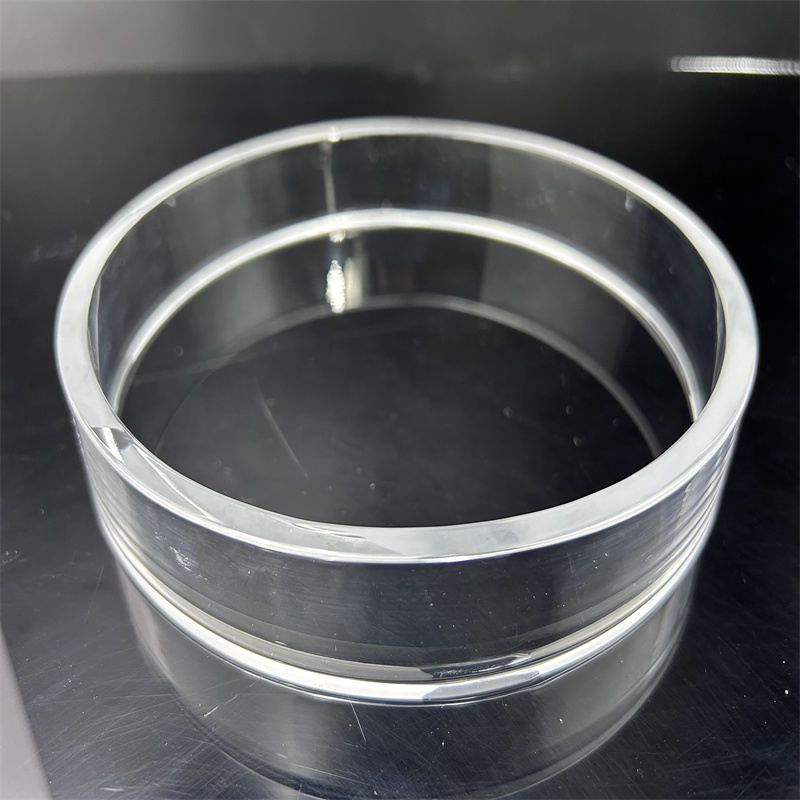
High-Purity Semiconductor Fused Quartz Bell Jar
- Application: CVD, PVD, Plasma Etch
- Thermal Rating: 1100°C Cont. / 1300°C Peak
- Corrosion Resistant & Custom Sizing
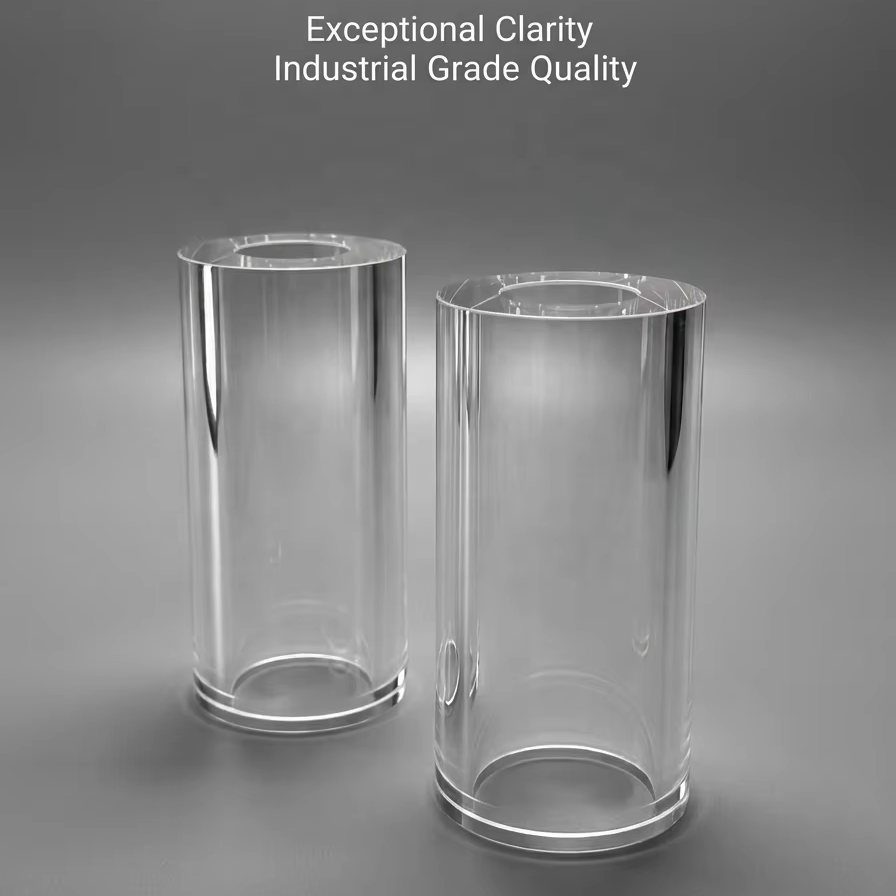
Custom Polished Quartz Twin Tube with Bending
- Bending, Moulding & Flame Welding
- Both Ends Optically Flame-Polished
- Dual Channel IR & Sensor Enclosures
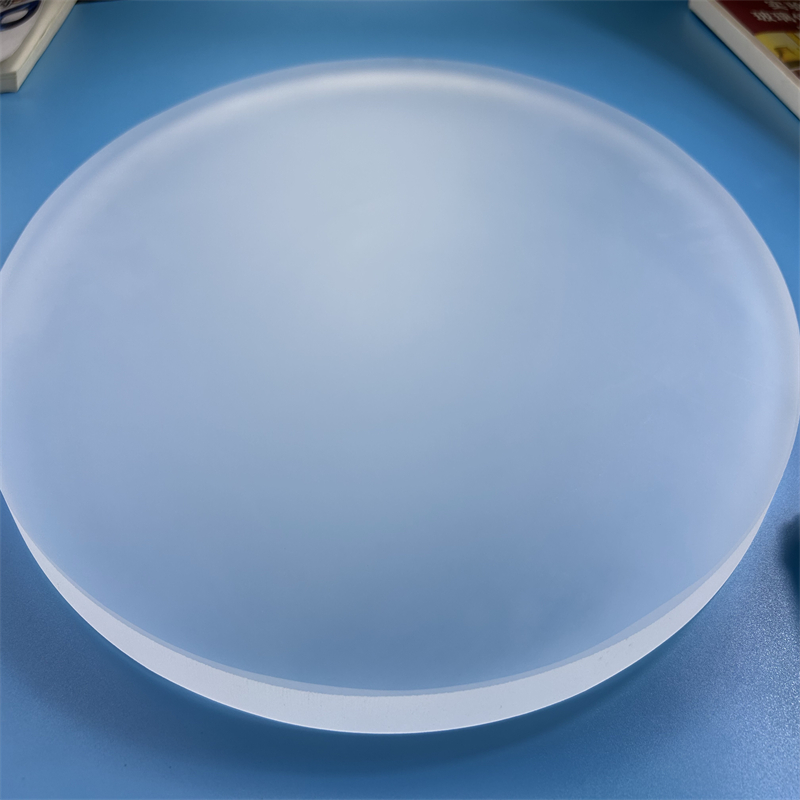
High-Temp Frosted Quartz Disc & Base Plate
- Surface: Fine Sandblasted / Frosted
- Uniform Heat & Diffuse Light Scattering
- CNC Micro-Grooving & Laser Notching
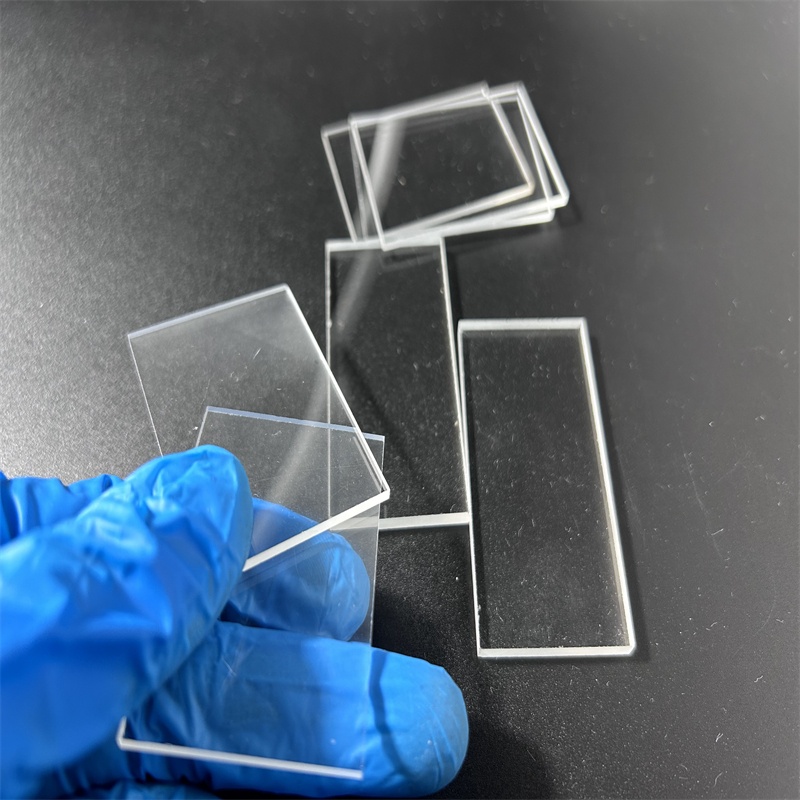
Optical Grade Fused Quartz Transparent Sheet
- Transmittance: > 92% across UV-VIS-NIR
- Surface Flatness: λ/4 to λ/10 per inch
- Double-Sided Precision Chemical Polish
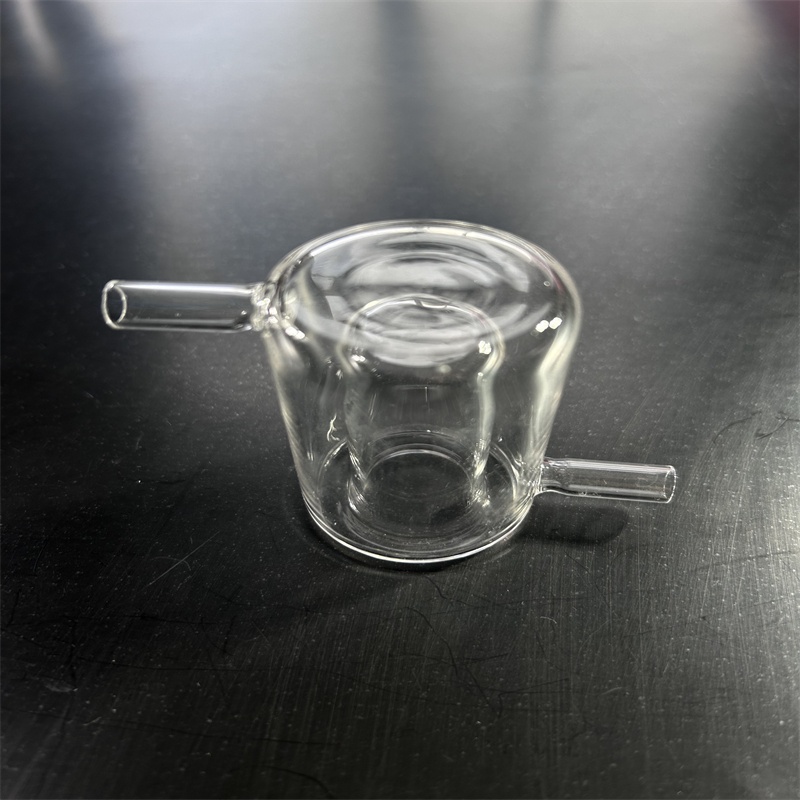
Ozone-Free Laboratory Quartz Glass Reactor Tube
- Selective 254nm Transmission (Blocks 185nm)
- High Chemical Stability in Acid Vapors
- Flanged End Fitting & Stopcock Welds
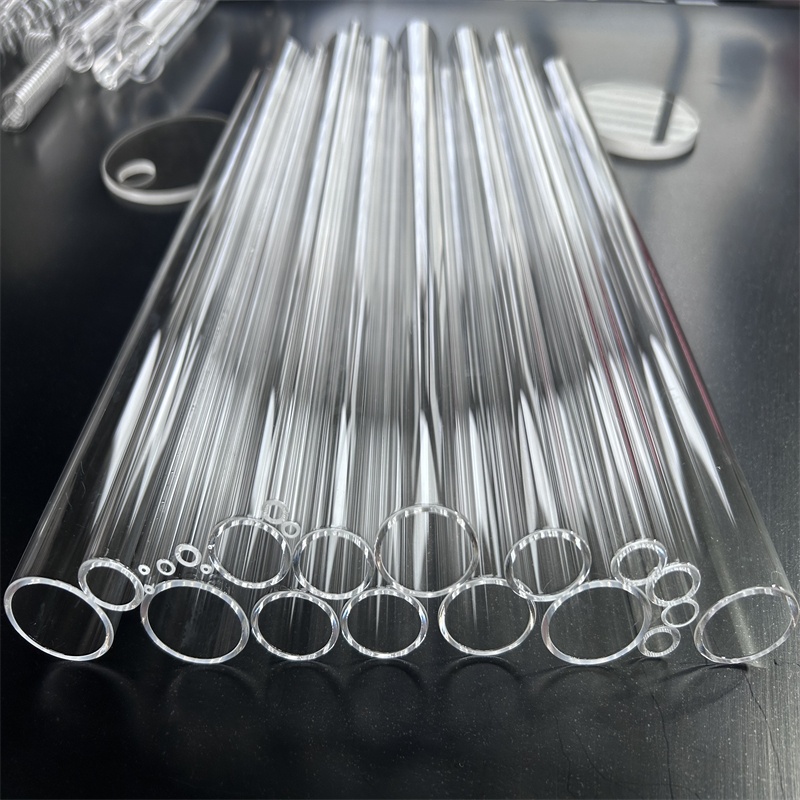
High-Heat Resistant Pure Quartz Twin Conduit
- CTE: 5.5 × 10⁻⁷ /K (Resists 1100°C Quench)
- Zero-Bubble Fusion at Longitudinal Joint
- Industrial Furnace Heating Element Core
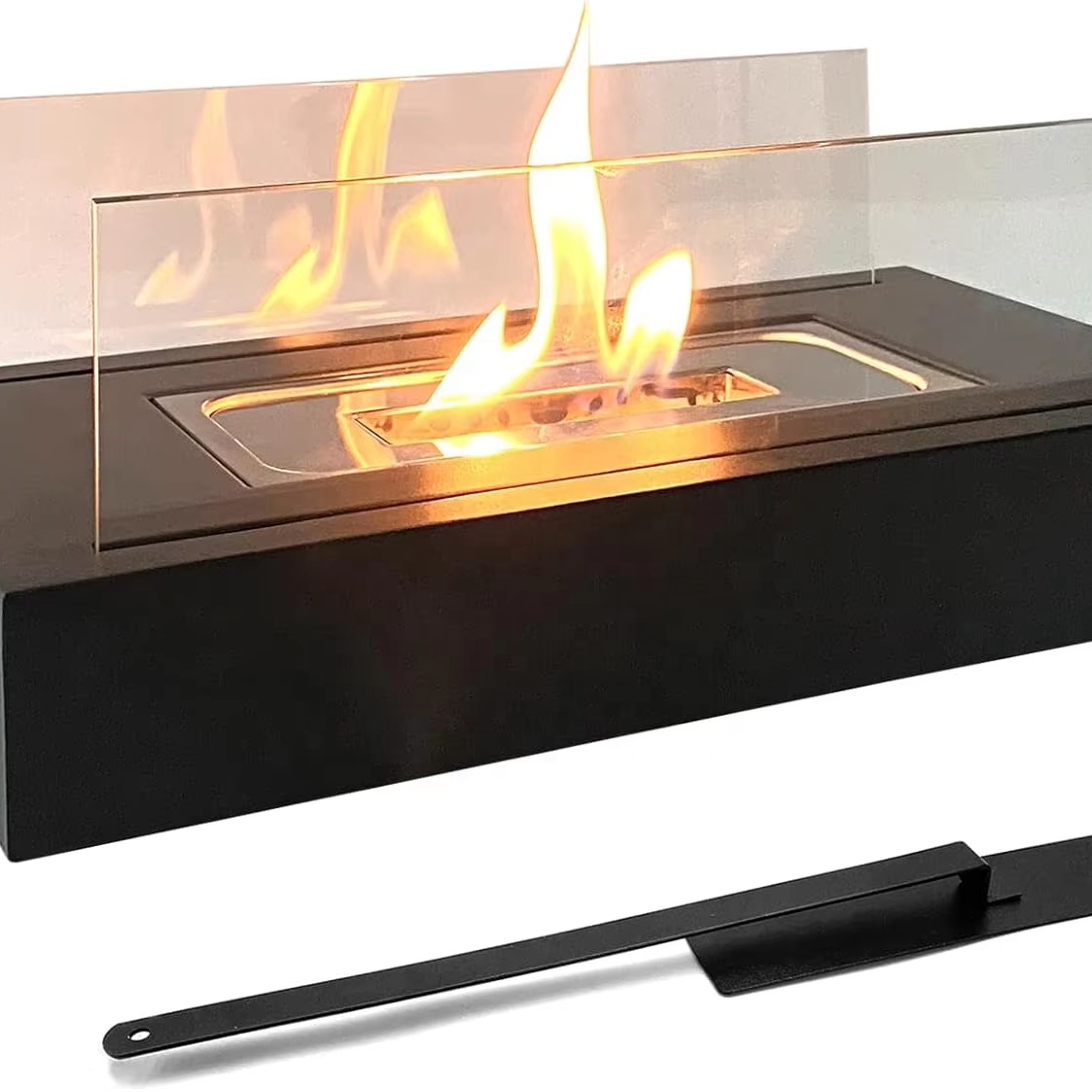
Portable High-Temp Optical Grade Quartz Shield
- Impact & Extreme Temperature Cycling
- Ultra-Clear Spectroscopic View Window
- Chamfered Edge with Anti-Crack Polish
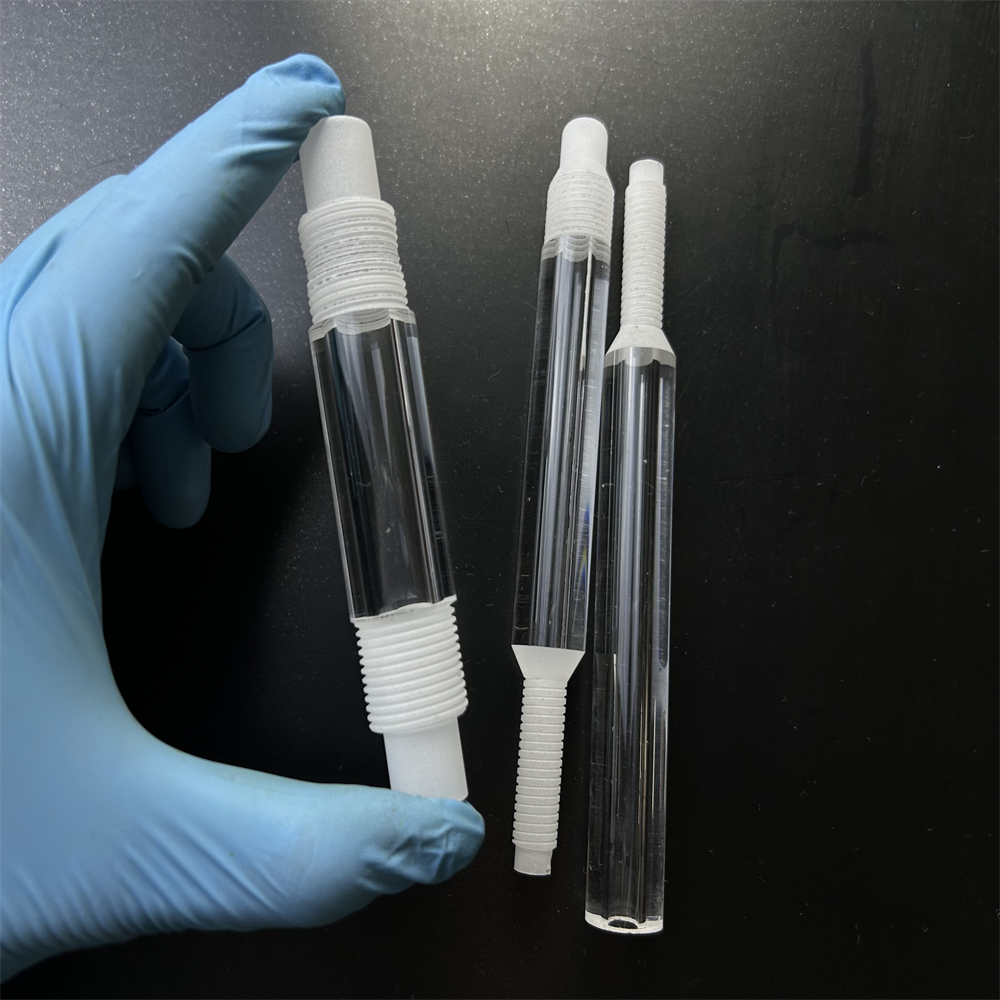
Precision Threaded UV Transparent Quartz Tube
- CNC Machined Quartz Male/Female Threads
- Deep UV (DUV) High Transmission Core
- High-Pressure Vacuum Hermetic Sealing
Fused Quartz Engineering in the Rome & Lazio Metropolitan Ecosystem
Bridging raw silica crystal refinement with the mission-critical specifications of Lazio’s aerospace clusters, photonics hubs, and fundamental physics laboratories.
The Metropolitan City of Rome and the wider Lazio region represent one of Southern Europe’s most densely concentrated environments for advanced applied physics, aerospace optronics, and high-frequency telecommunications. Unlike heavy manufacturing basins in Northern Italy, the Rome market is characterized by scientific research excellence and specialized technology integrators. Facilities situated within the Tiburtina Silicon Valley corridor, the aerospace defense hub in Colleferro, and renowned research facilities including the National Institute for Nuclear Physics (INFN - Laboratori Nazionali di Frascati), the National Research Council (CNR - ISM & IFN), and the ENEA Casaccia Research Centre demand ultra-customized quartz ware engineered to exacting thermal, optical, and mechanical tolerances.
In high-vacuum thermal deposition, laser-driven plasma spectroscopy, and cryogenic beamline isolation, standard commercial borosilicate glass is thoroughly inadequate. Standard glassware suffers thermal softening above 500°C, high thermal expansion coefficients ($3.3 \times 10^{-6}\text{/K}$), and high concentrations of alkali ion impurities (such as Sodium, Potassium, and Lithium) that cause catastrophic contamination during epitaxial silicon growth or chemical vapor transport reactions. Lianyungang Zelvo Quartz Products Co., Ltd. addresses this industrial demand by deploying synthetic and naturally purified crystalline fused quartz ($\text{SiO}_2 \ge 99.99\%$). We manufacture components with an exceptionally low thermal expansion coefficient of $5.5 \times 10^{-7}\text{/K}$, allowing components to withstand instantaneous thermal downshocks from 1100°C directly into ice water without structural micro-fracturing.
Critical localized requirements in the Lazio procurement theater:
Rome-area engineering procurement teams continuously emphasize three non-negotiable vectors when sourcing quartz glass fabricated parts from dedicated overseas manufacturers:
Particle Physics & Synchrotron Windows
High-energy beamline sample cells, ultra-high vacuum (UHV) viewports, and slotted XRD quartz slide substrates deployed across Frascati (INFN) and Tor Vergata physics facilities. Total lack of solarization under continuous intense UV/gamma irradiation is mandatory.
Aerospace Optronics & Laser Windows
Custom fused silica prisms, beam splitters, and protective pyrometry sight glasses engineered for Colleferro propulsion diagnostics and aerospace payload assemblies. Requires wavefront distortion < λ/4 and surface roughness Ra < 0.5 nm.
Semiconductor CVD & High-Purity Heating
Large-bore horizontal reactor tubes, twin-bore infrared conduit sheaths, and slotted wafer carriers designed for epitaxial furnaces in the Tiburtina industrial valley. Dehydroxylated grades (< 5 ppm OH⁻) prevent process blistering and tube sagging under 1150°C continuous operation.
Material Science Matrix: Zelvo Fused Quartz Benchmark Values
Rigorous mechanical, optical, chemical, and thermodynamic metrics certified by third-party spectrometry.
| Physical / Chemical Property | JGS1 (Synthetic Silica) | JGS2 (Optical Fused Quartz) | JGS3 (Infrared Fused Quartz) | Analytical Method / Standard |
|---|---|---|---|---|
| $\text{SiO}_2$ Purity Content | ≥ 99.999% | ≥ 99.99% | ≥ 99.98% | GDMS / ICP-OES Analysis |
| Spectral Transmission Range | 185 nm – 2500 nm (Deep UV) | 220 nm – 2500 nm (UV-VIS) | 260 nm – 3500 nm (Near-to-Far IR) | UV-VIS-NIR Spectrophotometry |
| Hydroxyl ($\text{OH}^-$) Content | Typ. < 1200 ppm (or < 5 ppm dry) | Typ. 30 – 150 ppm | ≤ 5 ppm (Water-free IR grade) | FTIR Infrared Absorption |
| Coefficient of Thermal Expansion (CTE) | $5.4 \times 10^{-7}\text{ /K}$ ($20\text{--}320^\circ\text{C}$) | $5.5 \times 10^{-7}\text{ /K}$ | $5.5 \times 10^{-7}\text{ /K}$ | Dilatometric Interferometry |
| Continuous Operating Temp | 1100 °C | 1100 °C | 1150 °C | Isothermal Long-Term Anneal |
| Peak Instantaneous Operating Temp | 1300 °C | 1300 °C | 1350 °C | Short-term Flash Exposure |
| Softening Point / Annealing Point | 1683 °C / 1215 °C | 1680 °C / 1210 °C | 1685 °C / 1220 °C | ASTM C338 / Beam Bending |
| Compressive Strength / Tensile Strength | > 1100 MPa / 48 MPa | > 1100 MPa / 48 MPa | > 1100 MPa / 48 MPa | Hydrostatic & Mechanical Load Rig |
| Refractive Index ($n_d$ at 589.3 nm) | 1.4585 | 1.4584 | 1.4585 | Abbe Refractometer at 20°C |
| Chemical Acid Resistance | Unaffected (Except $\text{HF}$ & hot $\text{H}_3\text{PO}_4$) | Unaffected (Except $\text{HF}$ & hot $\text{H}_3\text{PO}_4$) | Unaffected (Except $\text{HF}$ & hot $\text{H}_3\text{PO}_4$) | ISO 1776 Acid Resistance Assay |
Trace Element Purity Control: In semiconductor epitaxy and nuclear beamline physics, parts-per-million (ppm) metallic inclusions lead to lattice dislocation and sensor drift. Zelvo strictly controls raw natural crystal pegmatite feedstocks. Typical trace metallic limits across our standard high-purity stock: $\text{Al} < 14.0\text{ ppm}$, $\text{Fe} < 0.8\text{ ppm}$, $\text{Ti} < 1.0\text{ ppm}$, $\text{Ca} < 0.6\text{ ppm}$, $\text{Mg} < 0.4\text{ ppm}$, $\text{Na} < 1.0\text{ ppm}$, and $\text{K} < 0.8\text{ ppm}$. Total transition metal contamination remains below 2.5 ppm, satisfying class-10 cleanroom processing environments.
Rome’s Industrial Quartz Market: Driving Forces Under PNRR & EU Chips Act
Capitalizing on Italy’s National Recovery and Resilience Plan to modernize regional optoelectronic, quantum, and aerospace supply lines.
The procurement velocity for customized fused quartz in Central Italy is experiencing unprecedented acceleration, spurred directly by Italy's National Recovery and Resilience Plan (PNRR - Piano Nazionale di Ripresa e Resilienza) and the European Chips Act. Major capital allocations are funneling into university research infrastructures, regional quantum photonics labs, and green energy technology demonstrators across Lazio.
Three distinct structural procurement transitions are redefining supplier selection for Rome-based purchasing engineers:
1. Shift Toward Rapid Drawing-to-Part Prototyping (Low MOQ Agility): Traditional European quartz fabricators typically impose multi-thousand-euro minimum order fees and lead times exceeding 12 to 16 weeks for custom prototypes. Research institutes such as Sapienza Università di Roma and advanced sensor startups require iterative prototyping cycles. Zelvo solves this bottleneck by providing a 1-piece MOQ for drawing-based custom fabrications, offering 72-hour fast-track prototyping with full dimensional CMM inspection reports before production run commitment.
2. Transition to Synthetic Fused Silica (JGS1) for Deep-UV Curing and Quantum Optics: As Italian optoelectronic manufacturers migrate toward lithographic UV exposure systems and laser micro-machining, standard natural quartz exhibits light-induced degradation and optical absorption bands around 248 nm and 193 nm. Zelvo delivers synthetic fused silica with deep-UV optical transmission exceeding 90% at 193 nm, zero internal inclusions, and bubble class 0 (per DIN 58927 standards), essential for precision quantum optical benches.
3. Decoupling from European Intermediary Markups: With procurement inflation impacting research budgets, public universities and defense contractors are migrating away from multi-tier European catalog resellers. Sourcing direct from Zelvo's Donghai manufacturing facility lowers procurement costs by 35% to 50% while preserving engineering dialogue directly between customer CAD designers and our master quartz glassblowers.
Why Central Italy Engineers Rely on Zelvo Quartz
Headquartered in Donghai County — the world's crystal raw material hub — Zelvo combines century-old thermal glassblowing mastery with modern computer-numerical CNC machining.
5-Axis CNC & Laser Micro-Drilling
Ultrasonic diamond milling and laser drilling capable of producing holes down to ∅0.2 mm with zero micro-cracking and positional tolerances within ±0.02 mm.
Flame Working & Annealing Relieving
Over 10 years of artisan glassworking mastery in bending, manifold welding, and hydrogen-oxygen flame polishing, followed by 1150°C optical de-stress annealing.
Double-Sided Optical Polishing
Double-disk planetary lapping and chemical mechanical polishing (CMP) yielding scratch-dig ratings of 20/10, surface roughness Ra < 0.2 nm, and parallelism < 30 arcsec.
Shock-Proof Secure Transit to Lazio
Custom-cut polyfoam molds, vacuum-sealed PE moisture bags, and ISPM-15 certified export wooden crates ensuring zero transit damage directly to Rome addresses.
Frequently Asked Questions by Rome & Italian Buyers
Direct technical and operational answers to address common queries raised by Italian technical purchasers, university departments, and import managers.
How does Zelvo handle customs clearance and import duties into Italy?
Can you manufacture customized parts from our 2D/3D engineering drawings?
What is your minimum order quantity (MOQ) for custom prototypes?
How do you safeguard fragile, high-precision quartz during transit to Rome?
What documentation and quality certifications accompany each shipment?
What thermal shock limits must our process engineers observe?
Accelerate Your Quartz Prototyping for the Rome Market
Send your dimensional drawings, required material grade (JGS1/JGS2/JGS3), and operational temperatures to our technical team. Receive a manufacturing feasibility review and pricing quotation within 2 hours.