Featured Industrial & Scientific Quartz Components
Custom drawing-based fabrication with an ultra-strict 1-piece MOQ for scientific R&D trials at national laser platforms, industrial metallurgy, and electronics assembly in Romania.
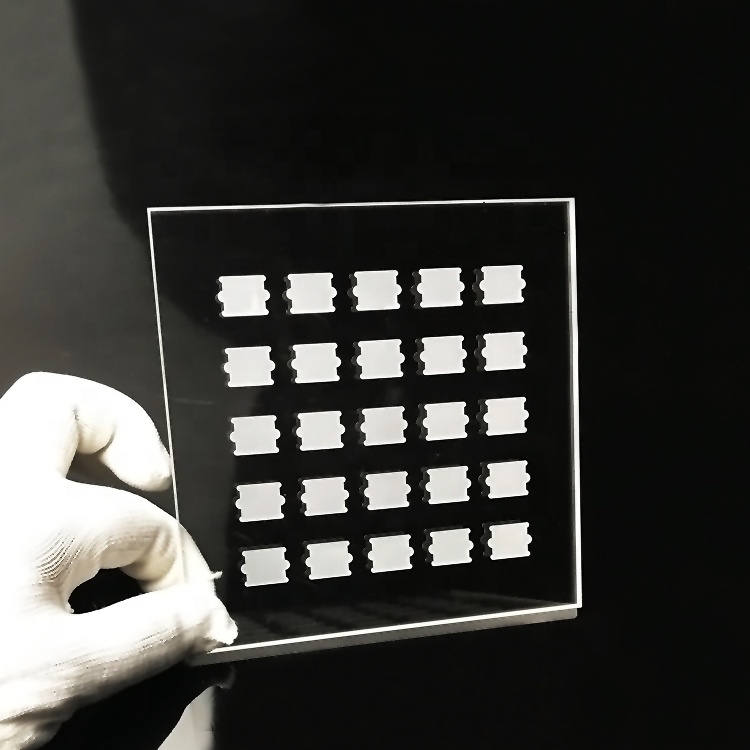
Custom Fused Quartz XRD Sample Holder
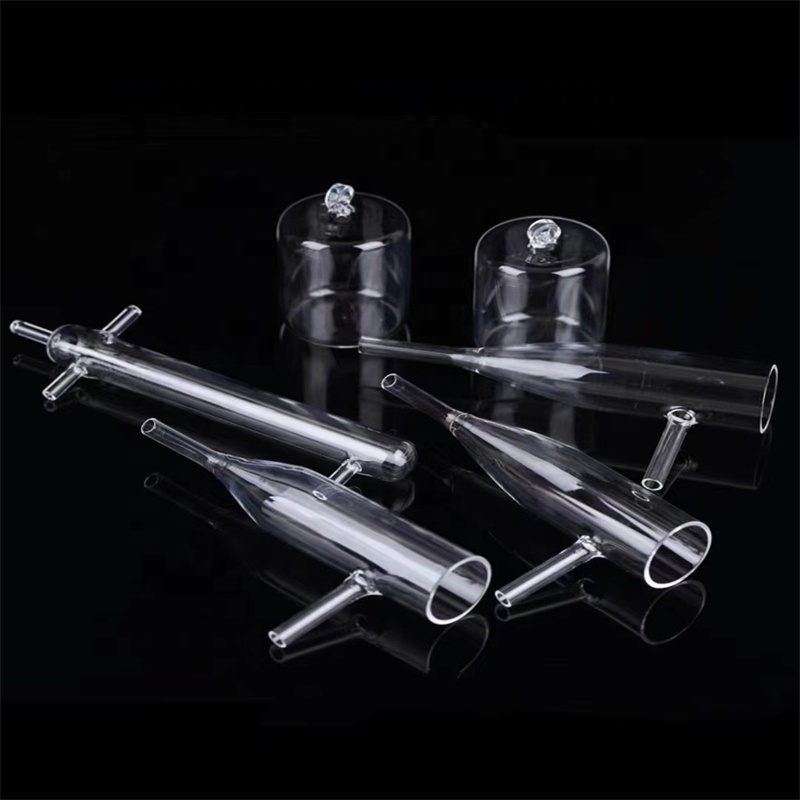
High-Temperature Twin Quartz Tube
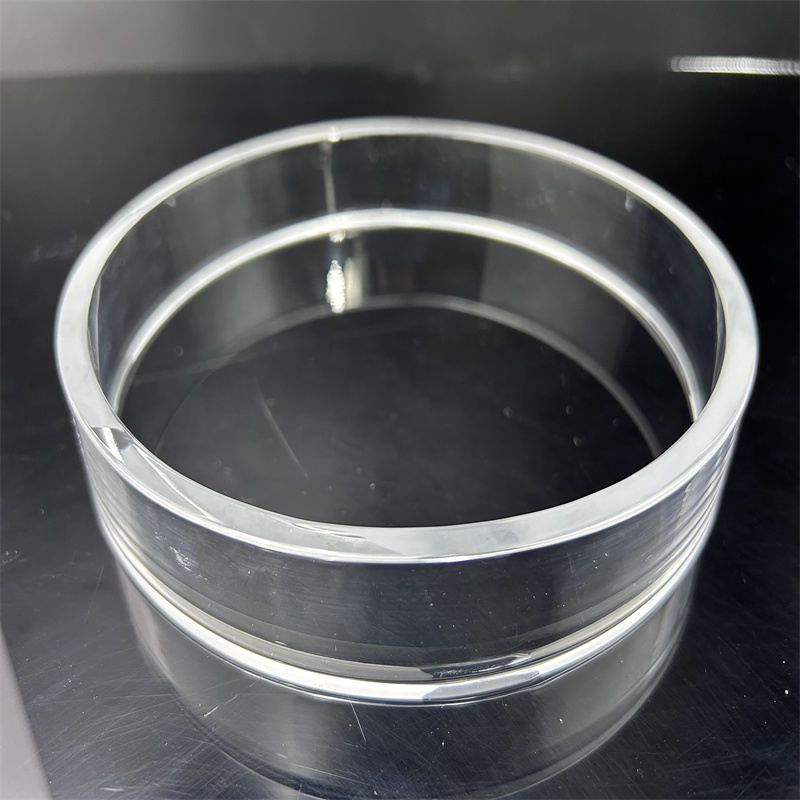
Corrosion-Resistant Quartz Bell Jar
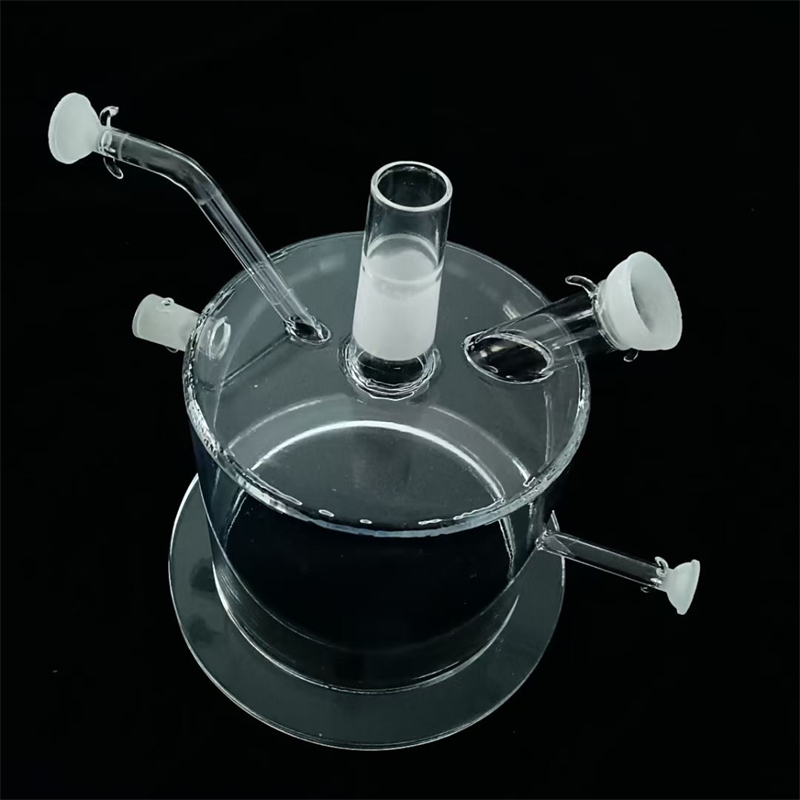
High-Pressure Clear Quartz Tube
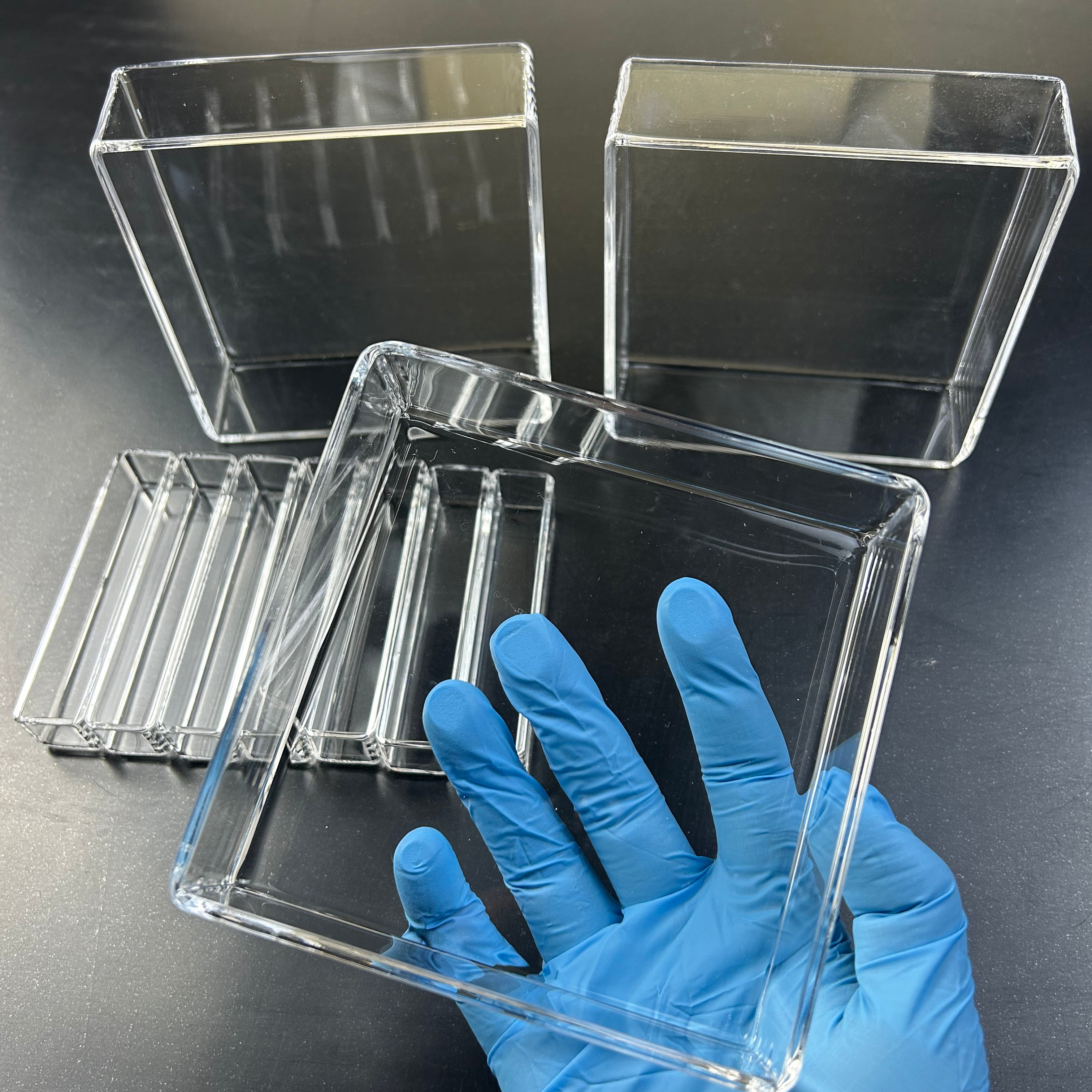
Fused Quartz Crucible & Tank
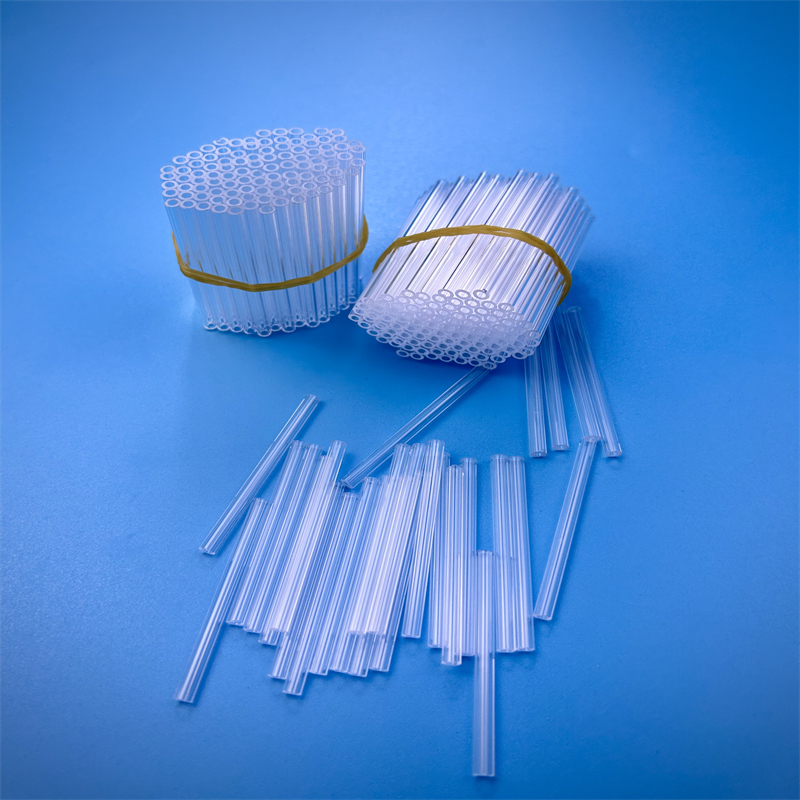
U-Bent Fused Quartz Glass Tube
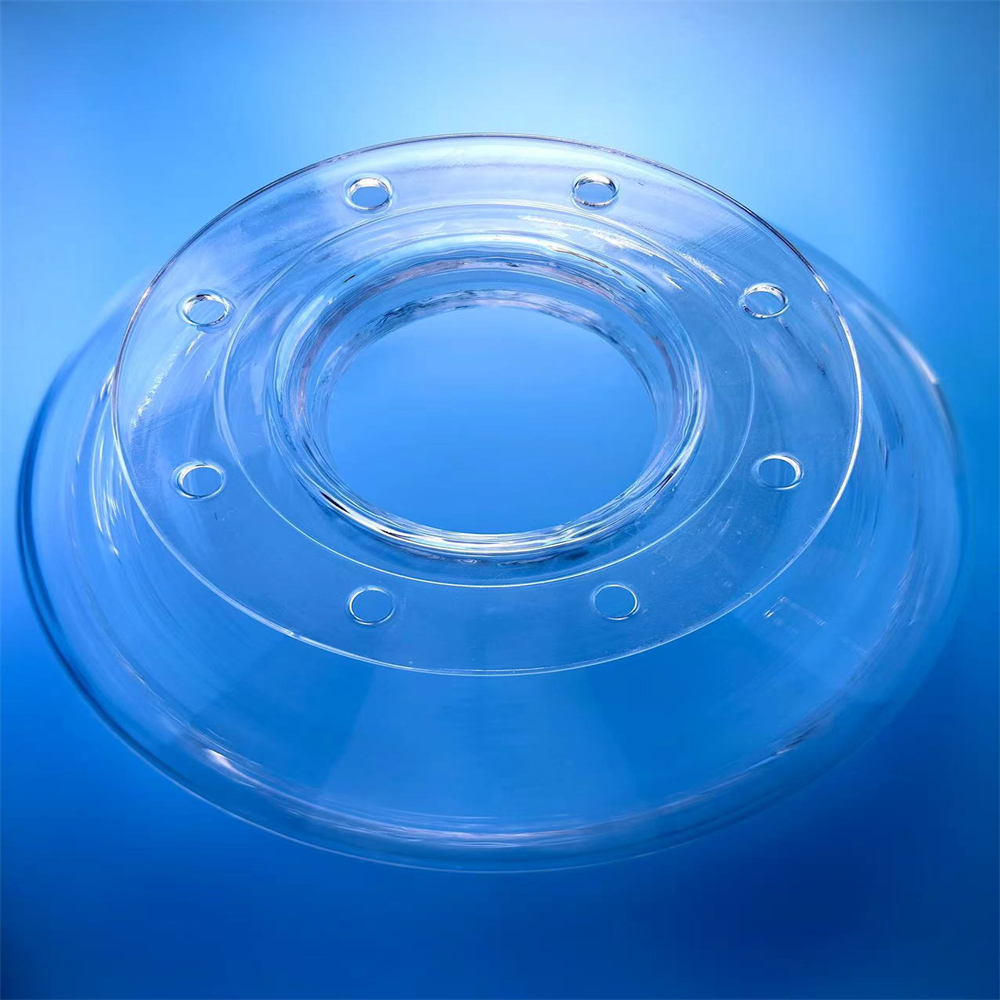
Flanged Twin-Bore Quartz Tube
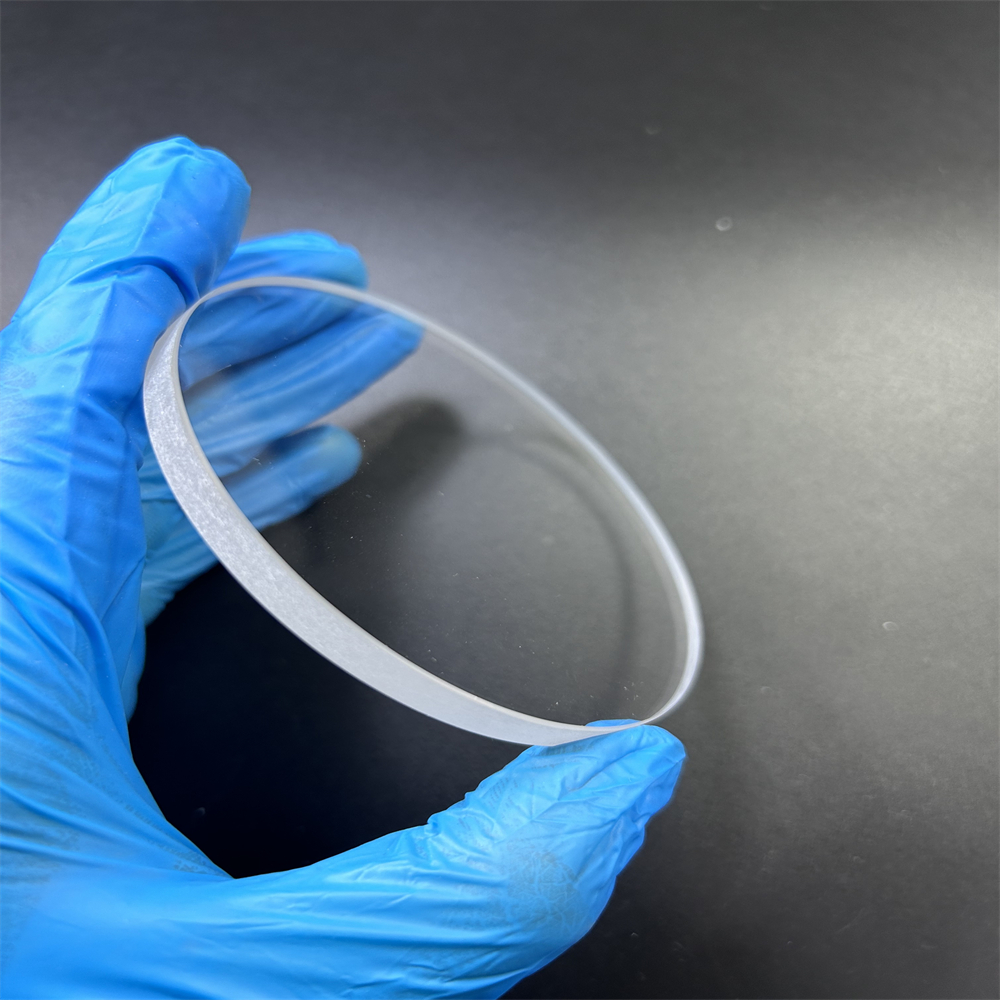
Fused Silica Quartz Wafer Substrate
High-Purity Fused Silica & Quartz Substrate Fundamentals
Engineered to withstand the demanding mechanical, thermal, and optical stresses encountered in Romanian high-power laser physics, chemical metallurgy, and cleanroom semiconductor manufacturing.
In high-precision industrial and experimental disciplines, standard borosilicate or soda-lime glass fails due to elevated thermal expansion, structural breakdown at temperatures beyond 500°C, and severe optical absorption in the ultraviolet and infrared spectrums. Fused quartz substrates fabricated by Lianyungang Zelvo Quartz Products Co., Ltd. are produced from naturally occurring high-purity crystalline quartz sand in Donghai County—China's world-renowned quartz capital—as well as synthetic silicon precursors ($\text{SiCl}_4$) for optical-grade fused silica (JGS1, JGS2, and JGS3 classifications).
The amorphous silicon dioxide ($\text{SiO}_2$) matrix provides an exceptionally rigid three-dimensional tetrahedral lattice. This network exhibits a virtually negligible coefficient of thermal expansion ($5.5 \times 10^{-7}/\text{K}$ between 20°C and 320°C), granting our quartz substrates unprecedented thermal shock resistance. A red-hot quartz plate heated to 1100°C can be plunged directly into cold water without micro-fracturing or catastrophic failure—a mandatory safety prerequisite for extreme CVD reactors and high-density beamline targets in Romanian laboratories.
| Physical / Thermal Property | Standard Value (Fused Quartz) | Optical Fused Silica (Synthetic) |
|---|---|---|
| Chemical Purity ($\text{SiO}_2$) | ≥ 99.99% | ≥ 99.999% |
| Density | $2.20\text{ g/cm}^3$ | $2.201\text{ g/cm}^3$ |
| Continuous Working Temp | ≈ 1100 °C | ≈ 1150 °C |
| Short-Term Peak Temp | ≈ 1300 °C | ≈ 1350 °C |
| Annealing Point | 1215 °C | 1140 °C |
| Softening Point | 1683 °C | 1730 °C |
| Thermal Expansion ($20\text{–}320^\circ\text{C}$) | $5.5 \times 10^{-7}\text{ /K}$ | $5.2 \times 10^{-7}\text{ /K}$ |
| Surface Roughness ($Ra$) | $\le 1.0\text{ nm}$ | < 0.5 nm (Super-Polished) |
| UV Cutoff Wavelength | ≈ 260 nm | ≈ 185 nm (Deep UV Transmissive) |
Custom Machining Tolerances
Every substrate order destined for Romanian importers includes material origin certificates, precise ultrasonic dimension inspection records, and bubble/inclusion verification logs according to ISO 10110.
Localized Quartz Substrate Applications Across Romania
Tailored solutions matching the research priorities and industrial growth corridors of Romania’s key academic centers and manufacturing regions.
High-Power Laser Facilities (ELI-NP Măgurele)
Romania hosts the world's most powerful laser platform at the Extreme Light Infrastructure - Nuclear Physics (ELI-NP) in Măgurele. Fused silica substrates serve as critical low-absorption debris shields, laser diagnostics windows, beam-steering optics, and target holders requiring high Laser-Induced Damage Thresholds (LIDT) across petawatt-scale optical beamlines.
Automotive Electronics Clusters (Timișoara & Arad)
Western Romania's automotive Tier-1 manufacturing plants utilize precision quartz plates for automated optical inspection (AOI) stages, UV-curing windows for automotive camera sensors, and micro-electromechanical (MEMS) test benches. High dielectric strength ($25\text{–}40\text{ kV/mm}$) ensures uncompromised electrical isolation in harsh test rigs.
Biomedical Nanotechnology (Cluj-Napoca Cluster)
Transylvania’s prominent biotechnology and physics institutes (Babeș-Bolyai University, INCDTIM) demand synthetic fused silica slides for laser-induced fluorescence, capillary electrophoresis, and deep-UV microfluidics. Our zero-autofluorescence substrate grades maximize signal-to-noise ratios in molecular spectroscopy.
Industrial Metallurgy & Heat Treatment (Pitești & Craiova)
Serving the southern automotive and industrial manufacturing corridor, thick-wall quartz tubes, flanged diffusion cylinders, and fused quartz crucibles enable vacuum annealing, carbon-nitrogen atmosphere heat treatments, and pyrometric sight glass viewing up to 1250°C without chemical devitrification.
X-Ray Diffraction & Crystallography (Iași Universities)
Gheorghe Asachi Technical University and regional analytical testing centers rely on our circular zero-background quartz XRD sample holders. Cut to exact well dimensions and polished with non-crystalline surface states, they eliminate baseline halo interference during thin-film and organic compound diffraction studies.
Solar Photovoltaic & Green Energy (Constanța Corridor)
With the acceleration of Romania’s National Recovery and Resilience Plan (PNRR) driving domestic solar cell capacity, our factory supplies high-capacity quartz boats, twin-bore process tubes, and ozone-free quartz tubes for PECVD silicon nitride passivation and solar wafer diffusion furnaces.
Romania’s Emerging Trends in Advanced Materials Procurement
How evolving European Union technology directives, nearshoring, and domestic industrial modernization are transforming quartz glass consumption in Romania.
Integration into the European Chips & Photonics Roadmap
Under the EU Chips Act and Horizon Europe funding streams, Romania is actively expanding its microelectronics competence centers. The transition toward domestic semiconductor pilot packaging and integrated photonic circuit (PIC) fabrication requires higher substrate surface purities, with heavy metals limited to under 15 ppm and surface flatness controlled below $\lambda/10$.
Direct-from-Source Procurement Over Distributor Markups
Romanian university labs and OEM production managers previously purchased through intermediary Western European trade warehouses, experiencing 200–300% markups and 12-week lead times. The modern procurement pattern favors direct manufacturing partnerships with verified Donghai fabricators, unlocking custom geometries from a single prototype piece with air-express delivery in 5–8 days.
Demand for High-Pressure & Extreme Temperature Integrity
Automotive sensor testing and hydrogen fuel research at universities in Brașov and Craiova require quartz tubes capable of maintaining structural stability under 5 to 20 bars of vacuum or positive pressure. This has catalyzed demand for reinforced twin-bore and heavy-wall (wall thickness $4.0\text{–}10.0\text{ mm}$) flame-polished quartz reactor assemblies.
Why Romanian Engineers & Importers Partner With Zelvo Quartz
Direct-from-source manufacturing excellence backed by world-class machinery, stringent quality assurance, and end-to-end logistics guarantees.
Donghai Crystal Cluster
Located in the heart of China's quartz capital, guaranteeing immediate access to raw crystalline silica, optimal energy supply, and competitive direct factory pricing.
≤2h Engineering Response
100% response rate with immediate technical feasibility assessment for CAD/STEP drawings, tolerance calculations, and commercial quotes.
10+ Years Master Crafting
Our veteran glassblowers and CNC machinists execute precision laser cutting, micro-grooving, optical edge beveling, and clean vacuum flanging.
Safe Romanian Delivery
Multi-layered shock-absorbing packaging and reinforced export crates delivered door-to-door to Bucharest, Cluj, Timișoara, or via Port of Constanța.
Frequently Asked Questions by Romanian Buyers
Comprehensive commercial, technical, and customs guidance for procurement managers, researchers, and engineers importing quartz glass into Romania.
- JGS1 (Synthetic Fused Silica): Produced by gas-phase synthesis ($\text{SiCl}_4$). Contains practically zero bubble inclusions and extremely high UV transmission from $185\text{ nm}$ to $2500\text{ nm}$. It features a high $\text{OH}^-$ content ($150\text{–}1200\text{ ppm}$) which creates strong absorption dips in the infrared at $2.73\text{ }\mu\text{m}$, making it ideal for deep-UV lithography, excimer laser windows, and fluorescence spectroscopy.
- JGS2 (Optical Grade Fused Quartz): Smelted from natural high-purity quartz crystal sand in an electric vacuum furnace. Excellent transmission across the visible and near-infrared range ($220\text{–}2500\text{ nm}$) with $\text{OH}^-$ around $30\text{–}150\text{ ppm}$. Standard choice for optical inspection windows, sight glasses, and semiconductor diffusion carriers.
- JGS3 (Infrared Fused Silica / Low-OH Quartz): Refined in a vacuum fusion environment to drive $\text{OH}^-$ content below $5\text{ ppm}$. Provides exceptionally broad infrared transmission from $260\text{ nm}$ up to $3500\text{ nm}$ without the $2.73\text{ }\mu\text{m}$ water absorption band, widely utilized in IR sensors, pyrometry, and thermal imaging systems.
Request a Precision Quartz Engineering Review for Romania
Upload your CAD/STEP files, tolerance requirements, or research specifications. Our senior quartz processing engineers will review thermal feasibility, optical requirements, and provide a direct factory quotation within 2 hours.