High-Purity Quartz Tubes & Thermal Reactor Components
Manufactured from premium raw quartz crystals (≥99.99% SiO₂) tailored for high-temperature semiconductor furnaces, laboratory reactors, and industrial vacuum environments.

Thermodynamic Integrity & Structural Dynamics of Quartz Furnace Tubes
An authoritative engineering breakdown of silica allotropes, hydroxyl radical management, thermal sag mitigation, and contamination control in sub-micron semiconductor and PV diffusion processes.
1. Purity Thresholds & Cristobalite Phase Transitions
The operational lifespan of a quartz furnace tube operating between 1000°C and 1250°C is fundamentally dictated by its alkali impurity profile (Na, K, Li). In high-temperature atmospheres, alkali cations act as catalytic nucleation centers that trigger devitrification—the destructive phase transformation of amorphous vitreous silica into crystalline α-cristobalite.
Because crystalline cristobalite undergoes an abrupt volumetric inversion (approx. 2.8% to 5.0% volume contraction) during thermal cycling through the 200°C–275°C window, micro-fracturing and structural spalling inevitably occur. We engineer our furnace tubes using certified Donghai natural quartz rock refined to ≥99.99% SiO₂, maintaining total alkali metal content strictly under 1.5 ppm, effectively delaying nucleation and extending thermal cycle life by up to 300%.
2. OH Radical Chemistry & High-Temperature Sag Resistance
Viscosity is the defining mechanical property governing tube deflection (sagging) under continuous wafer payload at elevated temperatures. Hydroxyl ions (OH⁻) structurally terminate the three-dimensional silicon-oxygen tetrahedral networks (-Si-O-Si-), lowering the annealing point and softening point of the glass matrix.
Tubes manufactured via conventional continuous flame fusion typically retain high hydroxyl concentrations (150–200 ppm OH), resulting in noticeable ovalization and sagging when subjected to long diffusion cycles above 1100°C. Zelvo Quartz implements proprietary secondary electrical vacuum baking and dehydroxylation processes, depressing hydroxyl content below 10 ppm (and sub-2 ppm on request), achieving a softening point of 1683°C and an annealing point of 1215°C for maximum resistance to gravitational distortion.
3. Ultra-Low Thermal Expansion & Thermal Shock Resistance
Fused silica features an exceptionally low coefficient of thermal expansion (CTE) of 5.5 × 10⁻⁷ /K between 20°C and 320°C—roughly one-twenty-fifth that of standard borosilicate glass. This gives the tube astonishing resistance to thermal shock, allowing furnace tubes to withstand immediate furnace loading and unloading cycles without micro-cracking.
Whether employed in horizontal thermal diffusion lines or vertical rapid thermal processing (RTP) chambers, our tubes exhibit uniform thermal conductivity (1.4 W/m·K at 20°C to 2.7 W/m·K at 1000°C), eliminating localized hot spots, preventing process gas pre-reaction gradients, and safeguarding wafer sheet resistance uniformity across wafer boats.
| Material Classification | SiO₂ Purity (%) | Hydroxyl [OH] (ppm) | Continuous Max Temp | Softening Point | Typical Industrial Deployment |
|---|---|---|---|---|---|
| Standard Electric Fused Quartz | ≥ 99.99% | < 30 ppm | 1100 °C | 1665 °C | Photovoltaic Diffusion, Chemical Tube Furnaces |
| Dehydroxylated Semi-Grade Fused Quartz | ≥ 99.995% | < 5 ppm | 1180 °C | 1683 °C | LPCVD, Wet/Dry Oxidation, 200mm/300mm Wafer Fab |
| Synthetic Fused Silica (Chemical Vapor) | ≥ 99.9999% | < 1 ppm (Low-OH) | 1220 °C | 1730 °C | Sub-7nm Wafer Processing, Deep UV Optical Windows |
| Continuous Oxy-Hydrogen Fused Quartz | ≥ 99.95% | 120 – 180 ppm | 1050 °C | 1630 °C | General Laboratory Ware, Heater Sheaths, Sight Glasses |
Future Procurement Trends in Quartz Furnace Tubes (2025–2030)
How the evolution of advanced node semiconductors, TOPCon/HJT solar architectures, and supply chain realignments are redefining technical procurement criteria worldwide.
Transition to Large-Diameter 300mm (12-Inch) Processing
Global semiconductor fab expansions have accelerated the obsolescence of legacy 150mm/200mm tube form factors. Modern horizontal and vertical batch furnaces require outer diameters exceeding 350mm to 450mm with lengths up to 2500mm. Sourcing challenges center on maintaining wall thickness uniformity (±0.2mm tolerance) and total indicator reading (TIR) run-out under 1.5mm to avoid automated wafer-loader collisions.
Aggressive Gas Chemistries & Thermal Etch Resilience
With atomic layer deposition (ALD) and plasma-enhanced CVD becoming mainstream, furnace tubes are frequently exposed to corrosive fluorine- and chlorine-based cleaning cycles (NF₃, ClF₃). Procurement teams are migrating away from standard continuous drawn tubes toward fire-polished, micro-crack-free inner surfaces that retard gas penetration, particle peeling, and localized wall thinning.
Photovoltaic Cell Shifts: TOPCon & Perovskite Tandem
The photovoltaic industry's rapid retirement of PERC cells in favor of n-type TOPCon (Tunnel Oxide Passivated Contact) requires rigorous high-temperature POCl₃ diffusion and LPCVD poly-Si deposition. Thermal tubes must withstand non-stop boron and phosphorus atmospheres at 1200°C without transferring metallic impurities into the silicon matrix, demanding verified sub-0.1 ppm Fe and Cu material certifications.
Direct-from-Source Clustering (The Donghai Advantage)
Tier-1 equipment OEMs and global semiconductor fabs are optimizing supply chains by bypassing Western trading intermediaries. Sourcing directly from certified manufacturers in Donghai County—the epicenter of China's quartz refining—delivers a 30% to 50% cost advantage, rapid sample turnaround (under 7 days), and completely customized CNC laser grooving and flange welding.
Engineered Precision from China’s Crystal Capital
Combining Donghai's world-leading raw quartz supply cluster with German-calibrated glass blowing, CNC cold machining, and strict cleanroom packaging protocols.
Onsite-Verified Manufacturing Facility
Situated on No. 99 Huanghe Road in Donghai, Jiangsu. Fully audited premises with legal verification, hosting modern hot-working flame lathe lines, diamond-tool grinding workshops, and laser drilling centers under one roof.
Senior Master Glassblowers & Engineers
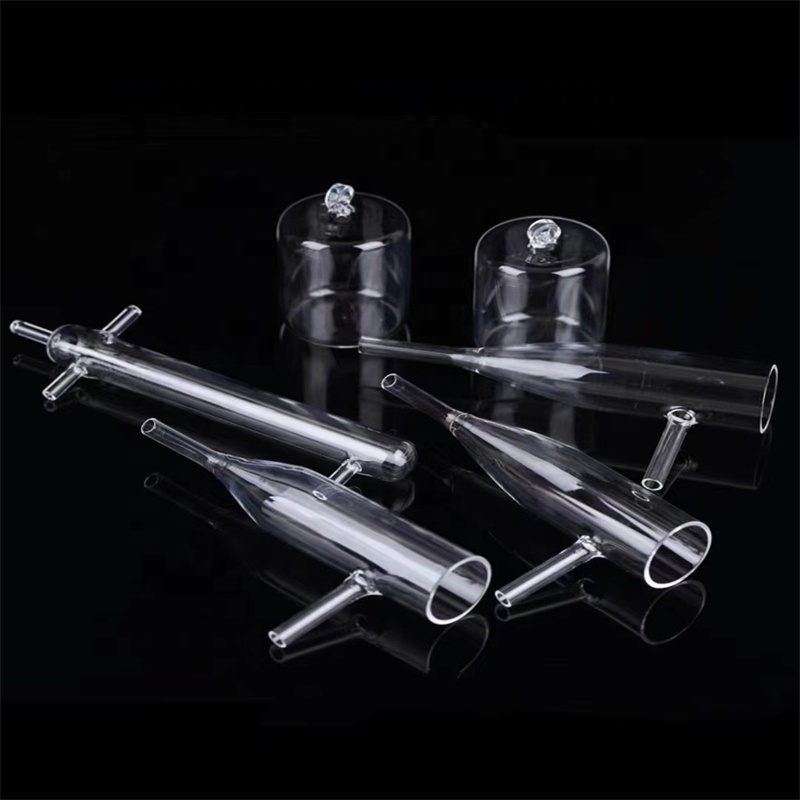
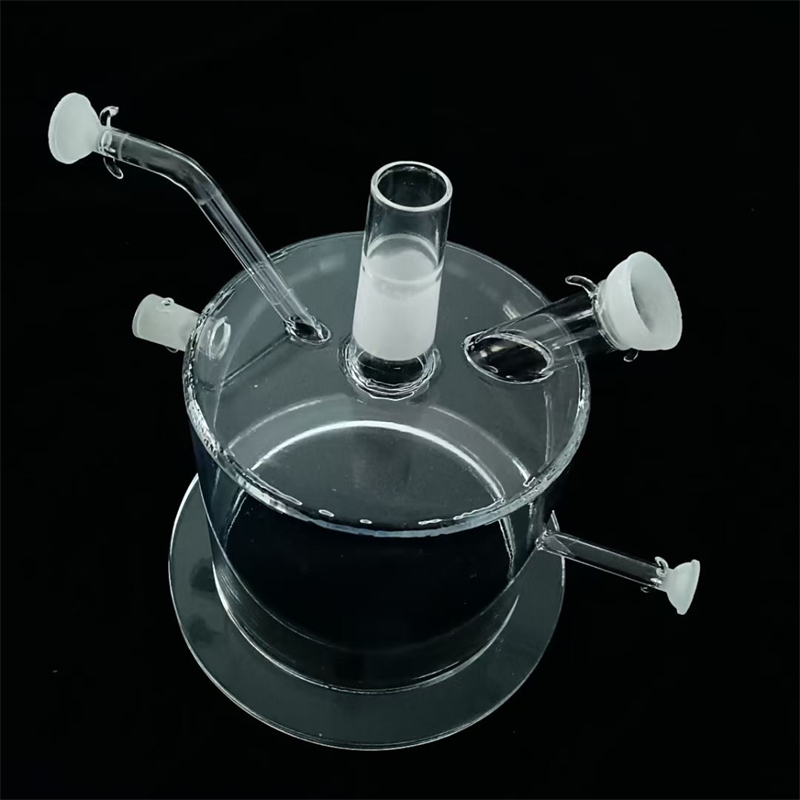
Our workshop technicians carry over 10 years of specialized flame-welding experience. We produce complex geometries: flat-bottom closed tubes, welded vacuum KF/ISO/CF flanges, twin-bore structures, thermocouple wells, and side injector ports.
1-Piece Prototyping to High-Volume Runs
Eliminate restrictive factory MOQs. Whether you require a single bespoke CVD reactor tube for university R&D or container loads of standardized diffusion tubes for a 10GW solar fab, our production schedules scale seamlessly.
Certified Dimensional & Optical Metrology
Every furnace tube undergoes comprehensive quality inspection before dispatch: wall thickness ultrasonic measurement, polariscopic stress strain verification, concentricity checks, and chemical spectrometry certification.
Engineered Zero-Breakage Export Packaging
Engineered for global air and sea logistics. Our high-density shock-absorbing EPE foam molds, vacuum shrink sealing, suspension brackets, and reinforced fumigated export wooden crates guarantee flawless transit across North America, Europe, and Asia.
Direct English Engineering Support (≤2h)
No intermediaries or lost-in-translation delays. Communicate directly with quartz technical sales engineers who review your CAD drawings (DWG, DXF, STEP, PDF), advise on tolerances, and provide accurate DDP/FOB/CIF quotes within 2 hours.
Frequently Asked Questions by Quartz Tube Buyers & Engineers
Clear, unvarnished answers addressing thermal limitations, devitrification remedies, chemical compatibility, fabrication tolerances, and global shipping protocols.
What is the absolute maximum continuous working temperature for fused quartz furnace tubes?
What causes white haze (devitrification) on furnace tubes, and how can it be avoided?
How does hydroxyl (OH⁻) content impact the mechanical stability of quartz furnace tubes?
Can Zelvo Quartz produce custom tubes with welded flanges, ball joints, or gas inlets?
What dimensional tolerances can you hold on wall thickness, ovality, and straightness?
- Outer Diameter (OD) Tolerance: Down to ±0.15 mm
- Wall Thickness Uniformity: Within ±0.10 mm
- Straightness / Total Run-Out (TIR): < 1.0 mm per meter length
- Ovality (Out-of-Roundness): < 0.5% of nominal OD
How are brittle quartz tubes protected against impact during intercontinental shipping?
What is the standard lead time for prototyping vs. batch production?
Which chemical agents can and cannot be safely used with fused quartz?
Accelerate Your Thermal Processing with Certified Quartz Solutions
Submit your 2D/3D engineering schematics, target tolerances, and thermal parameters. Our senior application engineers evaluate material specifications and return competitive factory-direct pricing within 2 hours.