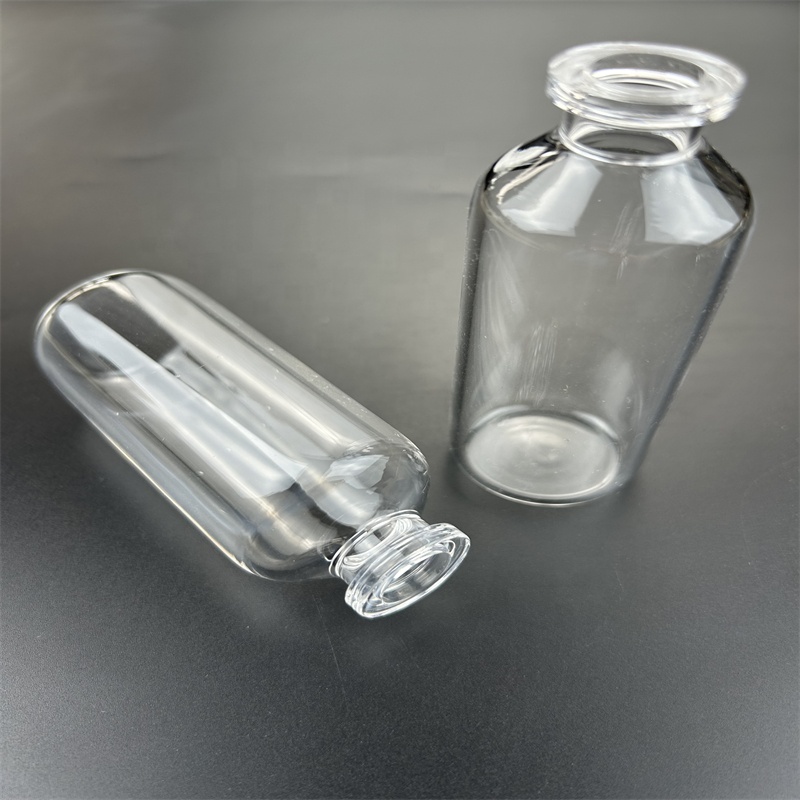
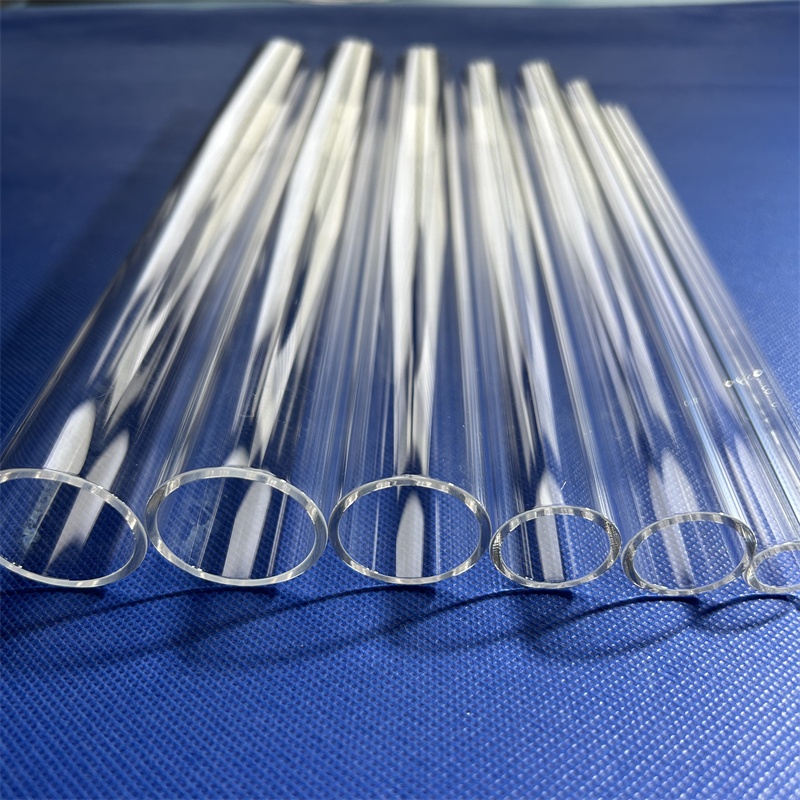
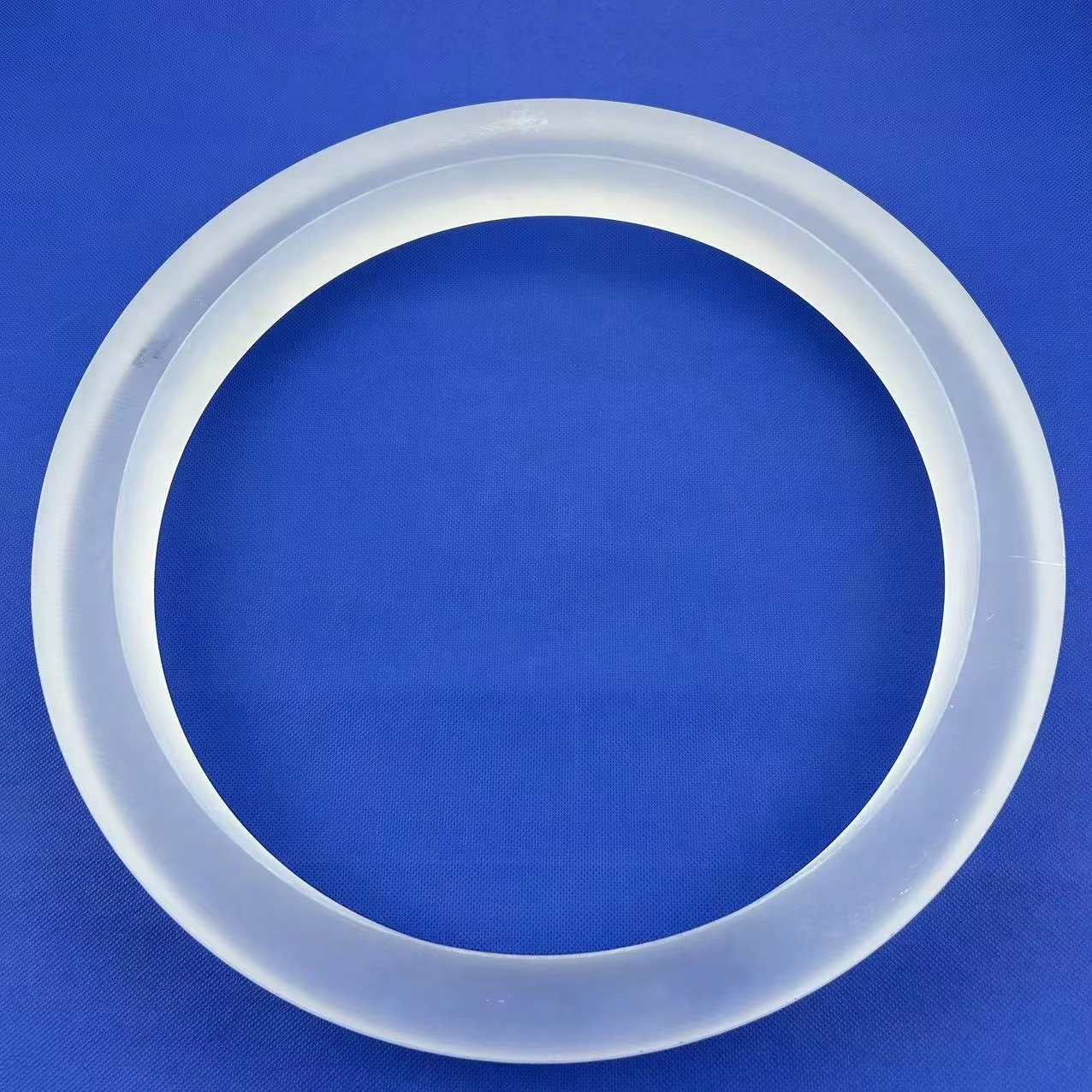
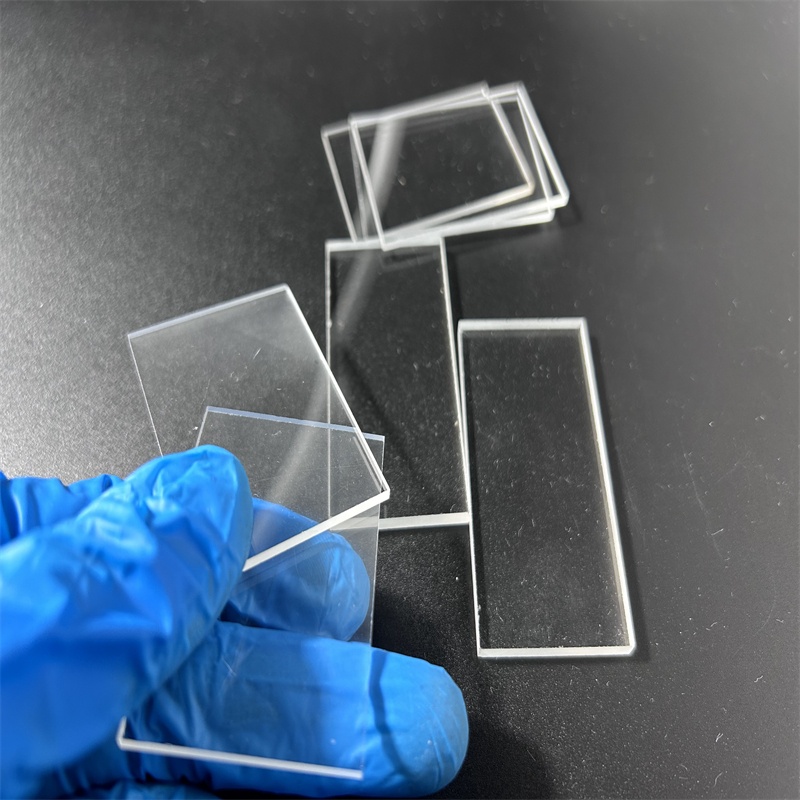
Precision-fabricated high-temperature, chemically inert, and optical-grade quartz components custom-calibrated for demanding analytical and industrial instruments.
Engineering Precision: Optical Quartz Prism Manufacturing for Port-au-Prince Industrial Infrastructure
In high-precision optical architecture, the selection of dispersive and reflective prism components dictates the signal-to-noise ratio, wavefront integrity, and operational lifespan of photonic assemblies. When sourcing an Optical Quartz Prism Manufacturer & Factory in Port-au-Prince, domestic research institutions, telecommunication backbones, maritime inspection terminals, and energy infrastructure managers face distinct environmental and logistical challenges. The Caribbean maritime microclimate in the Gulf of Gonâve subjects precision optoelectronics to extreme ambient relative humidity exceeding 85%, saline coastal aerosol deposition, and severe thermal cycles that induce mechanical fatigue in conventional crown borosilicate (such as N-BK7) substrates.
Lianyungang Zelvo Quartz Products Co., Ltd., leveraging raw feedstock deposits from Donghai County (the Crystal Capital of China), provides a direct manufacturing bridge to Port-au-Prince. By utilizing high-purity synthetic fused silica (JGS1, equivalent to Suprasil 1/2 and Corning 7980) and thermally stabilized electric-fused quartz (JGS2/JGS3), our engineering team manufactures dispersive, reflective, and polarizing quartz prisms that maintain sub-arcsecond angular tolerances and zero wavefront degradation across deep ultraviolet (DUV: 185 nm) to short-wave infrared (SWIR: 2500 nm) spectral bands.
Core Engineering Metric: Unlike optical borosilicates with high thermal expansion coefficients ($\alpha \approx 7.1 \times 10^{-6}/\text{K}$), fused silica exhibits a near-zero coefficient of thermal expansion ($\alpha = 5.5 \times 10^{-7}/\text{K}$ between $-50^\circ\text{C}$ and $200^\circ\text{C}$). This virtually eliminates thermal lensing and angular beam drift in uncooled field spectrometers deployed in Port-au-Prince’s tropical insolation environment.
Material Physics: Natural Crystalline Quartz vs. Synthetic Fused Silica
A primary failure mode in Caribbean optical field equipment is optical birefringence and internal bubble scatter resulting from misclassified glass materials. Our Donghai facility categorizes quartz prism materials into strictly verified thermodynamic classes:
JGS1 (Synthetic Deep-UV Fused Silica): Free of bubbles and inclusions, synthetically hydrolyzed from silicon tetrachloride ($\text{SiCl}_4$). Exhibiting near-zero absorption in the ultraviolet window down to 185 nm, JGS1 is ideal for medical fluorescence detection, laser beam steering, and solar UV radiometric pyranometers deployed in Port-au-Prince.
JGS2 (Optical Grade Fused Quartz): Smelted from natural high-purity crystal quartz sand with continuous gas-refining. Offers exceptional transmission across the visible and near-infrared bands (260 nm – 2100 nm), tailored for industrial sight windows, right-angle reflection prisms, and telecommunication DWDM mux/demux blocks.
JGS3 (Infrared Fused Quartz / Water-Free): Vacuum-melted with an ultra-low hydroxyl ($\text{OH}^-$) content (typically below 5 ppm). It completely eliminates the notorious absorption dip at 2730 nm, unlocking unimpeded transmission across the mid-infrared range up to 3500 nm for chemical gas analysis and thermal sensor prisms.
Physical / Optical Property
Standard Synthetic Fused Silica (JGS1)
Optical Grade Fused Quartz (JGS2)
Infrared Quartz (JGS3)
Standard Optical Glass (N-BK7)
Refractive Index ($n_d$ at 587.6 nm)
1.45846
1.45840
1.45845
1.51680
Abbe Number ($V_d$)
67.8
67.8
67.9
64.17
Thermal Expansion ($10^{-7}/\text{K}$)
5.5
5.5
5.4
71.0 (13× Higher)
Working Temp. (Continuous / Peak)
1100°C / 1300°C
1100°C / 1300°C
1150°C / 1350°C
450°C / 550°C
LIDT (Laser Damage Threshold)
> 15 J/cm² (1064nm, 10ns)
> 10 J/cm² (1064nm, 10ns)
> 10 J/cm² (1064nm, 10ns)
< 5 J/cm²
Chemical Resistance (Acid / Saline)
Class 1 (Unaffected except HF)
Class 1 (Unaffected except HF)
Class 1 (Unaffected except HF)
Moderate (Subject to dimming)
Localized Applications in Port-au-Prince and Greater Haiti
Industrial components imported into Haiti must operate reliably under high ambient humidity, erratic power grid stabilization, and dust-laden tropical environments. Our custom-fabricated optical quartz prisms are engineered specifically to solve localized operating vulnerabilities across key Port-au-Prince sectors:
Solar Radiometry & Clean Energy Monitoring
Port-au-Prince’s expanding micro-grid solar parks require continuous direct and diffuse solar irradiance tracking. Zelvo’s JGS1 equilateral dispersion prisms and quartz domes resist UV solarization and solar browning, providing linear optical transmission for pyranometers and spectrophotometers monitoring photovoltaic array degradation.
Telecommunication & Subsea Optical Nodes
Haiti's critical fiber trunk lines terminating in Port-au-Prince demand high-stability optical beam steering. Our quartz polarization beam splitters and right-angle prisms maintain cross-talk rejection under fluctuating ambient temperatures, preserving DWDM multi-gigabit throughput in unconditioned sub-distribution centers.
Biomedical Analytics & Public Health Labs
Public health diagnostic devices deployed in regional medical centers (such as MSPP facilities) rely on UV fluorescence quartz flow cells and micro-prisms. High-purity 99.99% SiO₂ eliminates autofluorescence noise, ensuring precise pathogen detection and biochemical spectroscopic analysis without baseline drift.
Port Lafito & APN Maritime Alignment
The Autorité Portuaire Nationale (APN) and commercial shipping channels in Port-au-Prince harbor utilize laser guidance, retroreflective rangefinders, and hydrographic survey LIDAR. Our fused quartz corner-cube prisms resist salt crust etching, ensuring accurate 180° beam return across maritime shipping routes.
Academic & University Research (UEH)
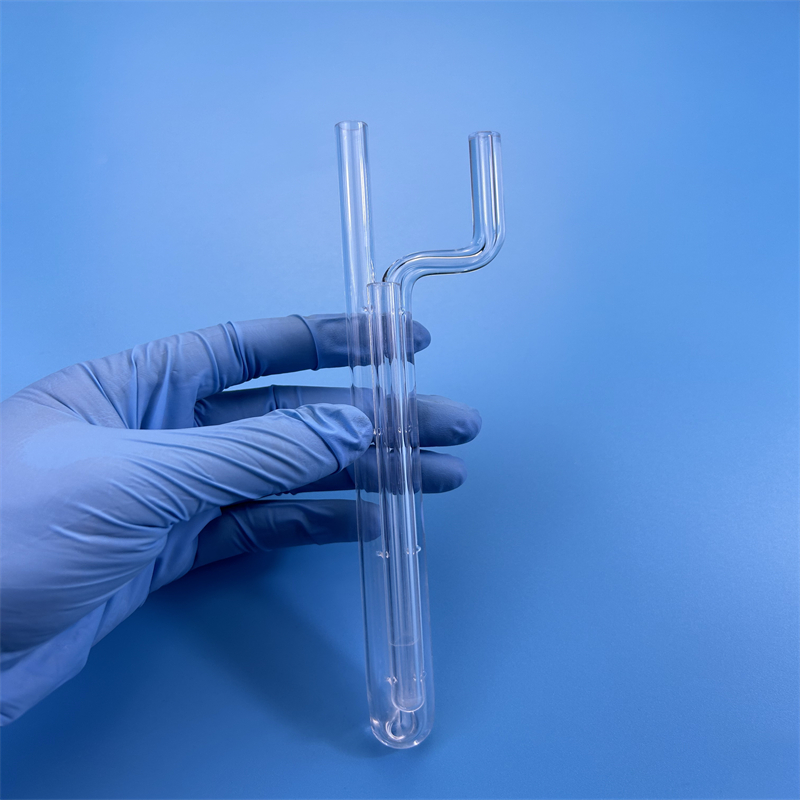
Laboratories at the Université d’État d’Haïti (Faculty of Sciences) conduct crystal diffraction and chemisorption analysis. We manufacture custom BET quartz sample tubes, twin combustion chambers, and Littrow dispersion prisms to support materials research and geophysical monitoring.
Industrial Thermal Furnace & Sight Windows
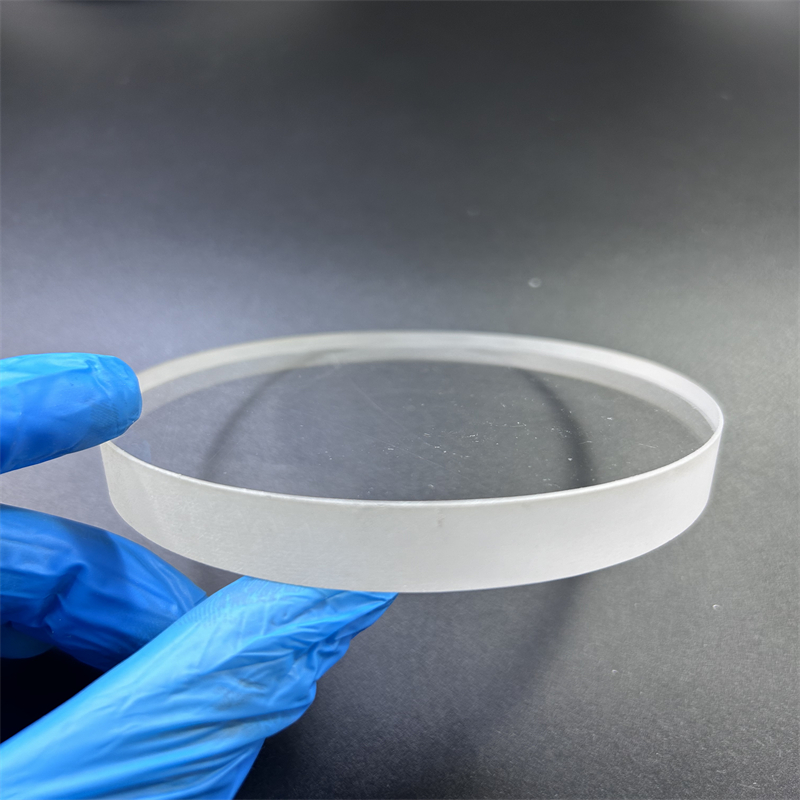
Port-au-Prince industrial processing boilers, cement kilns, and recycling plants require durable sight-glass observation prisms and quartz protection shields capable of withstanding rapid 1000°C thermal down-shocks during water washdowns without catastrophic shattering.
The Greater Antilles region is undergoing a significant transition toward decentralized infrastructure resilience. High reliance on imported hydrocarbons has accelerated large-scale commercial solar photovoltaic and off-grid battery installations throughout Haiti. Consequently, demand for accurate solar radiometric monitoring instruments—dependent on UV-grade fused quartz windows, dome lenses, and dispersion prisms—has seen steady growth.
Simultaneously, severe climate events in the Caribbean basin have highlighted the necessity for hardened geophysical monitoring networks. Real-time seismic monitoring along the Enriquillo-Plantain Garden Fault zone, coupled with coastal weather radar and sea-surface LIDAR, requires optical components capable of operating without maintenance or degradation in humid salt air. Conventional coated soft glass degrades within 12 to 24 months due to fungal etching and salt crystallization. In contrast, fused silica maintains chemical passivity and pristine surface figure tolerances ($\lambda/10$) over decades of continuous exposure.
Supply Chain Security for Haiti: With local high-vacuum coating and optical polishing capabilities absent in Port-au-Prince, Haitian procurement managers require direct manufacturer relationships offering pre-certified optical components, complete interferometric test reports (Zygo Verifire documentation), and airfreight packaging that guarantees intact arrival.
Why Partner with Zelvo Quartz for Port-au-Prince Optical Shipments
Lianyungang Zelvo Quartz Products Co., Ltd. operates state-of-the-art production lines in Donghai County, China’s primary hub for quartz refining and fabrication. We bridge international sourcing gaps by combining mine-to-finished-optic vertical integration with engineer-led communication.
99.99%
SiO₂ Chemical Purity
≤ 2h
Engineering Drawing Review
1 pc
Prototype MOQ Support
4.9 / 5
Verified Buyer Satisfaction
Sub-Arcsecond Precision Grinding
Our planetary double-sided lapping and CNC diamond profiling machines achieve angular tolerances down to $\pm 1$ arcsecond ($< 5\ \mu\text{rad}$) and surface figure flatness of $\lambda/10$ across full clear apertures.
Class 100/1000 Cleanroom Packaging
Every optical prism is ultrasonically cleaned, inspected under darkfield sodium light for inclusions, and vacuum-sealed in nitrogen-flushed, moisture-barrier pouches with humidity-indicator cards to safeguard Caribbean transit.
Reliable Port-au-Prince Logistics Routes
We support standard Incoterms including DDP, CIF Port-au-Prince (APN Terminal), and express CIP via Toussaint Louverture International Airport (PAP) with shock-monitored wooden crating.
Frequently Asked Questions: Sourcing Quartz Prisms in Port-au-Prince
Comprehensive technical guidance for procurement officers, optical technicians, and lab managers in Haiti.
Can Zelvo manufacture custom prism geometries from our CAD models or mechanical sketches?
Yes. We fabricate Right-Angle, Porro, Dove, Penta, Amici Roof, Littrow, Pellin-Broca, and Retroreflecting Corner-Cube prisms directly from your 2D engineering drawings (DWG/DXF/PDF) or 3D STEP models. Our CNC precision grinding and optical polishing centers accommodate custom facet angles, laser chamfers, mounting steps, and specialized dimensional tolerances down to ±0.02 mm.
How do you prevent humidity damage and salt mist haze during maritime transit to Port-au-Prince?
Caribbean sea routes expose cargo to high humidity and salt atmospheres. To guarantee pristine surface condition upon arrival, each prism undergoes automated ultrasonic degreasing before being sealed in anti-static, nitrogen-flushed multi-layer barrier foil bags with active desiccant canisters. Outward packaging utilizes custom-molded high-density polyethylene (EPE) foam inserts enclosed in reinforced, heat-treated plywood crates tested against multi-axis vibration.
What is the minimum order quantity (MOQ) for custom optical quartz prism prototypes?
Our MOQ starts at just 1 piece for custom prototypes and research projects, allowing university labs and instrumentation startups in Port-au-Prince to test proof-of-concept builds without capital waste. Consumable labware (such as BET analyzer sample tubes or standard sight discs) typically starts at 10 pieces.
Which optical coatings can be applied to quartz prisms for tropical deployment?
We provide ion-assisted electron beam deposition (IAD) coatings, including single-layer MgF₂ Anti-Reflective (AR) coatings, Broad-Band Anti-Reflective (BBAR) coatings covering 190–400 nm, 400–700 nm, or 700–1100 nm, as well as metallic mirror coatings (protected gold, silver, or enhanced aluminum) and high-power dielectric bandpass filters. All coatings meet MIL-C-675C and MIL-M-13508C standards for adhesion and humidity resistance.
What are the accepted Incoterms and shipping lead times to Port-au-Prince?
We handle FOB Shanghai/Qingdao, CIF Port-au-Prince (APN Maritime Port), and express DDP/CIP air delivery directly to Toussaint Louverture International Airport (PAP). Typical express courier dispatch (via DHL, FedEx, or UPS Air) takes 7 to 10 business days from factory release to Port-au-Prince customs clearance. Full container or LCL sea freight runs approximately 28 to 35 transit days.
What quality control documentation is delivered with high-precision quartz optics?
Each shipment includes a Certificate of Conformance (CoC), material purity spectrometer assay (confirming SiO₂ ≥ 99.99%), Zygo laser interferometer surface flatness profiles, spectrophotometer UV-VIS-NIR spectral transmission curves, and mechanical coordinate dimensional inspection reports.
Why select quartz over N-BK7 optical glass for solar or industrial laser applications?
N-BK7 exhibits a high thermal expansion coefficient (7.1 × 10⁻⁶/K) and suffers from solarization (photodarkening) under intense tropical UV exposure, resulting in optical distortion and beam wander. Synthetic fused quartz possesses a thermal expansion rate 13 times lower (5.5 × 10⁻⁷/K), can withstand continuous operating temperatures up to 1100°C (versus ~450°C for N-BK7), has superior chemical resistance, and provides a significantly higher laser-induced damage threshold (>15 J/cm²).
What payment currencies and terms are accommodated for Caribbean trade?
We accept international wire transfers via T/T, Irrevocable Letters of Credit (L/C at sight), PayPal, Western Union, and major corporate credit cards. Accepted currencies include USD, EUR, CAD, GBP, and CNY, supporting seamless procurement workflows for Haitian companies, non-governmental organizations, and global development programs.
Request Engineering Review or Custom Quartz Quotation
Submit your technical drawings, prism facet specifications, dimensional tolerances, and quantity requirements. Our optical manufacturing engineers analyze feasibility and respond with detailed DFM guidance and factory-direct pricing within 2 hours.