Featured Quartz Glass Components & Ampoules
Direct factory supply featuring 99.99% SiO₂ high-temperature resilience, exceptional chemical inertness, and micron-level welding tolerances for Parisian pharmaceutical and industrial systems.
Why Paris Life Science Leaders Mandate Medical Grade Fused Quartz
Addressing the critical limitations of standard Type I borosilicate glass in advanced biologics, mRNA therapies, lyophilization, and ultra-sensitive injectable formulations.
In the biopharmaceutical landscape of the Greater Paris Region (Île-de-France)—spanning from the research institutes of the Montagne Sainte-Geneviève to the high-throughput biomanufacturing plants of Genopole and the Paris-Saclay innovation cluster—the interaction between pharmaceutical active ingredients (APIs) and primary packaging containers has become a focal point of regulatory compliance. As biopharmaceuticals increasingly integrate monoclonal antibodies (mAbs), antibody-drug conjugates (ADCs), mRNA-lipid nanoparticle (LNP) complexes, and delicate therapeutic peptides, the limitations of traditional Type I borosilicate glass have presented significant operational liabilities.
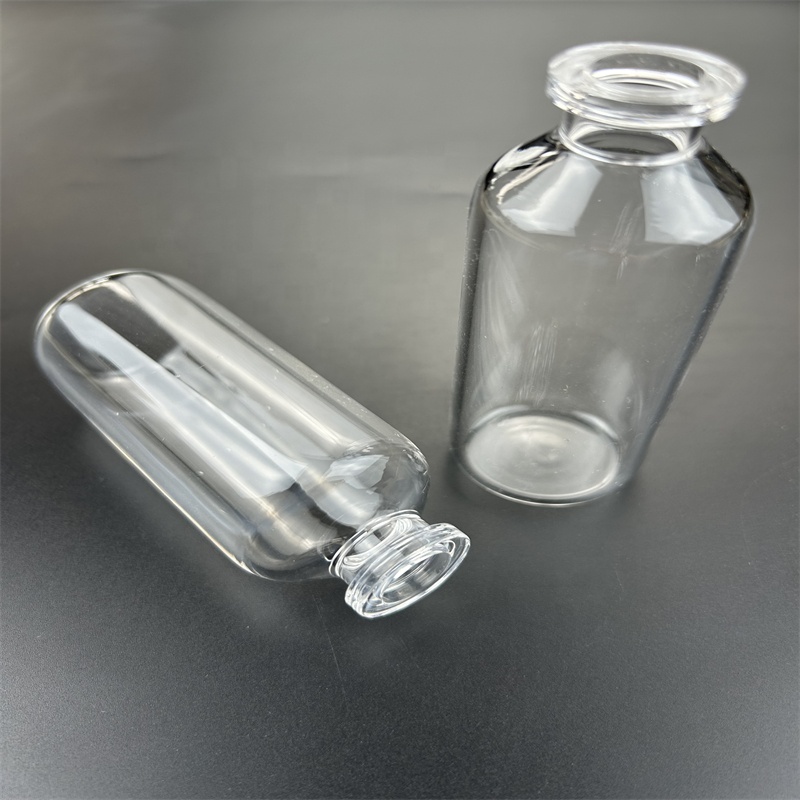
Under European Pharmacopoeia (Ph. Eur. 3.2.1) and ISO 1288 standards, conventional borosilicate glass relies on alkaline earth oxides, boron, and fluxing agents (such as Na₂O, Al₂O₃, and B₂O₃) to depress glass melting points. When exposed to alkaline formulation buffers, high-salinity lyophilization matrices, or prolonged cryogenic storage, these constituents suffer from ion leaching and surface micro-delamination. The dissolution of alkaline ions elevates solution pH, destabilizing sensitive protein conformations and risking the precipitation of glass flakes—a primary trigger for FDA and EMA injectable recalls. Our CE-certified medical-grade quartz ampoules, engineered from natural and synthetic fused quartz containing ≥99.99% silicon dioxide (SiO₂), virtually eradicate ion extraction and glass delamination risks.
“Engineering Insight: Fused quartz exhibits an ultra-pure covalent matrix with less than 50 ppm total elemental impurities. This zero-alkali structure eliminates pH-drift and particulate shed, providing an inert boundary that meets the strictest EMA MDR 2017/745 standards for next-generation injectables.”
Rigorous Material Property Contrast: Quartz vs. Borosilicate
For research directors, qualification managers, and procurement leads across the Paris pharmaceutical basin, evaluating the physical properties of primary packaging ensures container stability throughout terminal autoclaving, cryogenic nitrogen flash-freezing, and automated torch flame-sealing processes.
| Critical Parameter | Medical Fused Quartz (Zelvo Standard) | USP/Ph. Eur. Type I Borosilicate 3.3 | Neutral Glass (Type I Borosilicate 5.0) |
|---|---|---|---|
| Chemical Composition | SiO₂ ≥ 99.99% (Ultra-Pure Covalent) | SiO₂ 81%, B₂O₃ 13%, Na₂O+K₂O 4% | SiO₂ 72%, B₂O₃ 10%, Na₂O 7%, Al₂O₃ 6% |
| Hydrolytic Class (ISO 719 / 720) | Class HGA 1 (Virtual Zero Extraction) | Class HGA 1 | Class HGA 1 |
| Thermal Expansion Coeff. (20–300°C) | 5.5 × 10⁻⁷ K⁻¹ (Negligible Strain) | 3.3 × 10⁻⁶ K⁻¹ | 4.9–5.4 × 10⁻⁶ K⁻¹ |
| Maximum Working Temp. (Continuous) | 1100 °C (Short-term up to 1300 °C) | 450 °C | 480 °C |
| Thermal Shock Resistance (ΔT) | > 1000 °C (Quenchable in ice water) | ≈ 150 °C – 180 °C | ≈ 120 °C – 140 °C |
| Delamination & Flaking Risk | Zero Detection (Homogeneous Matrix) | Moderate under extreme pH buffers | High risk with specific buffer salts |
| UV Cutoff Transmission (200–260 nm) | > 90% Transmittance (Optical Grade) | Complete Opaque Cut-off (< 280 nm) | Opaque (< 290 nm) |
| Helium Leak Hermetic Seal Rate | < 1.0 × 10⁻¹⁰ mbar · L/s | < 1.0 × 10⁻⁸ mbar · L/s | < 1.0 × 10⁻⁸ mbar · L/s |
Structural Advantages During Flame Torch Hermetic Sealing
In Paris-based high-containment fill-finish facilities (e.g., in Evry, Créteil, and Antony), the sealing step of parenteral ampoules is critical. Conventional borosilicate glass has an approximate softening point near 825°C. When exposed to hot oxy-hydrogen or gas flame sealing, volatile borates and sodium sub-oxides can vaporize from the stem inner wall and deposit as micro-condensates inside the ampoule neck, contaminating the sterile solution. Fused quartz, with a transition temperature of 1215°C and softening point exceeding 1683°C, releases zero volatile components during localized laser or plasma-torch neck closing. This ensures a 100% inert environment, free from particulate fallout or headspace chemical reactions.
Specialized Deployment Across Greater Paris Clusters
Tailored component configurations matching the technical standards of France's primary biotechnology hubs, clinical development research centers, and luxury cosmeceutical laboratories.
Paris-Saclay Biopole
Dedicated to synthetic biology, genomics, and translational immunology. Our quartz ampoules support cryogenic preservation (-196°C in LN2) without thermal stress fracture, protecting critical cell-bank seeds and viral vectors from micro-cracking.
Genopole (Évry-Courcouronnes)
Optimized for gene therapy developers and biomanufacturing scale-ups. Ultra-pure ampoules ensure stable storage of nucleic acids, eliminating divalent cation leaching (Ca²⁺, Mg²⁺) that can compromise enzyme integrity.
Cosmetic Valley Axis
Serving prestige cosmeceutical formulation houses stretching from Paris to Chartres. Our flame-sealed quartz ampoules preserve volatile antioxidants, pure vitamin C, and delicate peptide serums with zero gas permeability.
AP-HP Clinical Trials
In clinical trial batches across Assistance Publique–Hôpitaux de Paris networks, our cleanroom-packed quartz vials guarantee compliance with tamper-evident, hermetically sealed storage for experimental active compounds.
Market & Regulatory Trends in Greater Paris (2025–2030)
Forward-looking analysis of regulatory shifts, decarbonization mandates, and emerging manufacturing technologies impacting European packaging procurement.
Tightening of EU MDR & EMA Leachables Thresholds
The European Medicines Agency (EMA) and ANSM (Agence Nationale de Sécurité du Médicament) continue to lower permissible limits for elemental impurities under ICH Q3D. Primary packaging must present a fully validated extractables and leachables (E&L) dossier. Fused quartz stands as the ultimate zero-risk baseline, containing negligible elemental impurities and zero plasticizers, slip additives, or borate modifiers.
Shift to Cryogenic mRNA & Precision Cell Therapies
With Paris becoming a principal hub for European mRNA innovation, injectable packaging must survive repetitive deep thermal cycling. Standard glass formulations experience lattice micro-fracturing at -80°C and -196°C due to uneven thermal contraction coefficients. Quartz's minimal expansion profile (5.5 × 10⁻⁷ K⁻¹) allows rapid flash-freezing without vial failure or vacuum loss.
Laser-Assisted Sealing & Particle-Free Automation
Modern sterile fill-finish operations in Île-de-France are adopting precision CO₂ and diode laser sealing stations to replace open gas flames. Quartz glass exhibits an ideal absorption spectrum for targeted laser welding, enabling narrow heat-affected zones, zero soot generation, and reliable hermetic seals with cleanroom Class A compatibility.
Decarbonized & High-Durability Logistics Lines
French CSR initiatives (Loi AGEC) demand reduced packaging waste and smaller transport carbon footprints. Quartz ampoules deliver high wall-strength-to-weight ratios and survive secondary processing without breakages, reducing rejects during automated high-speed visual inspection and air cargo transit through Paris-Charles de Gaulle (CDG).
Lianyungang Zelvo Quartz Products Co., Ltd.
Fabricating in Donghai County—the international crystal capital—our production facility integrates raw material synthesis, precision cold processing, and specialized hot-flame glassblowing for export worldwide.
Custom Drawing-Based Fabrication
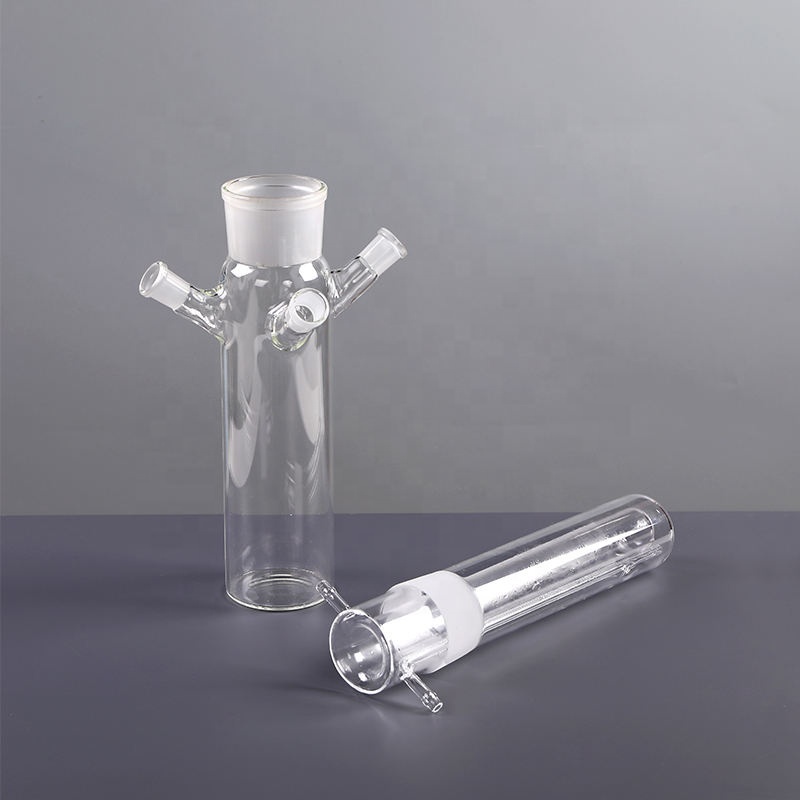
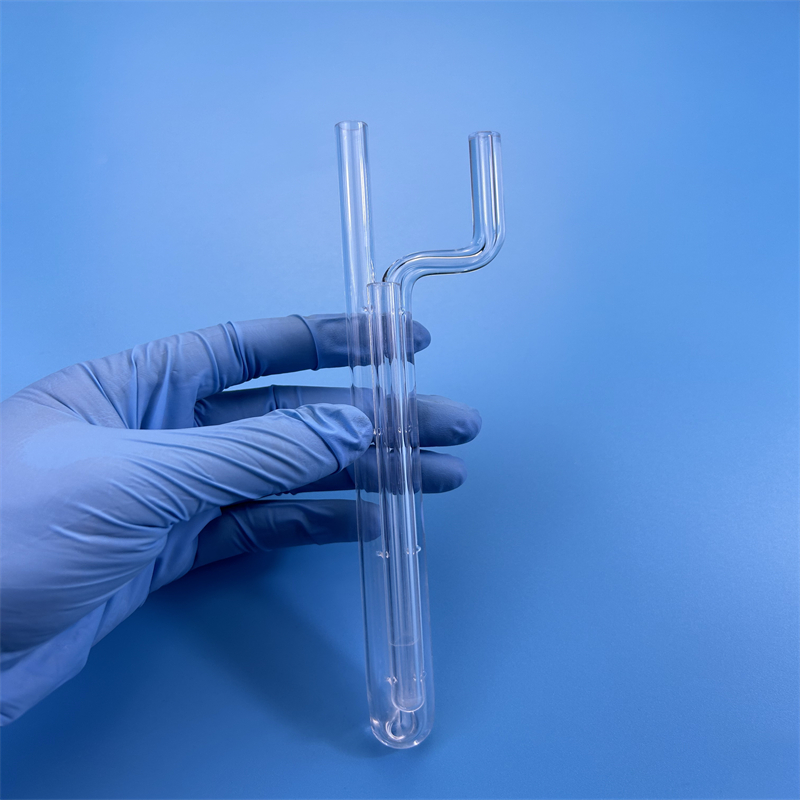
We work from STEP, DWG, DXF, or engineering sketches. Capabilities include laser cutting, high-precision micro-drilling, CNC edge grooving, customized bends, and multi-lumen twin tube configurations.
Low MOQ Prototyping (From 1 Piece)
Supporting pilot lab trials, R&D proof-of-concept tests, and small clinical batches with an MOQ of 1 piece, scaling up to high-volume commercial production runs exceeding 500,000 units.
Stress Annealing & QC Assurance
Every ampoule and reactor tube undergoes programmatic annealing at 1215°C to eliminate internal mechanical stress, followed by polariscope optical inspection and dimensional verification.
Onsite Verified Facility
Factory premises independently inspected and legal certifications verified. Transparent supply chain management with direct communication with glassblowers and technical engineers.
Export Packaging for Fragile Ware
Multi-layer shock-absorbing polyethylene foam cushioning, vacuum-sealed inner containment, and reinforced outer plywood crates engineered to withstand multi-leg intercontinental air transit.
Flexible European Trade Terms
Supporting French purchasing departments with DDP (Delivered Duty Paid), CIF (Paris CDG / Le Havre), FCA, and CIP terms, settling in EUR, USD, or GBP with comprehensive customs documentation.
Frequently Asked Questions by Paris Procurement Teams
Clear, technically rigorous answers covering compliance certifications, cleanroom cleaning, customs logistics, and operational tolerances.
What regulatory certifications accompany your medical-grade quartz ampoules into France?
Can your factory manufacture custom-geometry ampoules from engineering CAD drawings?
What sealing torch temperature and gas mixture are recommended for quartz ampoules?
What is the standard lead time and delivery route to Paris-Charles de Gaulle (CDG)?
How does quartz glass behave under rapid liquid nitrogen immersion and autoclaving?
What are the minimum order requirements and payment modalities for French entities?
Request Engineering Review & Quotation for Paris Delivery
Send your dimensional drawings, required wall thickness, and operating parameters. Our technical engineering desk evaluates feasibility and provides complete pricing within 2 hours on business days.