Precision Fused Silica Plates in Advanced Nordic Science & Manufacturing
A comprehensive material evaluation for optical engineers, cleanroom operators, and semiconductor process leads across Stockholm, Uppsala, and the Mälardalen technology corridor.
As Greater Stockholm reinforces its standing as Northern Europe's prime deep-tech nexus—anchored by advanced photonics at Kista Science City, cutting-edge bioscience around Karolinska Institutet, and sub-atomic physics research linked with AlbaNova and the nearby MAX IV facility—the procurement criteria for optical-grade glass have shifted drastically. Generic borosilicate and commercial float glass can no longer satisfy the demanding operational envelopes dictated by excimer lasers, extreme thermal gradients, high-density plasma etching, and ultra-high-vacuum (UHV) systems. For procurement managers and research directors seeking a certified fused silica plate supplier & exporter serving the Stockholm market, the primary imperative is securing uncompromised material homogeneity, verifiable transmission profiles, and zero-defect precision fabrication.
1. Material Science Dissection: Synthetic Fused Silica vs. Natural Fused Quartz
In high-specification applications, distinguishing between synthetic fused silica (amorphous silicon dioxide synthesized through chemical vapor deposition of silicon tetrachloride, $SiCl_4$) and naturally fused quartz (manufactured by electrically or flame-fusing ultra-pure natural crystalline quartz from the historic Donghai deposits) is fundamental to preventing field failure.
Synthetic Fused Silica (commonly referenced under optical designations such as JGS1, Suprasil, or Corning 7980) features an exceptional silicon dioxide purity reaching $\ge 99.999\%$. It is virtually free of metallic impurities (Fe, Al, Ti, Mg, Ca < 0.1 ppm total), effectively eliminating deep-UV absorption bands and color-center formation when subjected to high-energy radiation. This renders JGS1 fused silica plates the benchmark selection for UV photolithography masks, deep-UV fluorescence microscopy windows, and femtosecond laser optics operating down to 185 nm.
Conversely, Natural Fused Quartz (such as JGS2 and electrically fused JGS3) is produced from refined natural rock crystal. While maintaining exceptional mechanical strength, an operating temperature threshold exceeding 1100°C, and a high continuous resistance to thermal shock, natural fused quartz retains minute trace metal concentrations (typically Al at 10–20 ppm). JGS2 serves as an economical yet mechanically resilient choice for general optical inspection windows, furnace sight glasses, and semiconductor carrier plates across the 260 nm to 2500 nm range. JGS3, dehydrated during specialized vacuum melting to achieve an OH (hydroxyl) content below 2 ppm, eliminates the fundamental water absorption notch at 2730 nm, presenting optimal optical throughput throughout the Near-to-Mid Infrared spectrum (up to 3500 nm).
| Optical / Physical Parameter | JGS1 (Synthetic UV Silica) | JGS2 (Optical Fused Quartz) | JGS3 (IR Vacuum Fused Quartz) |
|---|---|---|---|
| Purity ($SiO_2$) | ≥ 99.999% | ≥ 99.99% | ≥ 99.99% |
| Hydroxyl ($OH^-$) Content | 1000 – 1200 ppm (High OH) | 150 – 200 ppm | ≤ 2 – 5 ppm (Low OH) |
| Optimal Transmission Range | 185 nm – 2100 nm (Deep UV) | 260 nm – 2500 nm (VIS-NIR) | 260 nm – 3500 nm (IR Extended) |
| Refractive Index ($n_d$, 587.6 nm) | 1.45846 | 1.45850 | 1.45840 |
| Thermal Expansion ($0–300^\circ\text{C}$) | $5.5 \times 10^{-7} / \text{K}$ | $5.5 \times 10^{-7} / \text{K}$ | $5.5 \times 10^{-7} / \text{K}$ |
| Continuous Working Temp | 1050 °C | 1100 °C | 1150 °C |
| Softening Point | 1650 °C | 1683 °C | 1710 °C |
| Primary Stockholm Applications | UV Laser Optics, Kista Lithography | Biomedical Substrates, Sensors | IR Spectroscopy, Pyrometry, Furnaces |
2. Thermomechanical Stability in Extreme Nordic Operating Conditions
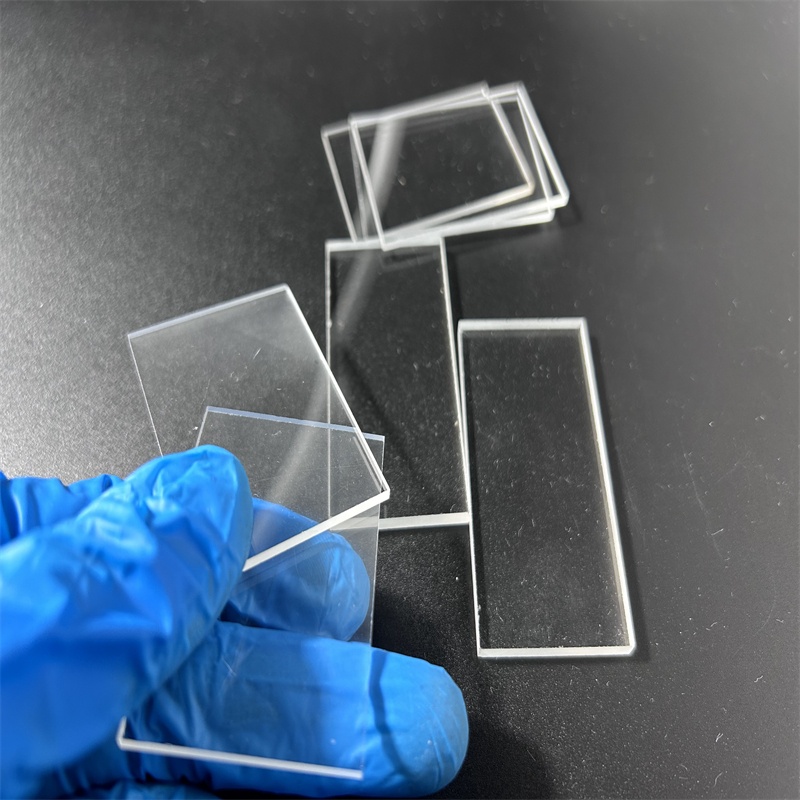
Stockholm's experimental physics laboratories and aerospace engineering units routinely subject transparent windows to violent thermal differentials—such as cycling between liquid nitrogen cryogenic envelopes ($-196^\circ\text{C}$) and rapid plasma ignition zones exceeding $800^\circ\text{C}$. The exceptionally low coefficient of thermal expansion (CTE) of our fused silica plates ($5.5 \times 10^{-7}/\text{K}$) provides almost absolute immunity to catastrophic thermal shock. A standard 3 mm to 10 mm fused silica disc fabricated by Zelvo Quartz can be heated uniformly to $1100^\circ\text{C}$ and plunged directly into ice-cold water without micro-fracturing or structural failure.
In addition, our plates undergo precision thermal annealing cycles within microprocessor-controlled lehrs. This relieves internal stress birefringence to values below $5\text{ nm/cm}$, safeguarding polarized laser beams against phase distortion and wavefront degradation when traversing optical inspection ports.
Localized Industry Applications Across the Mälardalen Ecosystem
Custom-fabricated quartz plates and fused silica components deployed within Sweden's high-tech industrial parks, academic universities, and research facilities.
Kista Science City: Semiconductor & Microelectronics
Widely utilized as ultra-flat quartz carrier wafers, photomask substrate blanks, and reactive ion etching (RIE) observation windows. Our fused silica plates feature sub-nanometer surface roughness ($Ra < 0.5\text{ nm}$) to prevent uneven wafer chucking and plasma corrosion during advanced semiconductor lithography.
AlbaNova & KTH: Quantum Optics & Laser Research
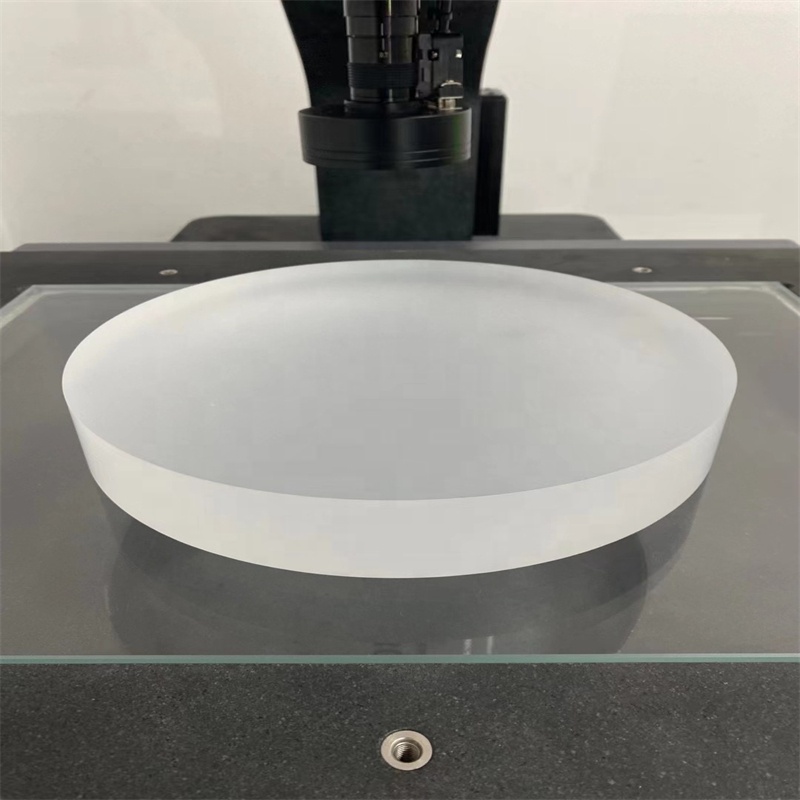
Chosen by academic researchers for optical breadboard setups, beam splitters, and vacuum chamber viewing ports. With deep UV transmittance exceeding 91% at 193 nm and high laser-induced damage thresholds (LIDT > 10 J/cm² at 1064 nm, 10 ns), our JGS1 plates eliminate beam distortion in ultrafast optics.
SciLifeLab & Karolinska: Bio-Imaging & Sequencing
Critical in high-throughput genomic flow cells, fluorescence spectrophotometry cuvettes, and microfluidic chip covers. The synthetic silica composition guarantees near-zero background autofluorescence under blue and UV excitation, ensuring maximum signal-to-noise clarity.
Fossil-Free Metallurgy & High-Temperature Furnaces
Supporting Sweden's progressive industrial decarbonization programs (such as hydrogen-reduced green steel piloting). Our heavy-duty fused quartz sight glasses withstand continuous thermal baths of 1100°C and aggressive reducing gas atmospheres without devitrification or clouding.
Advanced Environmental Monitoring & IR Gas Sensing
Engineered for Nordic emission tracking sensors, marine scrubbing exhaust monitors, and urban air quality stations throughout the Stockholm archipelago. Utilizing low-OH JGS3 quartz plates prevents spectral contamination in mid-infrared carbon and nitrous oxide absorption bands.
Emerging Market Trends Driving Quartz Consumption in Sweden
How the European Chips Act, green energy transitions, and precision photonics reshape procurement demands in Stockholm.
Sweden's technological ecosystem is undergoing rapid modernization driven by both European Union strategic autonomy objectives and national sustainability mandates. Several prevailing trends directly influence quartz glass specification across the greater Stockholm metropolitan area:
1. Escalation of Semiconductor Prototyping under the European Chips Act: Research hubs across Kista and Linköping are expanding pilot foundry capacities for compound semiconductors (Silicon Carbide - SiC, and Gallium Nitride - GaN). These fabrication processes involve chemical vapor deposition (CVD) and epitaxy operating at thermal regimes exceeding standard silicon processing. Fused quartz wafer carriers, slotted sample boats, and optical pyrometer sight windows must offer absolute purity (≥ 99.99% SiO₂) to prevent mobile ion contamination (especially Sodium and Iron) from degrading device breakdown voltages.
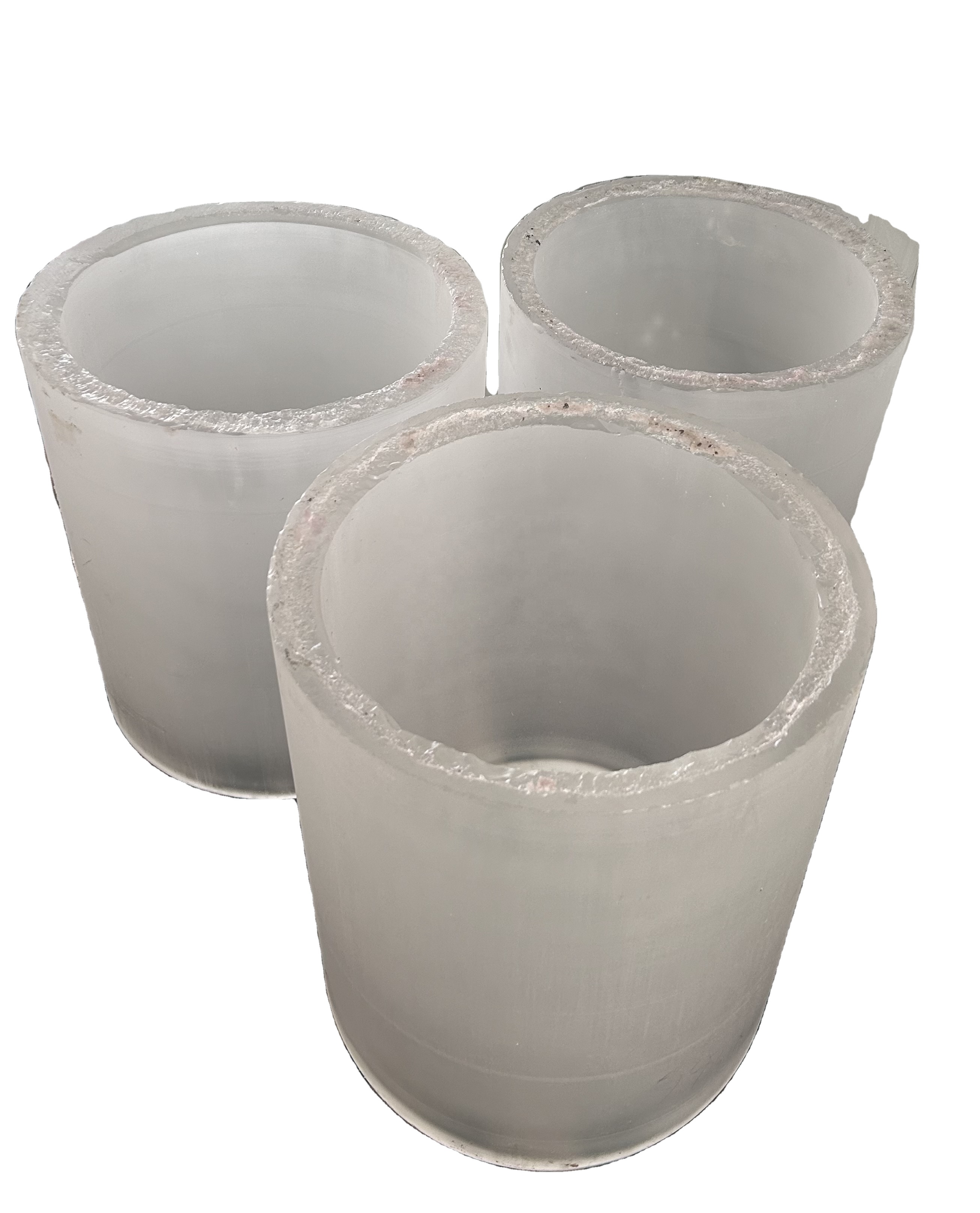
2. Transition to Fossil-Free and Sustainable Manufacturing: Sweden's legally binding pledge to reach net-zero greenhouse gas emissions by 2045 has sparked massive investment into electrification, hydrogen electrolysis, and synthetic fuel synthesis. Experimental reactors requires specialized fused quartz containment tubes and custom-ground viewports capable of handling high differential pressures while permitting continuous in-situ Raman and UV-Vis spectroscopic analysis.
3. Demand for Shorter R&D Iteration Cycles: Stockholm deep-tech ventures and university laboratories frequently require bespoke components in quantities of 1 to 5 pieces. Traditional industrial glass distributors often impose high minimum order quantities (MOQs) and 8-to-12 week lead times. Zelvo Quartz bridges this operational friction by offering true drawing-based custom prototyping with a 1-piece MOQ, immediate digital engineer reviews, and expedited air courier transit directly into Stockholm Arlanda Airport (ARN).
Why Stockholm Sourcing Specialists Partner with Zelvo Quartz
Direct factory fabrication in China's quartz capital, backed by engineer-led communication and rigorous European compliance standards.
Epicenter of Quartz Raw Materials
Located in Donghai County, Jiangsu—China's renowned "Crystal Capital"—Zelvo Quartz commands direct supply lines to high-purity natural silica sand and synthetic precursors, guaranteeing consistent lot-to-lot chemical purity and competitive wholesale pricing.
CNC 5-Axis & Laser Micro-Drilling
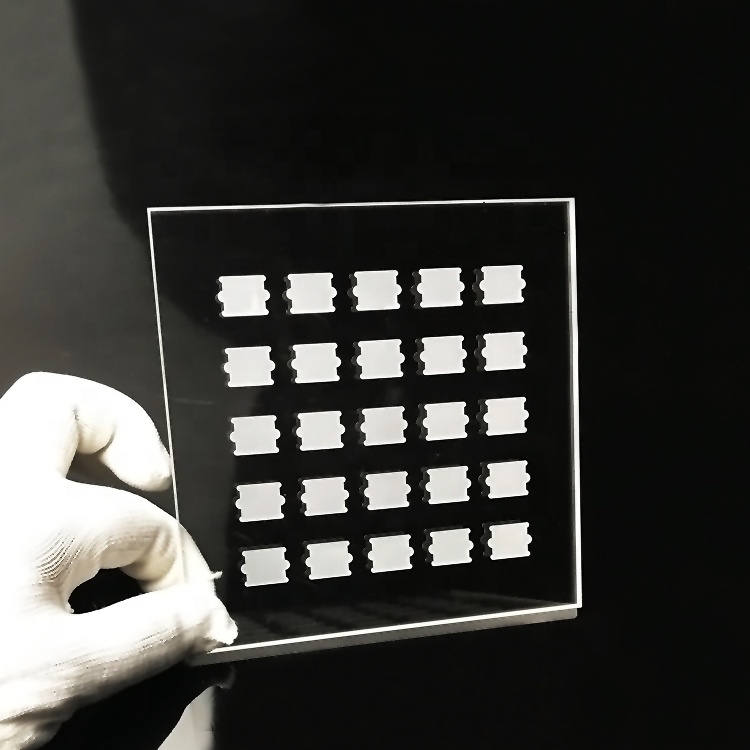
Beyond plain circular and rectangular plates, our workshop features CNC ultrasonic milling, CO₂/UV laser hole drilling (down to 0.2 mm without edge micro-cracking), step-grooving, circular beveling, and pristine flame polishing for hermetic sealing.
Documented Quality Control Protocol
Every shipment bound for Sweden is scrutinized via optical interferometry for surface flatness, laser bubble/inclusion counting according to DIN ISO 12123, and dimensional verification with calibrated micrometers and coordinate measuring machines (CMM).
≤2-Hour Rapid Engineering Review
No bureaucratic delays. Submit your CAD/PDF drawings and receive direct technical feedback from optical glass technicians regarding tolerances, edge chamfering feasibility, and raw material grading within two working hours.
Zero-Breakage Packaging & DDP to Sweden
All plates are sealed in dust-free cleanroom bags, cushioned within high-density expanded polyethylene (EPE) shock cells, and crated in heavy-duty plywood cases. Full door-to-door DDP transit handles all Swedish Tullverket customs clearance seamlessly.
Frequently Asked Questions by Swedish Procurement Teams
Essential guidance on optical standards, international logistics, material verification, and order processing for Stockholm buyers.
How do you handle shipping, customs clearance, and import VAT through Swedish Customs (Tullverket)?
What is the standard lead time for custom-machined fused silica plates delivered to Stockholm?
Can your factory manufacture according to ISO 10110 optical drawing standards?
How do you guarantee that optical plates will not fracture during transit to Sweden?
What purity and spectral transmission documentation do you furnish?
Can fused silica plates withstand continuous exposure to reactive plasmas in semiconductor etching?
What is your Minimum Order Quantity (MOQ) for non-standard experimental prototypes?
Are your quartz products compliant with EU REACH and RoHS environmental standards?
Accelerate Your Next Optical or Thermal Project in Stockholm
Send our senior engineering team your 2D/3D component drawings, target operating temperatures, and spectral requirements. We will analyze your specifications and provide a definitive technical proposal with transparent pricing within two business hours.