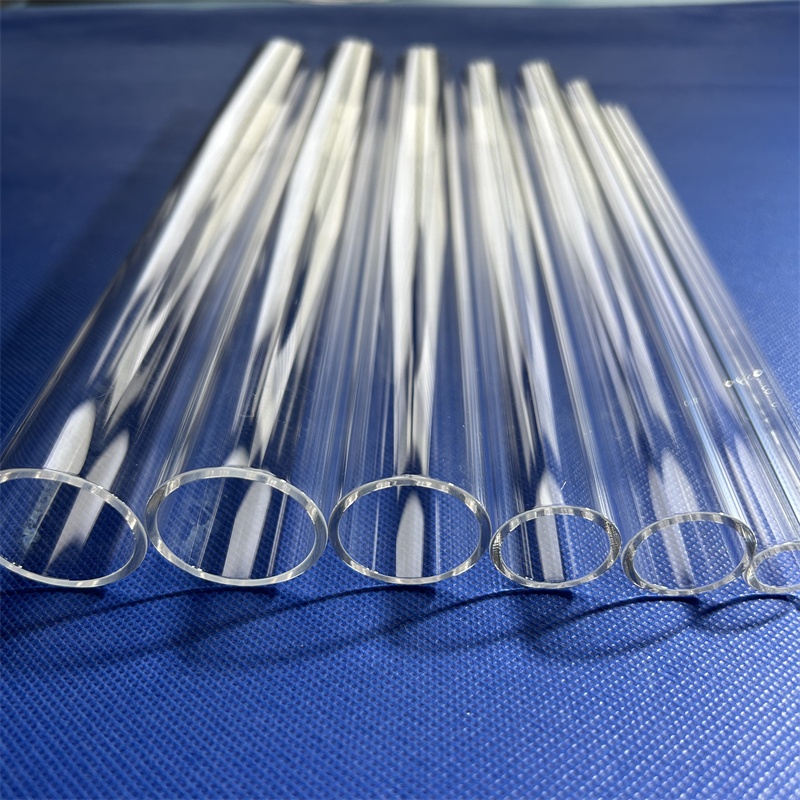
Transparent High Pressure 99.99% Pure Quartz Glass Tube Furnace Boiler Chemical Applications Corrosion Bending Moulding
99.99% SiO₂
High Pressure
Anti-Corrosion
Engineered to deliver unmatched thermal shock resistance, 1100°C continuous endurance, and zero-corrosion fluid processing across specialized Latin American industrial environments.
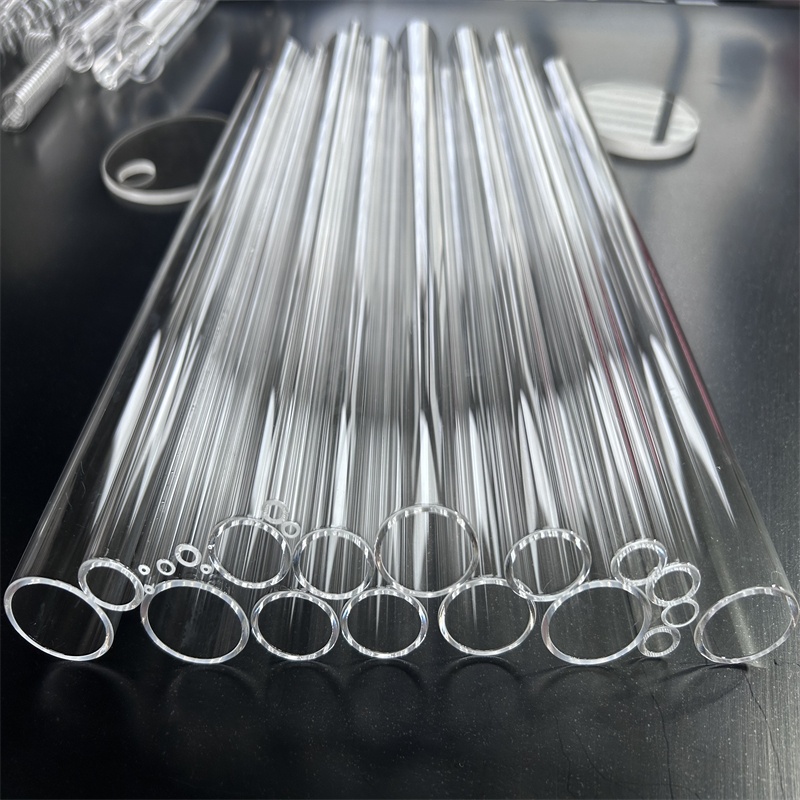
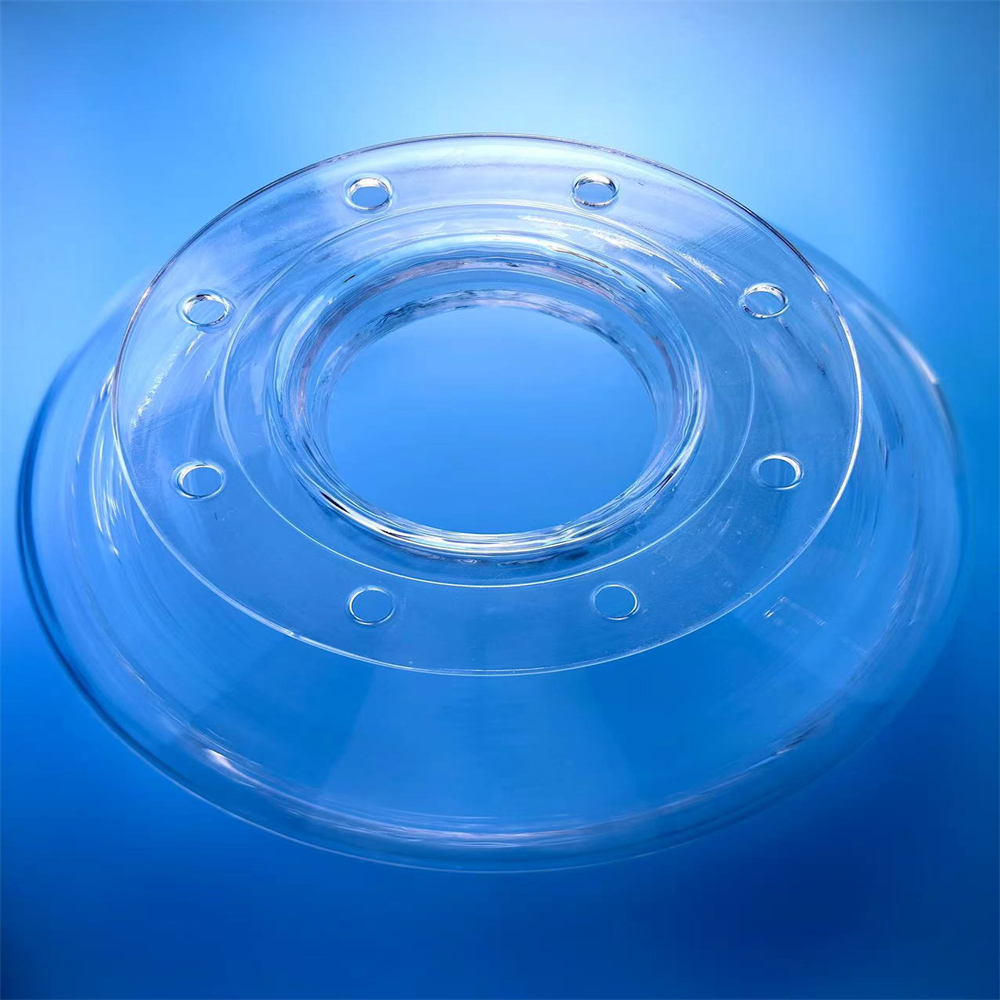
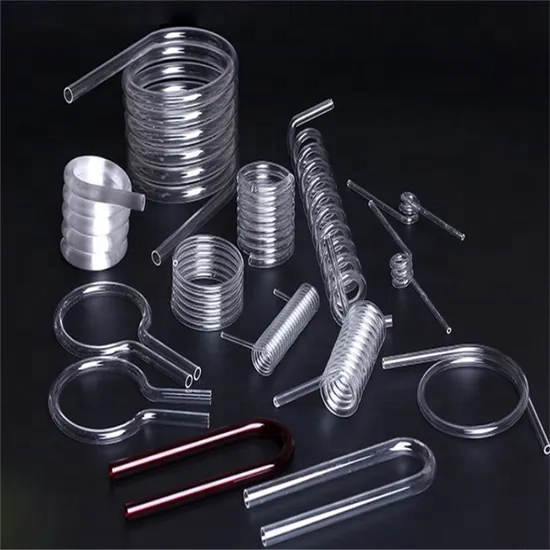
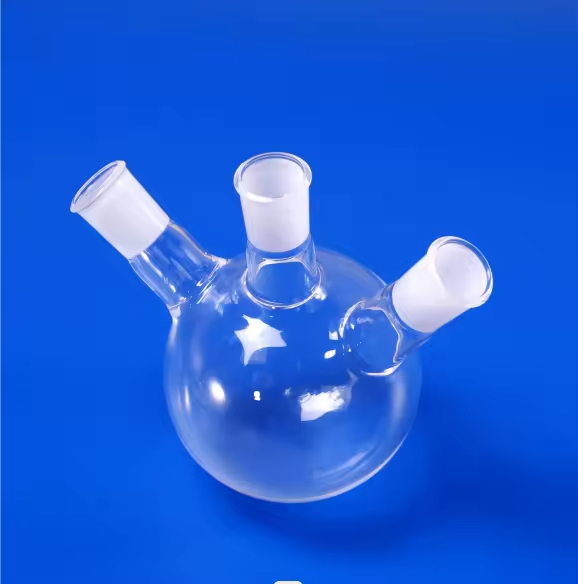
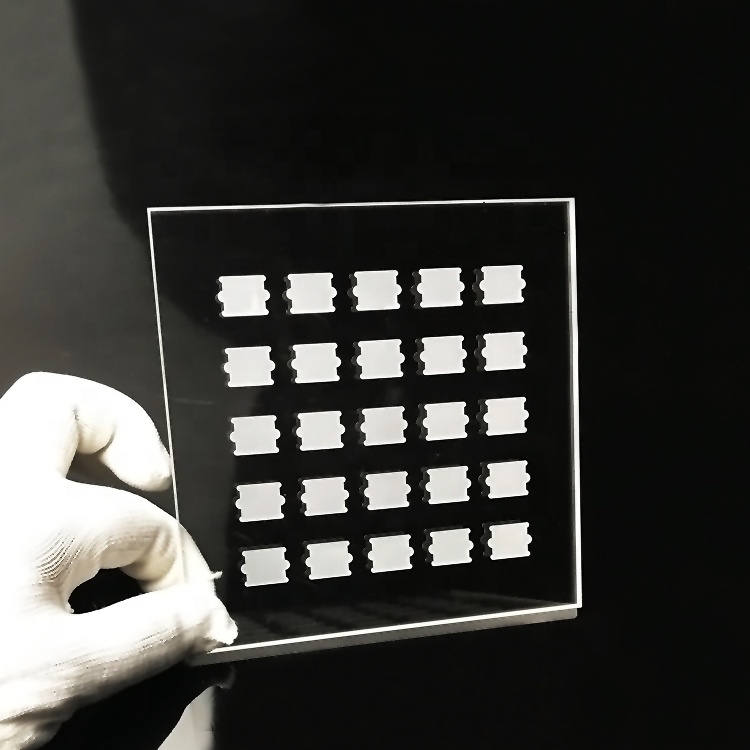
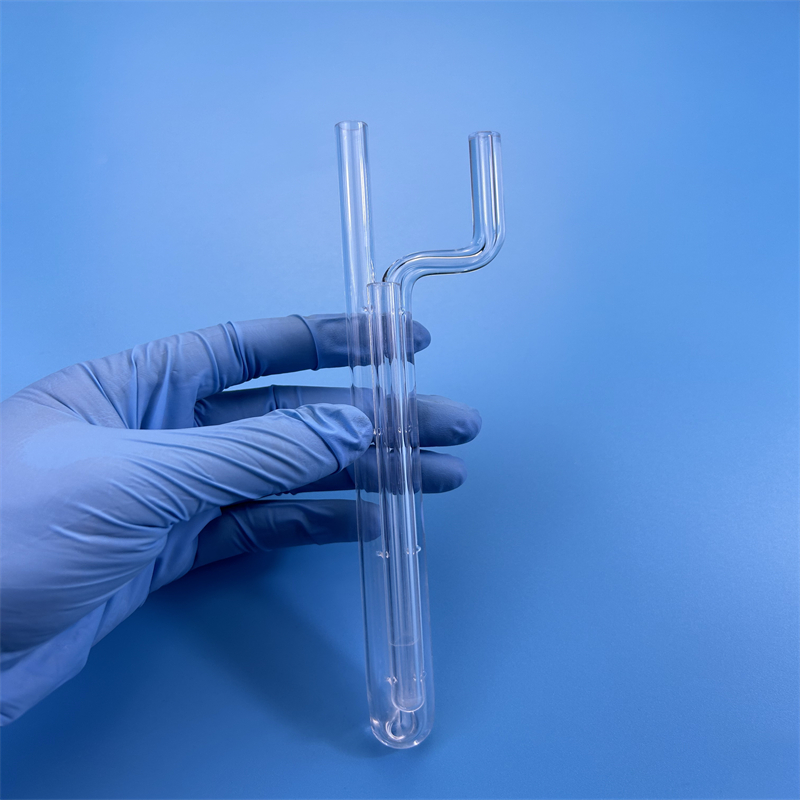
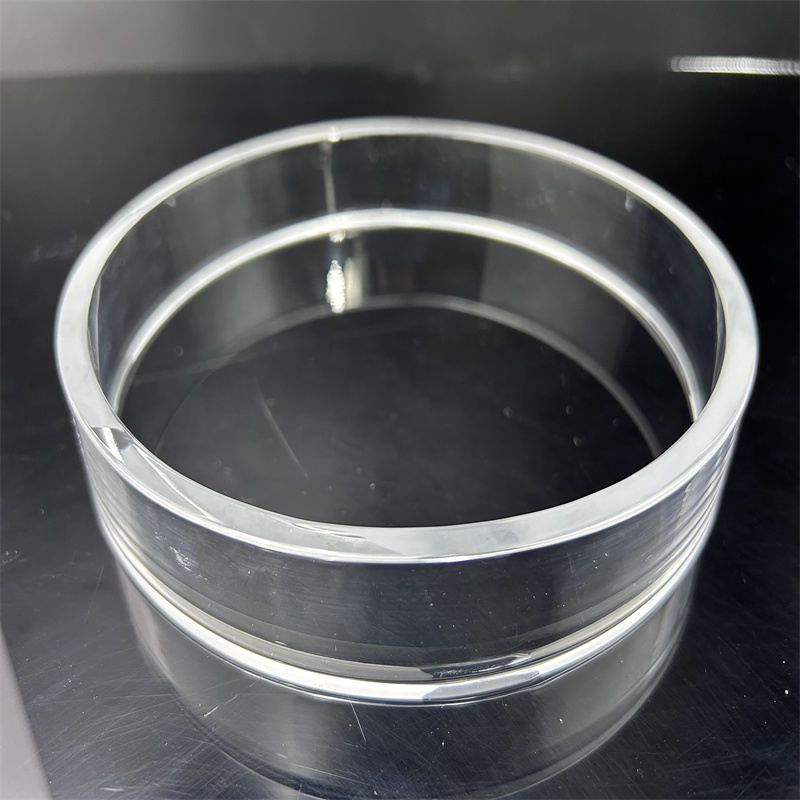
A rigorous examination of amorphous silicon dioxide (SiO₂) performance parameters under elevated thermal cycling, aggressive solvent vapor loads, and rapid phase-transition stress.
In high-efficiency heat exchange, chemical synthesis, and photochemical decomposition, standard straight tubular conduits suffer from continuous boundary-layer stagnation. When fluid or gas travels through a linear path, parabolic velocity profiles limit heat conduction to the outer perimeter, resulting in slow heat transfer and localized thermal hot spots. Helical spiral quartz tubes resolve this limitation through the continuous induction of centrifugal forces perpendicular to the primary axial flow.
This kinetic motion generates secondary counter-rotating circulation patterns widely recognized as Dean Vortices. The dimensionless Dean Number ($De = Re \sqrt{d/2R}$, where $d$ is the internal tube bore and $R$ is the curvature radius of the spiral coil) defines the intensity of fluid mixing. By continuously folding fluid layers across the high-purity quartz boundary without requiring mechanical impellers, Zelvo Quartz spiral assemblies deliver heat transfer coefficients up to 280% greater than straight conduits of equivalent length. This mechanism proves indispensable for processes handling heat-sensitive agrochemical extracts, alcohol rectification streams, and photochemical oxidation reactions across Camagüey's industrial sector.
Material Integrity Guarantee: Manufactured exclusively from continuous electric-arc or oxy-hydrogen fused high-purity natural silica sand in Donghai County, China. Our quartz maintains an aggregate trace impurity concentration below 20 ppm, ensuring zero catalytic contamination during sensitive pharmaceutical and petrochemical distillations.
Fused silica features an exceptionally low coefficient of linear thermal expansion ($\alpha = 5.5 \times 10^{-7} \text{ K}^{-1}$ across the 20°C to 1000°C range). This single-digit expansion coefficient is roughly one-twentieth that of standard borosilicate glass (3.3 series). Consequently, our spiral quartz coils easily withstand thermal shock differentials ($\Delta T$) exceeding 1000°C. In extreme qualification testing, components heated to 1150°C and dropped directly into ice water exhibit zero micro-fracturing, structural fatigue, or structural spalling.
Prolonged high-temperature operation requires deep engineering insight into the glass transformation region. Fused quartz exhibits an annealing point at approximately 1215°C and a softening point at 1683°C. In furnaces operating continuously at 1100°C, internal stress relief occurs without causing dimensional distortion or sagging. However, when operating above 1150°C in atmospheric furnaces containing airborne alkaline or metallic dusts, surface nucleation into crystalline cristobalite (devitrification) can occur over long thermal cycles. Zelvo Quartz addresses this through proprietary multi-step flame polishing and mechanical lehr annealing cycles, delivering a smooth, defect-free vitreous outer surface that resists nucleation.
| Physical / Chemical Property | Reference Value (SI Units) | Test Methodology / Standard | Operational Significance for Camagüey Industrial Operations |
|---|---|---|---|
| Purity ($SiO_2$ Content) | ≥ 99.992% | ICP-OES / GD-MS Analysis | Prevents metal leaching during high-temperature aggressive acid extraction. |
| Thermal Expansion Coefficient ($20-1000^\circ\text{C}$) | $5.5 \times 10^{-7} \text{ K}^{-1}$ | Dilatometry (ASTM E228) | Enables rapid thermal switching without structural fracture in batch reactors. |
| Continuous Working Temperature | 1100 °C | Thermal Stability Standard | Safe for calcination, pyrochemical reduction, and furnace heating jackets. |
| Peak Short-Term Temperature | 1300 °C | Transient Flame Immersion | Withstands momentary industrial boiler blowback and runaway exothermic peaks. |
| Dielectric Strength ($20^\circ\text{C}$) | $25 - 40 \text{ kV/mm}$ | IEC 60243-1 High Voltage | Excellent dielectric isolation for induction furnaces and RF plasma systems. |
| Spectral Transmission (Optical UV-C) | ≥ 88% at 254 nm | UV-Vis Spectrophotometry | Maximum photochemical activation for water sterilization and photocatalytic oxidation. |
| Compressive Strength | 1150 MPa | Hydraulic Mechanical Load | High resistance to external pressures in deep vacuum chambers and autoclave systems. |
Engineered to resolve real-world processing, corrosion, and energy challenges encountered by industrial facilities and research laboratories in Camagüey Province.
Camagüey's historic agro-industrial sugar processing plants—such as Central Carlos Manuel de Céspedes and Batalla de las Guásimas—rely on continuous processing of bagasse, raw cane juice, and molasses. High-purity spiral quartz condensers prevent caramelization buildup along condensation paths while resisting corrosive volatile organic acids (acetic, lactic, and aconitic acids) present in distillation and ethanol dehydration columns.
Positioned along the mineral transportation corridor linking Camagüey to the nickel and cobalt reserves of Holguín and Moa, local analytical facilities use custom quartz reactors to run high-pressure acid leach (HPAL) simulations. Our thick-wall quartz tubes and slotted XRD sample holders withstand continuous exposure to concentrated sulfuric acid and temperatures up to 1100°C without leaching background silica or metal contaminants.
Research departments at the Universidad de Camagüey "Ignacio Agramonte Loynaz" and municipal diagnostic laboratories utilize twin-tube digestion apparatus, ozone-free ampoules, and BET chemisorption tubes. Fused quartz ensures zero background interference, providing consistent, reliable results during complex chromatographic analyses and high-vacuum thermal desorptions.
Tropical Environmental Resilience: In Camagüey's hot, humid, and salt-laden maritime atmosphere, conventional metallic heat exchangers (including 316L stainless steel and copper-nickel alloys) suffer from chloride-induced pitting, stress corrosion cracking, and galvanic oxidation. Vitreous fused quartz remains fully inert against atmospheric salinity and industrial chemical vapors, providing years of maintenance-free service.
Strategic modernization programs across central Cuba are driving demand for high-performance fused quartz equipment.
Central Cuba's high solar irradiation is accelerating the deployment of continuous-flow photochemical reactors for wastewater recycling. Helical quartz coils serve as core photochemical reaction zones, transmitting high-intensity UV-C radiation down to 254 nm while swirling effluent through Dean vortices to maximize direct radiation exposure.
Modernization of sugar mill cogeneration plants requires durable heat-recovery components capable of handling sudden boiler flue excursions. Spiral quartz tube heat exchangers recover sensible heat from corrosive flue gases containing sulfur and ash, without risk of thermal cracking or acid corrosion.
To reduce dependence on imported chemical intermediates, regional pharmaceutical production centers are transitioning from metal-jacketed reactors to transparent quartz distillation setups. This configuration allows complete visual monitoring of boiling behaviors while preventing metal-ion contamination.
Essential guidance covering technical specifications, shipping logistics, customs documentation, and maintenance best practices for Latin American buyers.
Combining Donghai County's high-purity natural quartz reserves with advanced CNC cutting, laser drilling, and traditional master glassblowing craftsmanship.
Situated in Donghai County, China's "Crystal Capital." Direct access to premium silicon dioxide reserves guarantees stable pricing, consistent chemical purity, and uninterrupted raw material supplies for large-scale production runs.
Equipped with CO₂ laser cutting machines, ultrasonic core drilling units, multi-axis surface grinding stations, and CNC slotting beds capable of micro-drilling clean apertures down to 0.5 mm with chip-free edges.
We welcome 1-piece custom prototyping alongside containerized batch orders. Whether building a single replacement coil for a university pilot plant or refitting a municipal utility, every project receives full engineering support.
Every piece undergoes polariscopic stress inspection, dimensional verification, bubble/inclusion grading under high-intensity backlighting, and spectral transmission validation prior to crate sealing.